


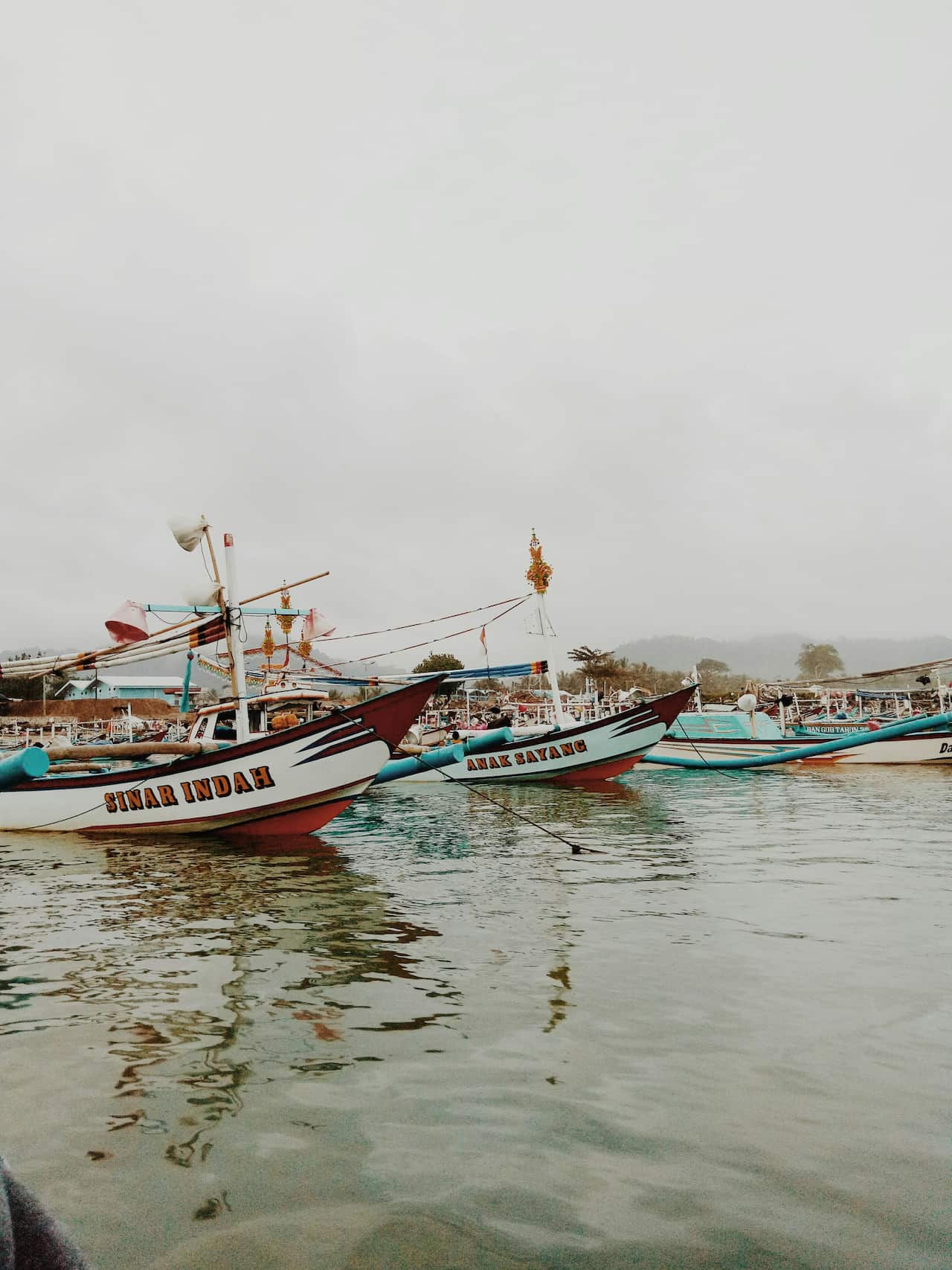
Indonesia's shallow waters of up to 4 nautical miles are a vital lifeline for the majority of small fishermen with motorboats under 5 Gross Tonnage. Governance for that coastal area is necessary because it is a spawning area, or an area where fish breed and also its coral potential.
Indonesia, as the country with the second longest coastline in the world, harbors an incredible treasure in its shallow waters.
Up to four nautical miles, this stretch of water is not simply a natural landscape, but rather the main living pedestal for the majority of small-scale fishermen who operate boats under 5 Gross Tonnage (GT).
This coastal region holds a very vital ecological role as a spawning ground for fish and coral reef growth.
Given the nature of fish in shallow waters that tend to settle, protection of these habitats becomes much more crucial to the sustainability of marine ecosystems at large compared to high seas areas.
However, this huge potential is overshadowed by a deep vulnerability for traditional fishermen.
Rizky Latjindung, Director of the Makassar-based Nusantara Maritime Institution (Lemsa), revealed to SBS Indonesian that the main challenge on the ground is weak environmentally friendly governance.
Many times, policies taken at the central as well as provincial levels are difficult to reach reality on the ground due to the great geographical distance. It is this oversight loophole that then becomes a threat to the sustainability of local ecosystems from destructive practices.
As a solution to address these oversight gaps, the active involvement of local communities through participatory schemes emerged as a key key. The initiative encouraged by Lemsa proved that strengthening the rule at the village level was capable of being an effective defensive bulwark.
With strong local rules, communities can restrict access for large ships as well as prevent the use of destructive fishing gear such as fish bombs. Through this empowerment, oversight of ocean health is carried out directly by those most dependent on the sustainability of such nature.
Nevertheless, the path to ideal maritime sovereignty is still fraught with obstacles. Law implementation is often disrupted by changes in authority that distance control functions from society, coupled with the threat of climate change beginning to have a real impact. On the other hand, economic issues such as the hereditary practice of ijon continue to ensnare fishermen in circles of poverty and weaken their bargaining power.

Therefore, future coastal governance must be holistic; not only focusing on nature conservation, but also addressing aspects of welfare and equitable access to capital in order to break the chain of poverty that has long shackled Indonesia's coastal communities.