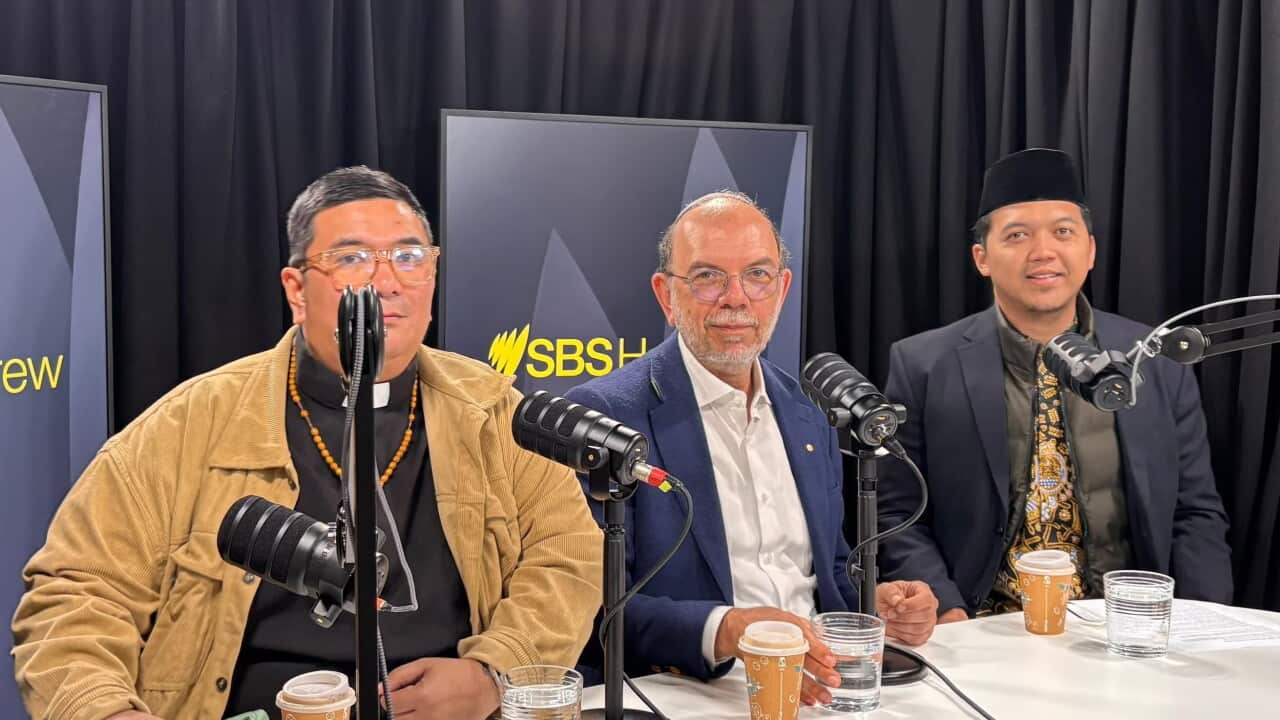

Some people may associate the Israeli aggression in Gaza with religion. But an ustadz who lived with a rabbi for three weeks found that the issue's far more political than religious. Together with a priest, the three engaged in dialogue to understand each other more deeply.
Ustadz Niki Alma Febriana Fauzi faced questions from some of his peers when he decided to join the programme, particularly because it involved a rabbi, he told SBS Indonesian. An ustadz is an Islamic cleric in Indonesia.
He acknowledged that upon his return, certain perceptions would likely follow him, including the possibility of being labelled a liberal, Ustadz Niki said.
But for Ustadz Niki, what matters most is sharing what he gained from the experience without forcing others to agree. Everyone has their own preferences, and it's impossible to please everyone, Ustadz Niki said.
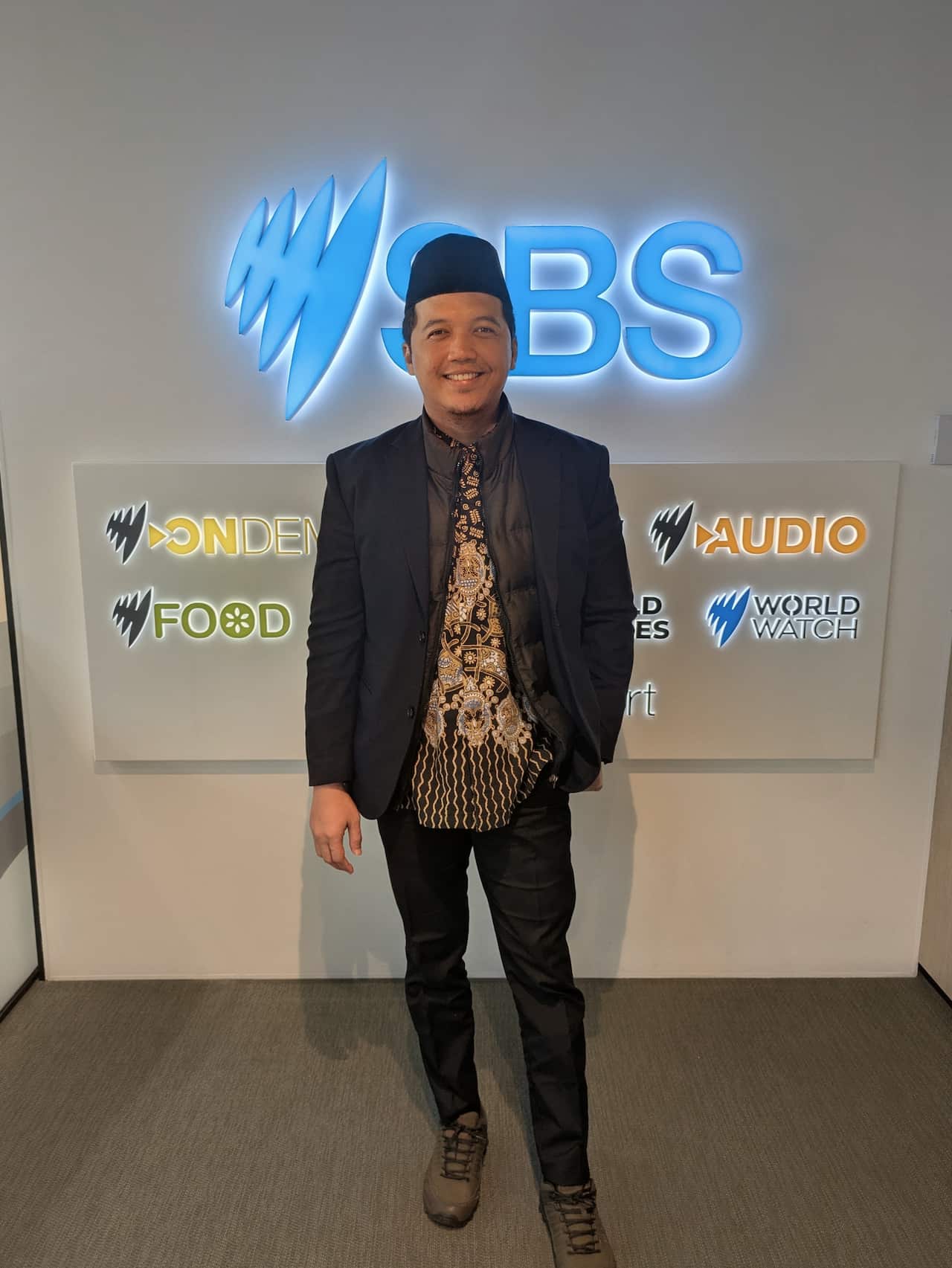
Ustadz Niki, a lecturer in Hadith Studies at the Faculty of Islamic Studies, Universitas Ahmad Dahlan, Yogyakarta, took part in the 1000 Abrahamic Circle Project in August 2026. The programme is an initiative by the Foreign Policy Community of Indonesia (FPCI), which Dino Patti Djalal founded and chairs.
The programme brings together three religious leaders from Islam, Christianity and Judaism to live together for three weeks, rotating between each participant's home country.
The first week took place at the home of Father Adrian, a priest in Iligan City, the Philippines. The second week moved to Yogyakarta. The third and final week brought the group to Melbourne, where they stayed with Rabbi Ralph.
The programme differs from typical interfaith events, which tend to be seminars or conferences, Ustadz Niki said. The participants truly live together, eat together, even wash dishes together, he said.
We live together, eat together, wash dishes together... have informal chats over meals... At a conference... things tend to be more formal, but when you live together, conversations become far more natural, far more honest, and you can ask as many detailed questions as you're curious about.Ustadz Niki Alma Febriana Fauzi
The conversations that emerge from that kind of daily life feel far more natural and far more honest, Ustadz Niki said.
Global conflicts often ride on religious sentiment, which gives this programme particular relevance, Ustadz Niki said. Many conflicts are fundamentally political, yet religion bears the brunt of the stereotyping, he said.
Ustadz Niki is part of the programme's eighth cohort. One of its previous alums is Habib Ja'far.
Listen to the full interview on the SBS Indonesian podcast.