Highlights
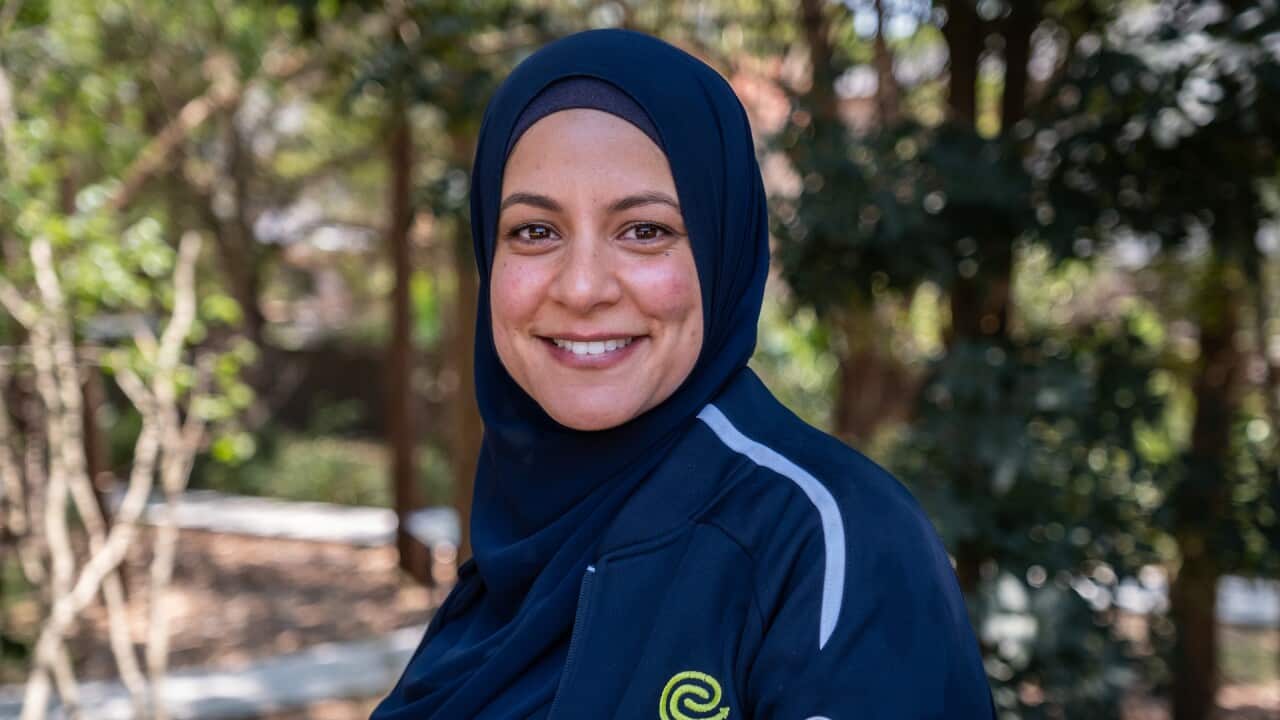
- Through her work with Creating Chances, a social enterprise, Assmaah Helal promotes positive youth development through sports
- Growing up in Australia, Assmaah says football taught her to be “proud” of her identity and “respectful” to others
- Coinciding with International Women’s Day, 8 March is AFC Women’s Football Day
As a youngster in Sydney, Assmaah was shy and introverted.
Already self-conscious of her body, she felt the “added elements of being a minority and [wearing] a hijab” made her “stand out”.
However, Assmaah said it was on the football field that she learned to be “proud” of her identity and “respectful” to others.
“It wasn’t about what you wore or how you looked, it was very much the attitude on the field and how you were as a teammate,” she told SBS Japanese.

From captaining several premier league teams, she realised that she found joy in motivating and inspiring her teammates.
Football became for her a “place of sanctity, peace, inclusion and belonging”.
“And I want others to feel that.”
Chances for all
Today Assmaah oversees operational growth at Creating Chances, a social enterprise that promotes positive youth development through sports.
She has designed and led a number of initiatives aimed at creating safe spaces for women to learn football, such as female empowerment workshops and women-only Unigoal tournaments.
Such opportunities, Assmaah pointed out, were not readily available when she was a uni student.
Football has allowed me to be the leader I am today.
The group recently received funding from Migration Australia Council to run a value-based football leadership program for young people in Western Sydney's Afghan community, with a specific focus on women and girls.
'A sense of belonging'
Assmaah, who is of Egyptian heritage, said she was fortunate to grow up in a family where football was ever-present in the lounge room, and which gave her the chance to regularly participate in the sport.
“Football runs in my veins,” she said.
However, she explained that this is not the case for many women, particularly within the Muslim community.
“Football is not often looked at as a sport for girls, there are cultural misunderstandings or misconceptions. Some [families] prioritise education, employment or raising families,” she said.
Second-generation immigrants also face inter-generational challenges, “trying to maintain the core value of their family and culture, while adopting the new”.
Assmaah said it has been a “long journey” to understand these challenges faced by her community, but that sport is a universal tool with capacity to drive change.
It can increase resilience, improve pro-social behaviour, reduce peer problems, and promote cross-cultural relationships, health and wellbeing.
Assmaah said that until we are “honest about accessibility of the game for all” we will not be able to achieve 50/50 participation in football - a goal which Football Federation Australia (now Football Australia) committed to achieving within 10 years as part of their Gender Equality Action Plan 2019.
“If society or the system does not allow vulnerable and people of low socio-economic background, who can’t afford or can’t travel to games, we have the responsibility to come to them and provide that,” said Assmaah.
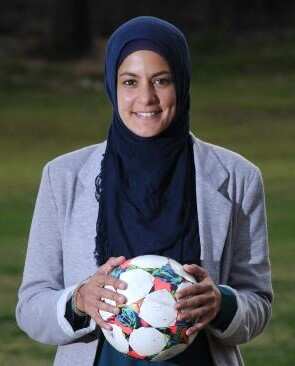
Coinciding with International Women’s Day, 8 March is AFC Women’s Football Day, a date to celebrate women's football and showcase the sport as being open to anyone and everyone to participate.
For more inspiring stories from footballing women in the country, listen to SBS’s new podcast series Moving Goalposts: Beyond Barriers, where players, coaches and administrators share their experience of overcoming challenges when playing football.
Listen to SBS Japanese Radio on Tue, Thu and Sat from 10pm
You can listen to our past stories from our podcast
And don't forget to visit SBS Japanese Facebook page!