

Key Points
- Sumo wrestling is widely considered as a traditional sport of Japan, though it has struggled for popularity recently.
- In the amateur circuit, sumo is embraced by people of all genders, sizes and ages.
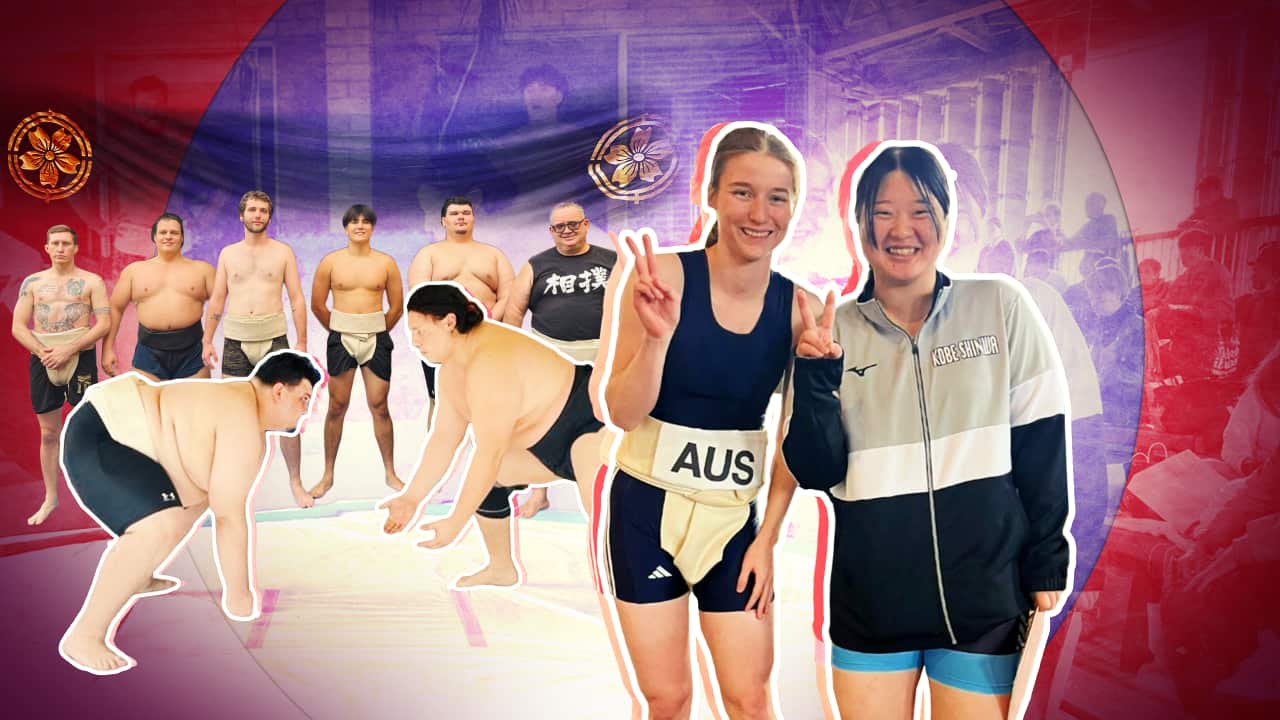
- Australian wrestlers are preparing to compete in the upcoming Oceania Sumo Championships.
Sydney teenager Charlie Traill is preparing to defend his title as national junior sumo champion at the Oceania Sumo Championships in Sydney on 27 April.
Representing your country is always a big deal, but especially when you're also sitting your HSC in the same year.
However, Charlie says that whenever people hear about his sporting exploits, their response is almost unanimous.
“They say I am not fat enough,” he tells SBS Japanese.
“They just don’t really know about it, and they expect me to wear big sumo suit or something silly like that.”
Charlie explains that sumo wrestling has been his passion ever since he was five years old.
He's following in the footsteps of his father, John Traill — a former Oceania and Australian sumo champion — while embracing the cultural heritage of his Japanese mother, Miho.
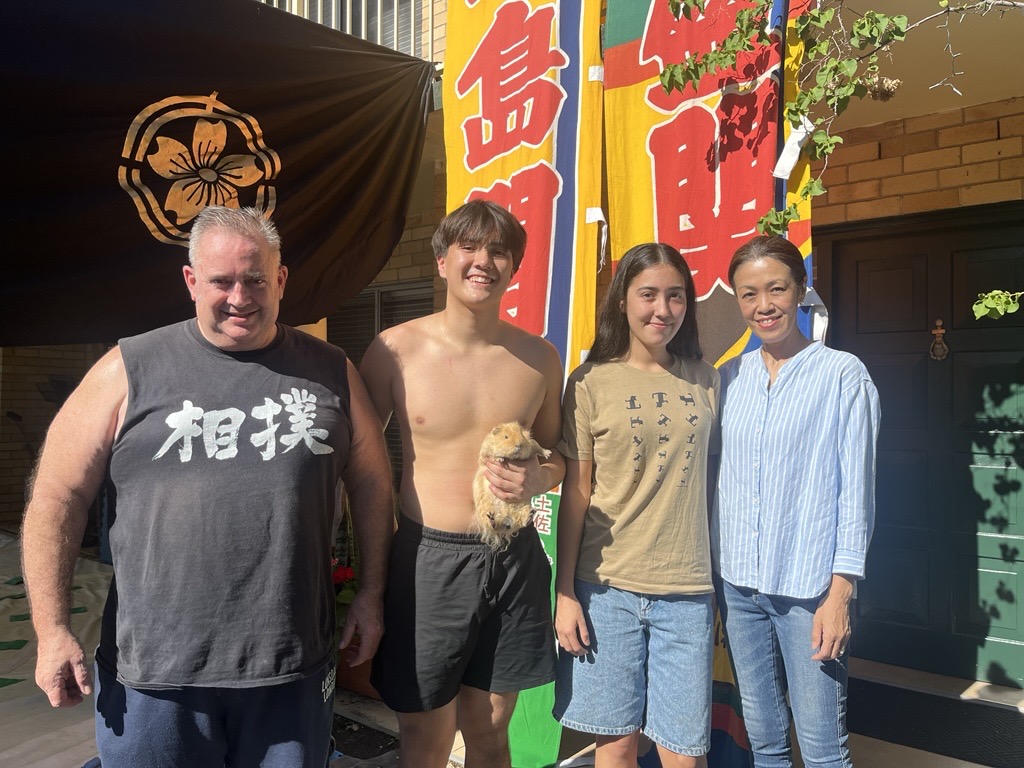
“I want to keep my title, but I think I find fun in the sport being able to fight and keep the heritage going, especially outside of Japan,” Charlie says.
I like to keep touch with my cultural heritage.Charlie Traill
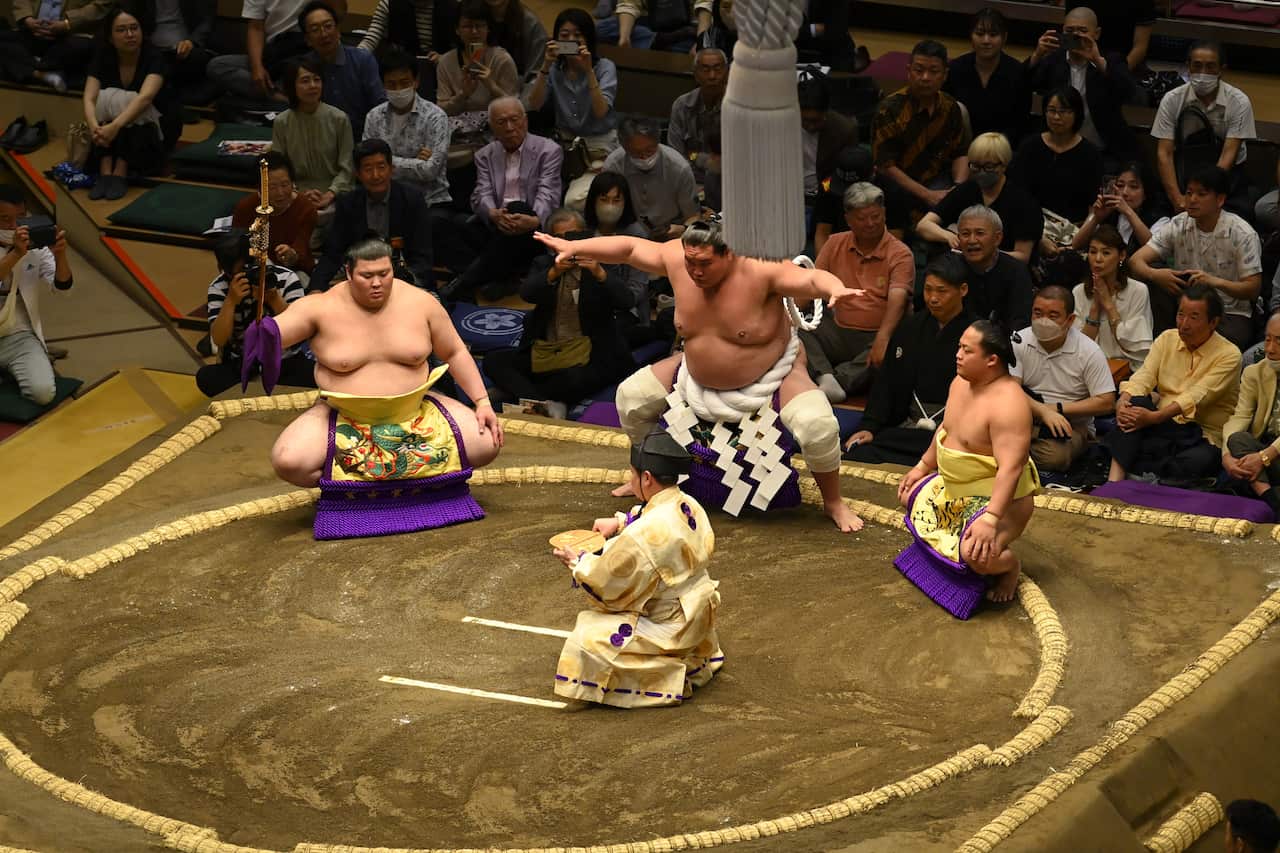
While Japan does not have an officially declared “national sport” by law, sumo has deep historical roots.
According to Japan's Sumo Federation, the origin of the sport can be traced back to the year 712, when it began as a ritual performed during festivals to predict the year's harvest.
It wasn’t until centuries later that sumo evolved into a competitive sport, yet many traditional elements, like purifying the ring (dohyo) with salt, are still practised today.
The continued exclusion of women from professional sumo, or Grand Sumo, also reflects the sport’s long-held customs.
However, in the burgeoning amateur circuit, sumo is open to all and embraced by people of all genders, sizes and ages, as John Traill knows well.
He's the current president of the Australian Sumo Federation and vice president of the International Sumo Federation.
“In Australia, we are keen to promote a healthy outlook on sumo. We are rapidly breaking down the stereotypical image of a sumo wrestler with nationwide media coverage eager to focus on (the idea of) 'fit not fat' and that woman can not only do sumo, (but) do it well,” Traill says.
Women in sumo
Women's amateur sumo began in Japan in 1996 and has been gaining momentum — especially overseas — as the sport pushes for global recognition and a future place in the Olympics.
Brisbane's Giselle Shaw, 19, first learnt of sumo back in 2021 through NHK, Japan’s public broadcaster that covers the sport.
The former sprinter was intrigued by the variety of bout combinations in sumo.
“In athletics, it’s always kind of the same formula,” Giselle explains.
"Sumo has so many different bout combinations, depending on which wrestlers are fighting who, what styles they have, and what dominant winning techniques they have. Even height and weight can change the dynamic of a bout," she says.
"Since sumo is so dynamic, I thought it would be interesting to try it myself."
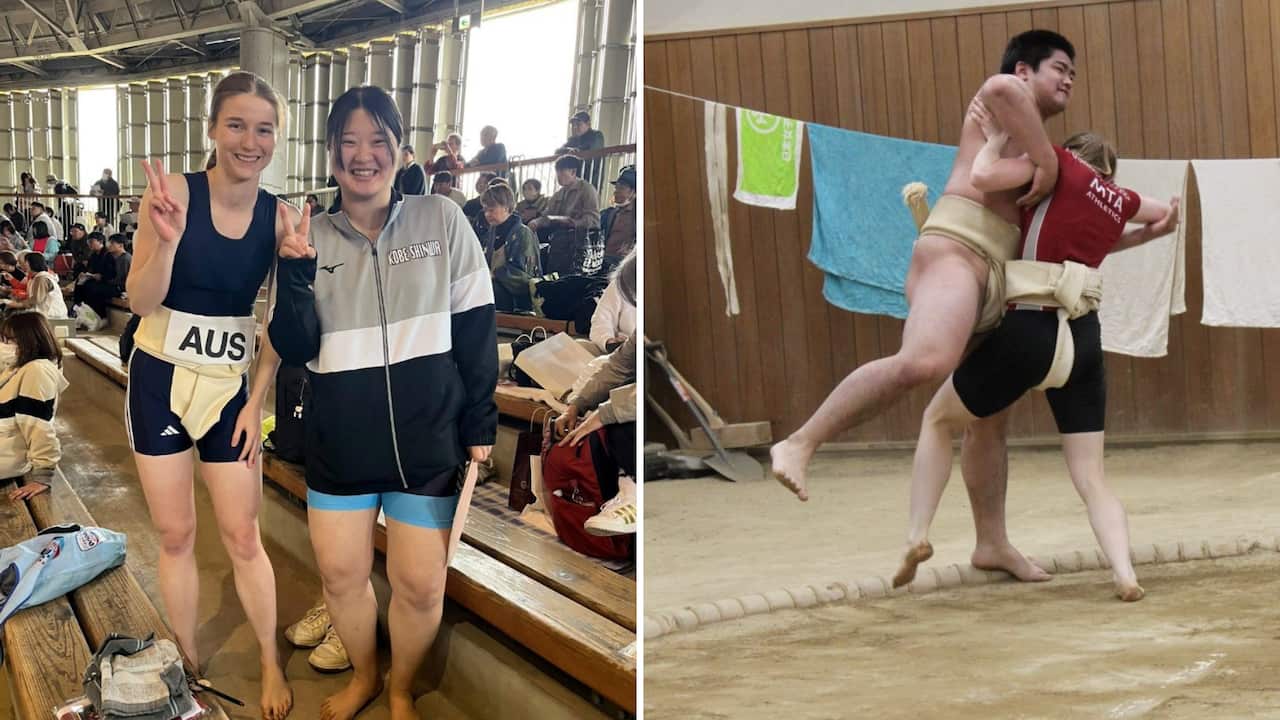
Giselle began training at a Queensland sumo club in 2023 and quickly developed a deep passion for the sport.
She says people were often “confused” when they learned about her interest, frequently asking, “Aren’t you a bit small for that?”
But her passion only grew stronger during an exchange program in Japan last year, when she trained with the Kwansei Gakuin University Sumo Club.
After placing third in her very first competition, Giselle earned a spot in the prestigious All Japan Women’s Sumo Championship during her stay.
Now her eyes are firmly set on the upcoming Oceania Championships — a crucial step toward qualifying for the World Championships in September.
Athletes from across Australia, as well as Samoa, Tonga, Fiji and New Zealand will come together for this opportunity.
Reviving the popularity of sumo
Despite its deep roots in Japanese history and tradition, sumo hasn't maintained the same popularity in the country as baseball, football or rugby.
While most people are familiar with a few well-known wrestlers and basic rules, their understanding of the sport’s storied past and detailed rules remains limited — something Giselle learnt firsthand.
“There was no sumo club in my high school. Sometimes I found myself having to explain aspects of sumo to my host families, because a lot of them knew little about sumo,” she says.
Miho Traill, wife of the president of the Australian Sumo Federation, echoes this sentiment.
Until I met my husband, I knew little about sumo. It was actually he who taught me about my Japanese culture.Miho Traill
“I feel proud to see him (John) and Charlie share this Japanese culture with Australia with so much passion. I think it is truly admirable,” she continues.
There are currently only around 50 members in the Australian Federation. Still, Miho says she is blown away by their commitment to keeping sumo alive in Australia.
Training grounds are often makeshift, set up in open areas — like Traill's home on Sydney's North Shore — where athletes gather weekly.
Some members, like coach Caleb Hudson and group veteran Henry Bowley (middleweight division) travel from as far as the Blue Mountains.
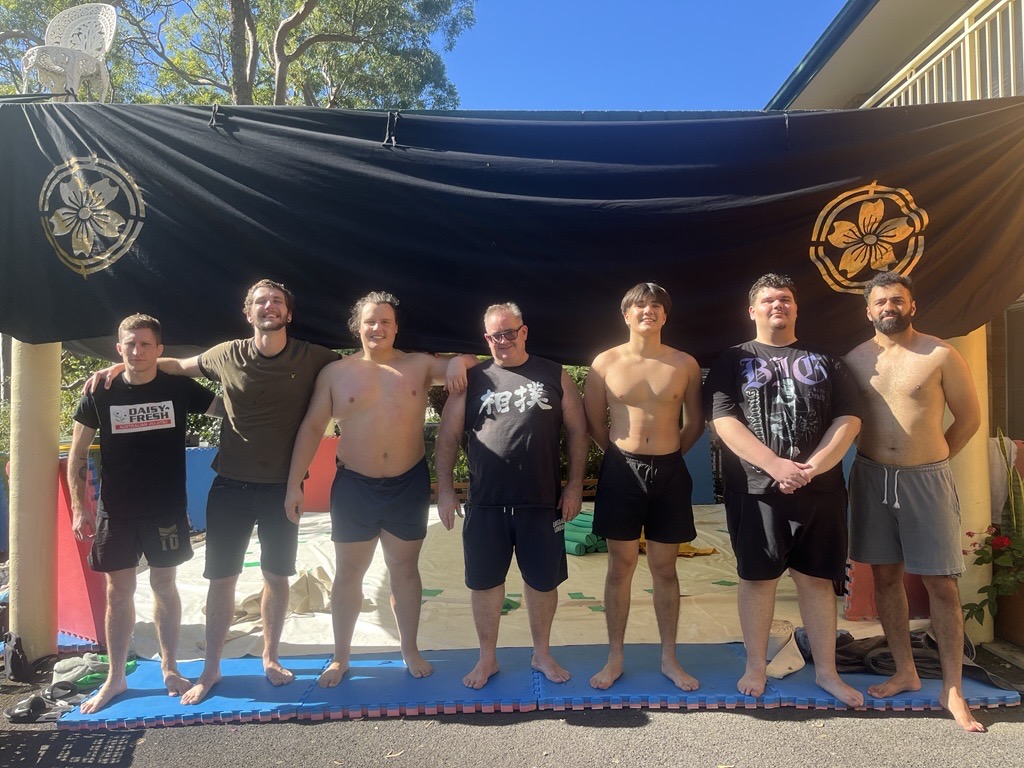
"The way you have to use your body and train your body is like nothing else. I find it an impressive form of athleticism ... It's like problem solving. You try one thing and if it doesn't work, you try something else ... so you get really lost in it," Caleb says.
Many, like Oisín Donohoe (men's under 70kg) and Harry Sohal (lightweight), have a martial arts background and were impressed by the sport's sense of tradition.
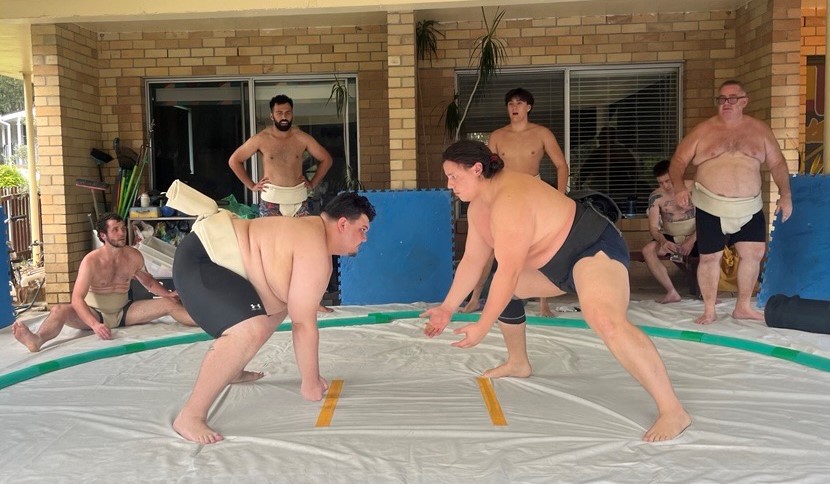
"Compared to a lot of other martial arts these days like karate and kung fu, sumo still holds a lot of culture and tradition within it," says Oisín.
Others, like Heith Sines-Wainwright (heavyweight), discovered sumo because of an interest in Japanese culture — particularly anime.
The Dhanggati men, who placed second in both heavyweight and open divisions in last year's championship, says "connection with other people" and "strength building" have been his driving forces for the past three years.
Learning from the pro
With the championship less than a week away, the group travelled to Campbelltown for a special training session with former professional sumo wrestler Minaminoshima Isamu Prescott Falevai.
Starting from the early 2000s, Minaminoshima was a regular in the pro ring for nearly a decade before recurring injuries led him to retirement.
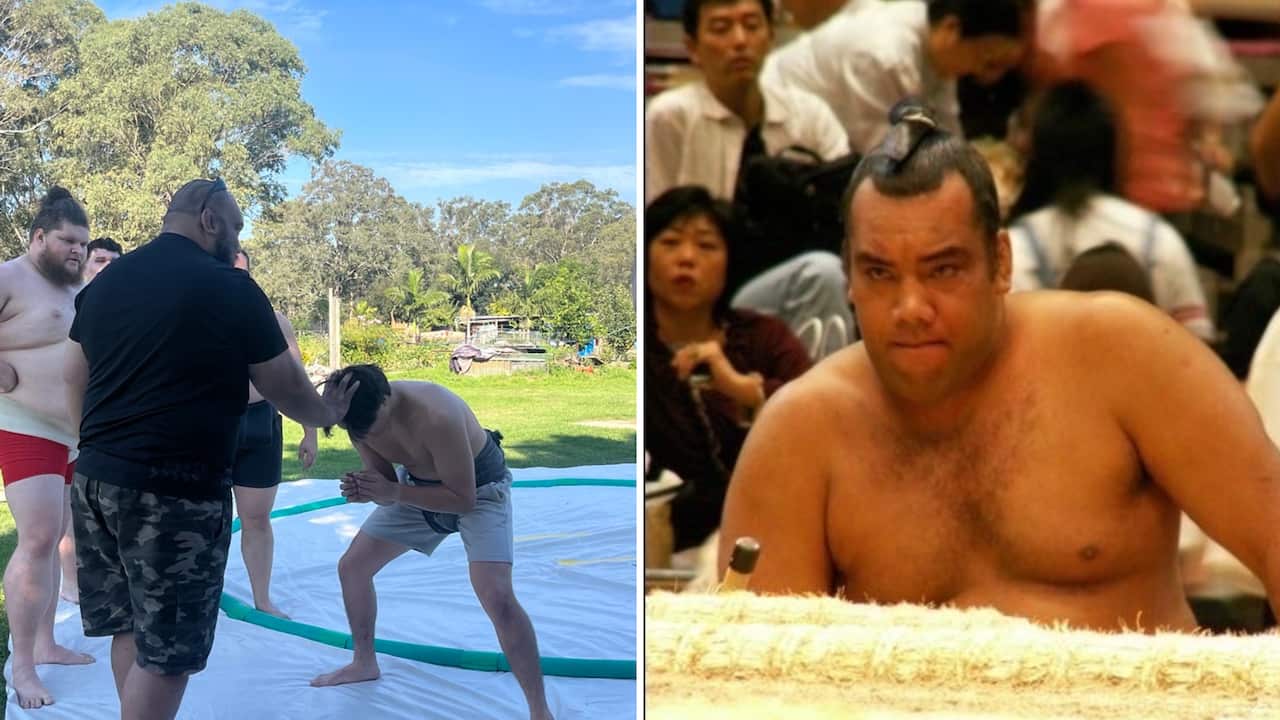
He says he was initially very surprised to find people in Australia who embrace sumo.
"I am so happy to be able to teach sumo to the boys. It brings back my memories of when I was in Japan," he says.
Even though years have passed since he left the ring, Minaminoshima says the Japanese culture of respect and discipline he learned through sumo remains a big part of his life — something he continues to share whenever he gets the chance.
Now, he's looking to revive and grow the traditional sport further, by starting a team within his Tongan community and passing on his passion to the next generation.
The 2025 Oceania Sumo Championships will be held at St. Ives SJJA, Sydney, on 27 April.
Listen to SBS Japanese Audio on Tue, Thu and Fri from 1pm on SBS 3. Replays from 10pm on Tue, Thu and Sat on SBS1. Listen to past stories from our podcast.
Download the free SBS Audio App and don't forget to visit SBS Japanese Facebook
and Instagram page!




