
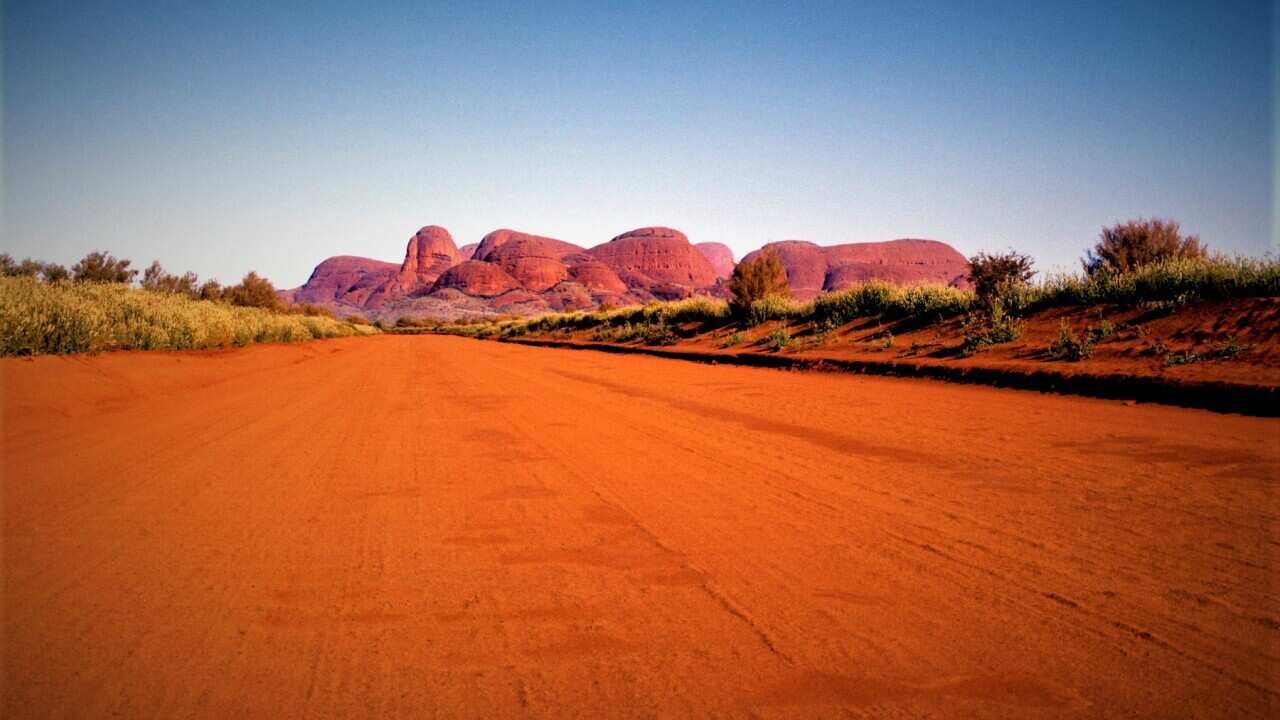

With millions of Australians stuck in lockdown, the chance to head out on the open road is just a dream for many. But once restrictions start to lift, there's a track being paved through the desert to upgrade the connection from the east to the west of Australia. Putting down bitumen is also helping to close the gap on Indigenous disadvantage by making it safer for First Nations communities to travel and access services.
The Outback Way is a network of highways and roads stretching 2,700 kilometres from Boulia in Queensland to Laverton in Western Australia.
While parts of it are sealed, huge stretches - in all 1,200 kilometres - are dirt.
One stretch of the highway is now also home to a 70 kilometre long outdoor art gallery, hanging works created in Central Australia, offering the chance to drive through and even purchase.
But sealing the deal on the entire road network has been a long time coming.
The anticipation is building, with international travel restrictions from the pandemic driving more people to explore their own enormous back yard.
With so much of this road network still dirt or single lane bitumen, it’s still at times a daunting patchwork of surfaces.
Eventually those lobbying for a paved road are hoping it will be possible to conquer the entire stretch in a sedan.
Download the free SBS Radio app to listen live and on-demand or explore podcasts.
https://podfollow.com/sbs-japanese
Visit our Facebook for more Japanese stories and images.