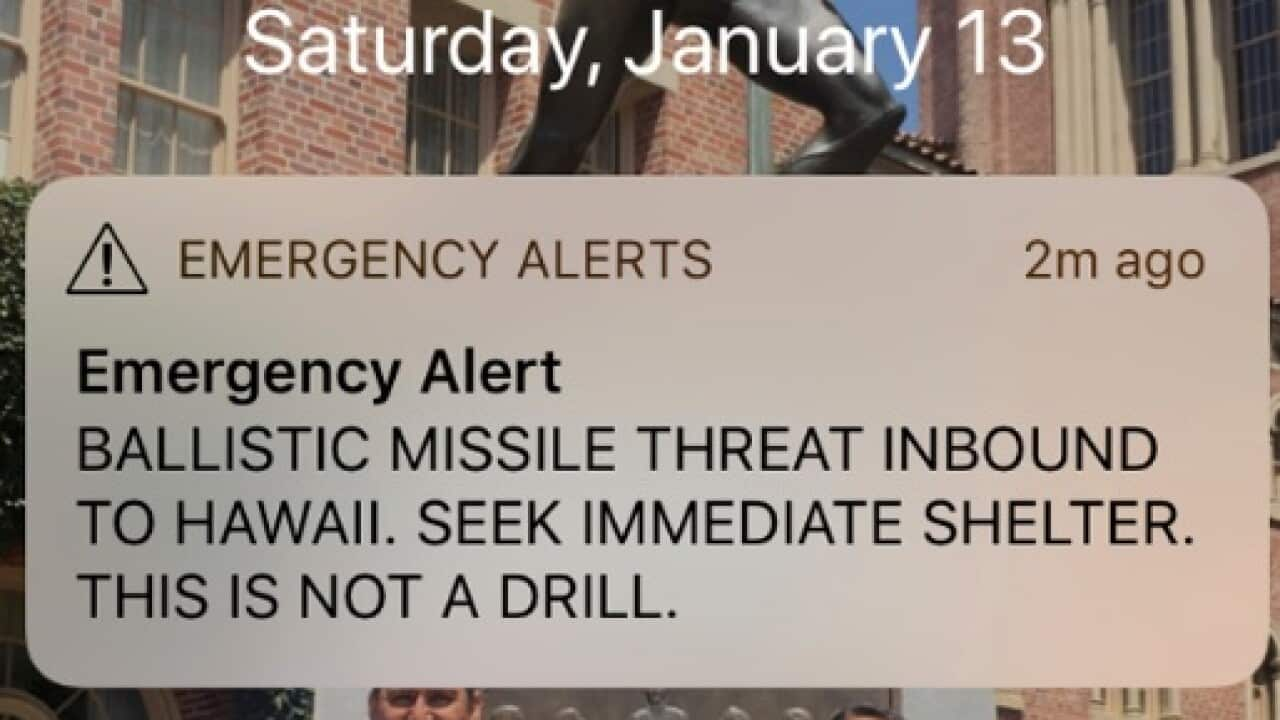
The emergency alert urging Hawaiians to "seek immediate shelter" came after months of soaring tensions between Washington and Pyongyang, with North Korea saying it has successfully tested ballistic missiles that could deliver atomic warheads to the United States, including the chain of volcanic islands.
"There is NO missile threat to Hawaii," the Hawaii Emergency Management Agency quickly tweeted, as social media ignited with screenshots of the cell phone emergency warning.
US military spokesman David Benham said US Pacific Command "has detected no ballistic missile threat to Hawaii. Earlier message was sent in error."
The warning -- which came across the Emergency Alert System that authorities nationwide use to delivery vital emergency information -- read: "BALLISTIC MISSILE THREAT INBOUND TO HAWAII. SEEK IMMEDIATE SHELTER. THIS IS NOT A DRILL."
A corrected message indicating that "there is no missile threat or danger to the state of Hawaii" was not dispatched to phones until nearly 40 minutes later.
SBS News reporter Greg Dyett, was on the Hawaiian island of Maui at the time of the warning, said there was mass panic.
"I also grabbed my mobile and noticed I'd received the same alert and we eventually found a TV station that had an audio alert running of what turned out to be a false alarm," he said.
"After a minute or so on Twitter, I was relieved to see a post from my colleague Brett Mason who had re-tweeted a local politician who confirmed that the alert was a false alarm."

This smartphone screen capture shows a false incoming ballistic missile emergency alert sent from the Hawaii Emergency Management (AAP)
AAP
Governor David Ige was to meet with Defense Department senior officials and the state's EMA to pinpoint why the erroneous message, which was also broadcast on some local television stations, was sent.
"While I am thankful this morning's alert was a false alarm, the public must have confidence in our emergency alert system," the governor said in a statement.
"I am working to get to the bottom of this so we can prevent an error of this type in the future."