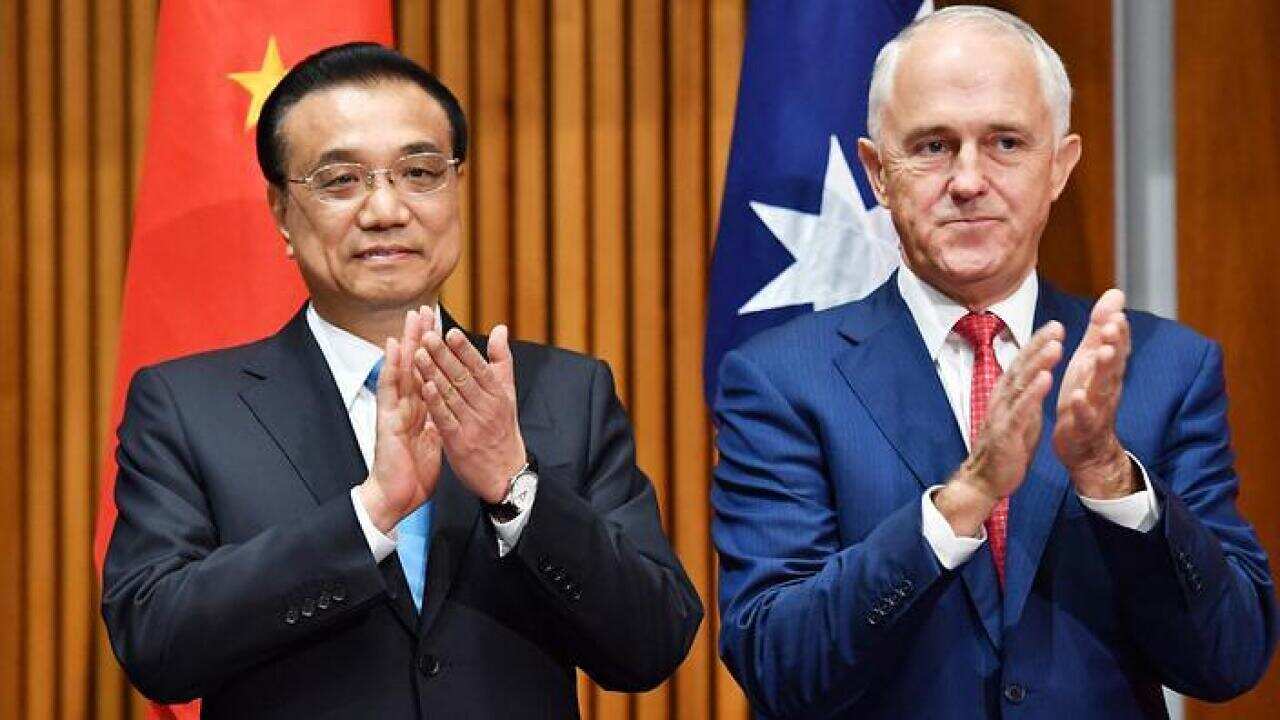
Mr Turnbull has pulled legislation to enable ratifying a China extradition treaty, ahead of Labor's move to block the bill in the Senate with crossbench support.
The China extradition treaty has been on hold since 2007, when it was signed under former prime minister John Howard.
If ratified, the treaty would allow China to make official requests to Australia for people wanted on crimes in China to be extradited. An Australian court would decide on each individual extradition request.
Earlier in March, the government introduced legislation, which needs to pass both houses before the treaty can come into force.
But Labor's shadow cabinet on Monday night opposed the treaty's ratification. Shadow Treasurer Chris Bowen said the final decision would be put to the Labor caucus room on Tuesday.
"I can assure you we've looked very, very closely ... at all the issues involved and come to a very well-considered view, after long deliberation, on what is a serious matter," he told ABC radio on Tuesday.
On Tuesday morning, however, Mr Turnbull called Opposition Leader Bill Shorten and told him the legislation would be pulled before a vote.
The move comes just a day after Chinese Premier Li Keqiang concluded a four-day visit to Australia.
The extradition treaty has drawn opposition from the legal community, including the Law Council of Australia over its lack of safeguards and the independence of the Chinese legal system.
Labor, along with support from the Greens and some crossbench senators, were expected to have the numbers to block the bill.
There was also opposition within the government including three Liberal Senators Eric Abetz, David Fawcett and Dean Smith.
Former prime Minister Tony Abbott on Tuesday said he would be cautious about ratifying this treaty now.
"In my judgment, China's legal system has to evolve further before the Australian government and people could be confident that those before it would receive justice according to law," he told The Australian on Tuesday.
Malcolm Turnbull on Monday described the treaty as an important part of Australia's co-operation with China on law enforcement.
Former Liberal senator-turned-independent Cory Bernardi, now serving under the Australian Conservatives banner, had introdcued a motion to disallow the treaty's ratification.
"That doesn't strike me as an open and transparent legal system," he told ABC radio.