
Federal Labor says it will increase Australia's refugee intake and give the United Nations more money to support asylum seekers if it wins the next election.
Australia would accept 4,000 more refugees a year under a Labor government, but the opposition's commitment to boat turn-backs and offshore detention will remain.
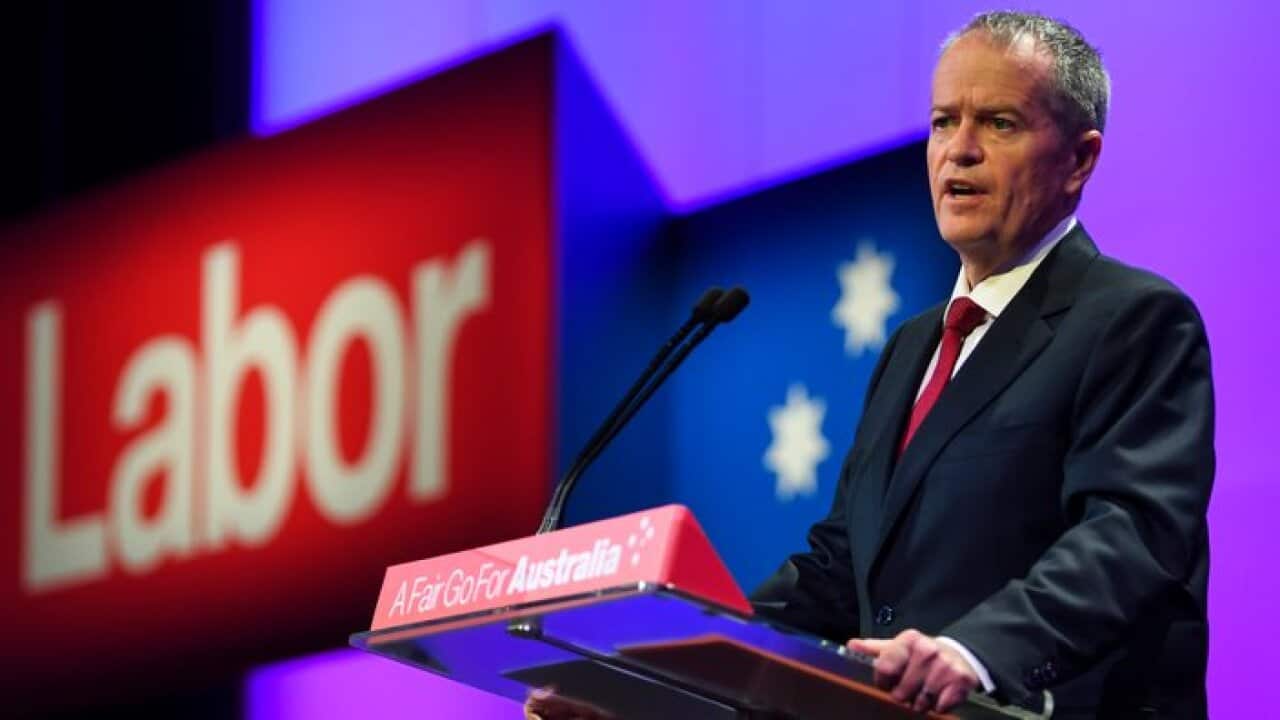
So said Opposition Leader Bill Shorten to the party's annual state conference in Adelaide.
[["I believe that Australia can meet its international humanitarian and legal responsibilities without compromising our national security or commitment to strong border protection. I wonder sometimes, even deep down, if some of our opponents even know this to be true; that it not one or the other, strong borders or indefinite detention."]]
Labor also pledges to give 500-million dollars to support the United Nations' global efforts on asylum seekers, and it wants to expand a community-based refugee program from 1,000 to 5,000 places.
The announcement is part of a compromise deal between the party's Left and Right factions to avoid a damaging public debate on asylum seeker policy.
Bill Shorten says the party will also look to boost the number of Australian officials in overseas countries to stop people smuggling at the source.
In addition Labor says it will finally accept New Zealand's offer to settle people currently in offshore detention.
[["If elected, we will look to take up New Zealand's offer to resettle refugees from Manus and Nauru by immediately negotiating an agreement on similar terms with that that has already been negotiated with the United States."]]
The comments come as the federal government released its mid-Year Economic and Fiscal Outlook, announcing changes to visa processing among other measures.
More than $70 million would be spent on its ‘next-generation’ visa processing system, which will involve choosing a company to run a new digital platform to process applications from those seeking to study, work and live in Australia.
In return, the company would be allowed to collect an operating fee from each application.
Labor and the unions have attacked the planned privatisation, saying it puts thousands of jobs at the Home Affairs department at risk, and threatens security assessments.
But Treasurer Josh Frydenberg says his government's Mid-Year Economic and Fiscal Outlook confirms his government is making the right decisions.
[["Today's strong budget update is no accident. It's the product of hard-earned gains over more than five years and these can be quickly and easily squandered. Should Australia allow the Labor Party to revert to their high-taxing, high-spending agenda, which as they have shown before is a recipe for less jobs and slower growth." ]]
The Morrison government says it will also spend nearly $20 million over the next four years on measures to encourage more skilled migrants to settle in the regions, through a Regional Migration Hub, which will undertake outreach activities to help regional employers access skilled migrant workers.
It will also expand the use of special migration programs targeted at individual areas, through Designated Area Migration Agreements, and will also offer enhanced visa processing for regional areas.
The federal budget says a surplus of 4.1 billion dollars in mid-2020 - that's almost double the 2.2 billion dollars projected in the May budget - will help fund its projects.
But Chris Richardson, an analyst from Deloitte Access Economics, says the government can't claim all the credit for the result.
He's told Sky News trade with China has also been important.
[[ "They are reining in spending, and credit to the government for doing that: these are difficult political times to be achieving slow growth in spending; but the big swing in this budget is not the good work of the government. Sure it's been doing things, it is actually what's happening in China. That's delivering a boost to the budget and that's been the key to the turnaround here." ]]