
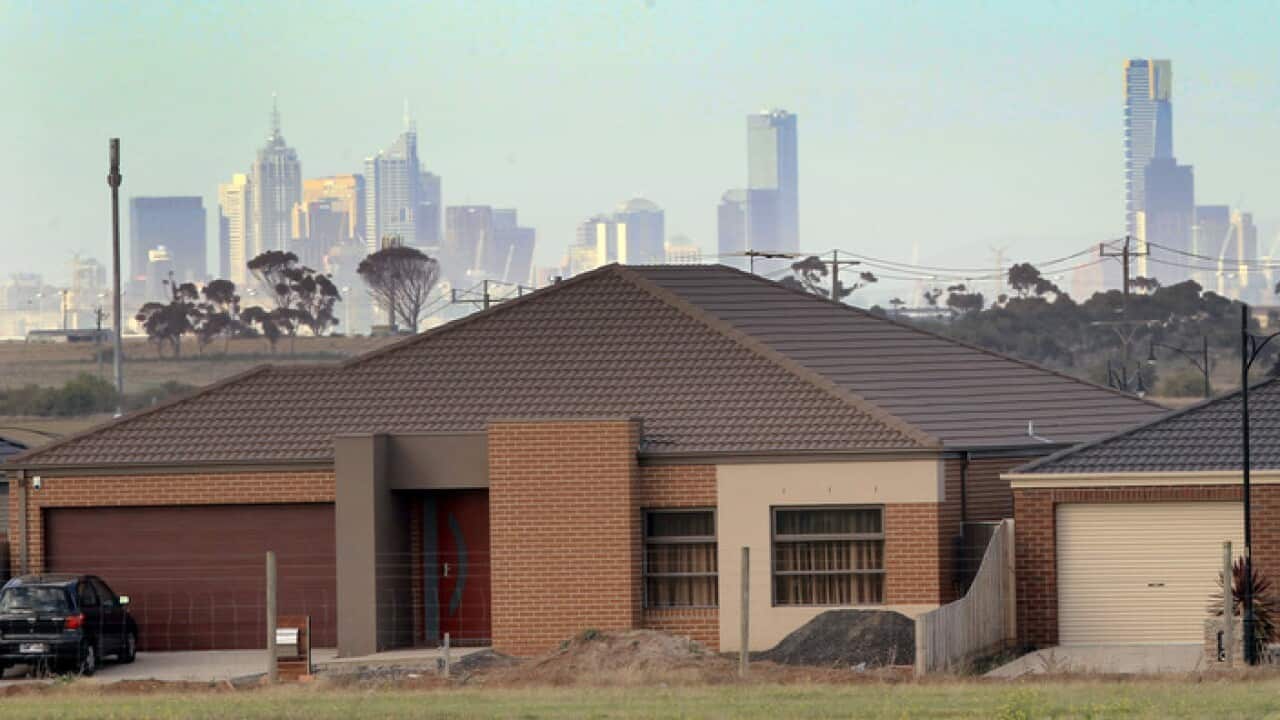

A Melbourne planning analyst has expressed doubts the Federal Government's newly announced plan to force some migrants to live in regional areas would relieve congestion in Sydney and Melbourne.
The Federal Government has announced its intention to force some migrants to live in regional areas for at least a few years to ease population pressure in Australia's biggest cities.
Cities and Population Minister Alan Tudge says migrants are responsible for more than half the country's population growth so encouraging some to live outside Sydney and Melbourne would ease congestion.
"Net overseas migration accounts for 60 per cent of the overall population growth and around 75 per cent of the growth of the two big cities, so, hence, settling even a slightly larger number of new migrants to the smaller states and to the regions can take significant pressure off our big cities."
But a Melbourne planning analyst says population pressures are so significant in Australia that encouraging migrants to live in regional areas would make little impact.
Emeritus professor of environment and planning Michael Buxton, at RMIT University, says the problem is governments have failed to plan and build the infrastructure to cope with rapid population growth.
Alan Tudge concedes Sydney is in what he calls a "catch-up stage" when it comes to infrastructure.
Professor Buxton says the infrastructure failings have occurred because governments have relied too much on the private sector.
Professor Buxton says Melbourne is adding a million more residents every eight years, with some forecasts predicting the population will reach 10 million by 2050.
He says even if the federal government relieved that population pressure by convincing a million migrants to settle in regional areas, Melbourne and Sydney would still face challenges.
Professor Buxton says some of the most congested cities in the world, like Los Angeles, are now taking infrastructure challenges seriously, with significant investment in public transport.
"Los Angeles, San Francisco, all the West Coast cities have got massive new public-transport infrastructure programs, involving the complete rebuilding, in many cases, of the city's public transport. Over the rest of the world, or much of the world, governments actually play this role, including the big mega Asian cities. So governments really need to adopt the responsibility of planning and anticipating the infrastructure needs and then going about building it, and stop being reactive and, as Mr Tudge said, trying to play catch-up."