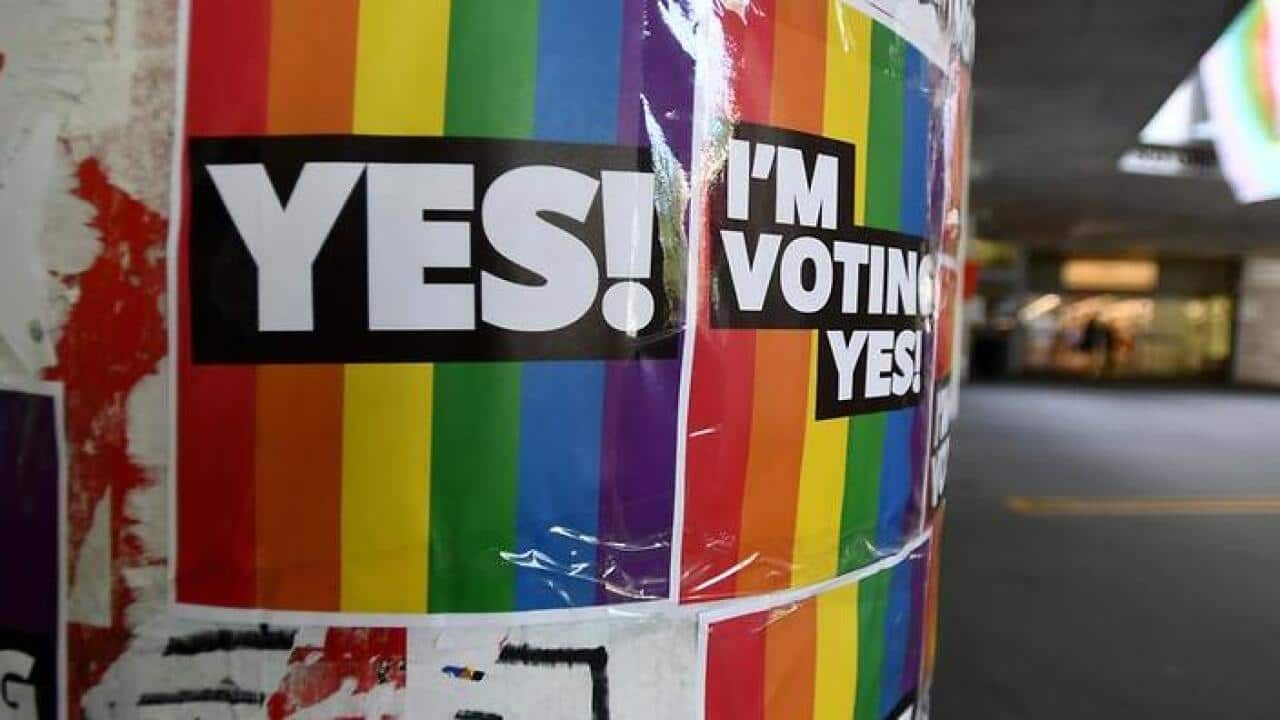

The SMH argues that new, more compelling arguments are unlikely to be found that would alter the conclusion: the "yes" case deserves overwhelmingly to win.
The SMH says the arguments on both sides are by now familiar: those supporting "yes" argue that same-sex couples should not be viewed any differently from heterosexual couples, and that though some points of discrimination against those couples have already been removed, others have not; marriage is an institution fundamental to society and should evolve as society evolves; by recognising same-sex marriage, society can now embrace homosexual couples fully and free itself from the last vestiges of a discrimination that is not only unjust, but also harms its victims and its perpetrators.
According to the paper, opponents, on the other hand, argue that marriage does not evolve: it is by definition a compact between a man and a woman that cannot be remodelled to fit temporary fashions in social attitudes; some opponents have pointed to a range of imagined consequences, from the curious to the lurid, which may flow from recognition of same-sex marriage – from changes to sex education and threats to religious freedom, to marriage with animals. The paper believes these are all irrelevant to the question at issue.
The SMH argues that it seems pretty clear that there would be no more compelling arguments which could alter the obvious conclusion: the "yes" case deserves to win.