
An early-childhood program in Melbourne is bringing the two generations together, with encouraging results.
Once a week, the preschool class at Melbourne's Davis Street Kindergarten relocates to an aged-care home.
A large residents' lounge at Uniting AgeWell Carnsworth is transformed into a classroom.
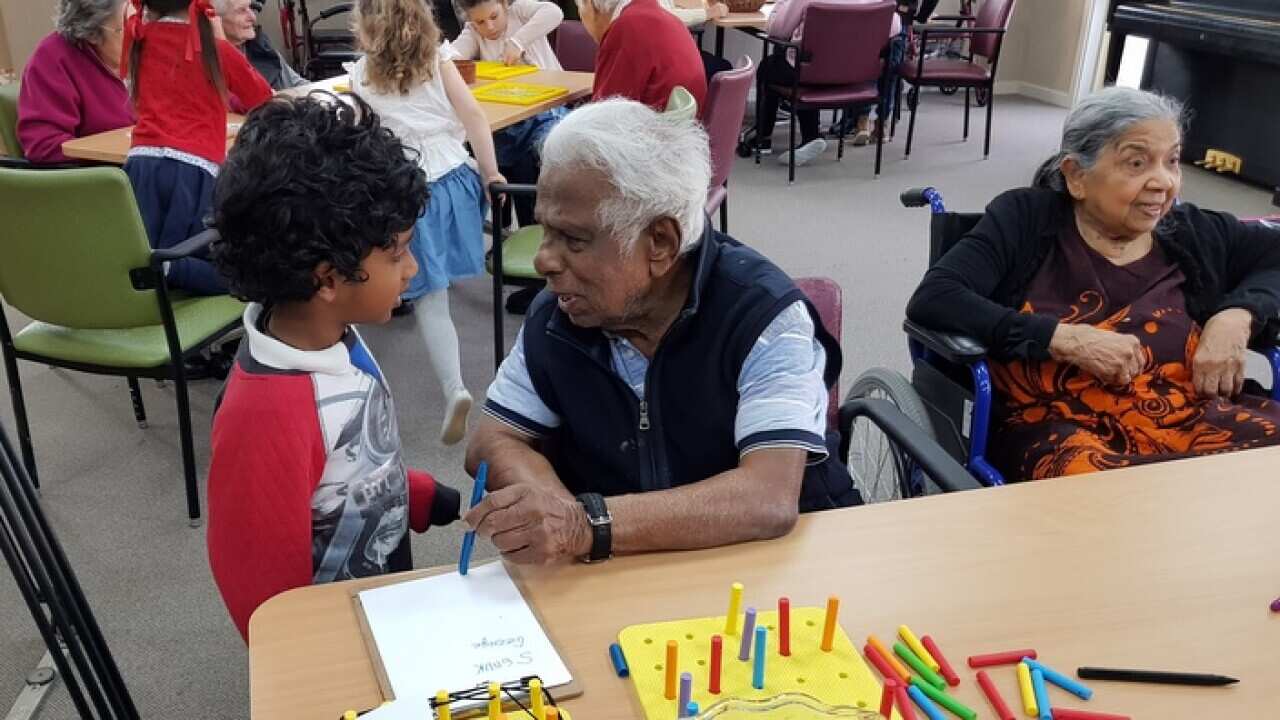
Activity stations are set up around the room, where the four- and five-year-olds and about a dozen elderly residents get busy playing and socialising.
Young and old sit side-by-side, huddled over puzzles.
They help each other with crafts, or play pretend tea parties.
Residents, some in wheelchairs or with walking frames, say they find great enjoyment in the visits.
Teacher Ruth Wallbridge says, for the children, there are big benefits.
“We're certainly seeing huge ones, in terms of them being able to accept difference much more easily. So we're seeing that translate in other places, recognising that they can be teachers as well as learners. So they actually often support the residents in doing things that they find tricky now. And that, of course, reverses when some of the residents help them do things that they can't do.”
For residents, the program can combat loneliness and depression. It can also help those with dementia.
The lifestyle coordinator at Uniting AgeWell Carnsworth, Vindhya Mendis, says she sees firsthand the positive impact on residents.
“Their self-esteem goes up with the children. And they get empowered. And also, they feel valued, because the little ones are very keen to listen to their stories."
The simple inter-generational interactions may not seem like much, but, in a country where many grandparents and grandchildren are separated by long distances, they have become a way to build links across the years.