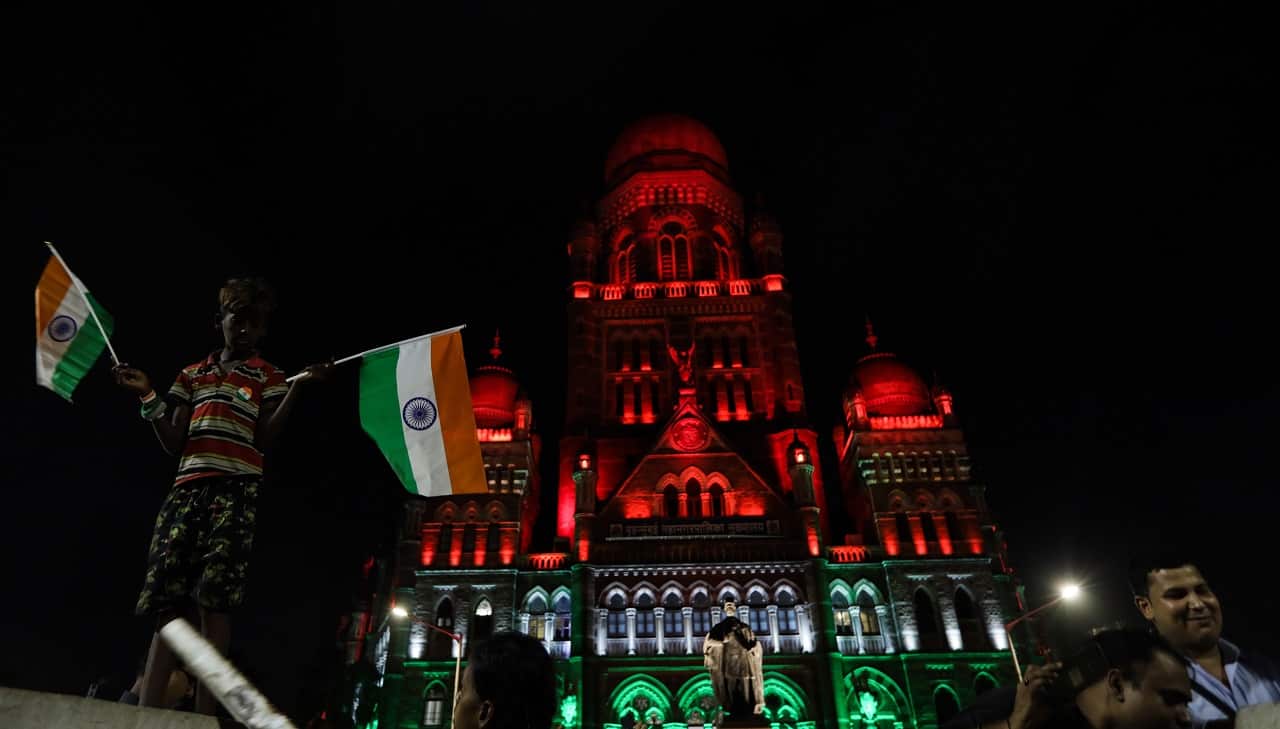
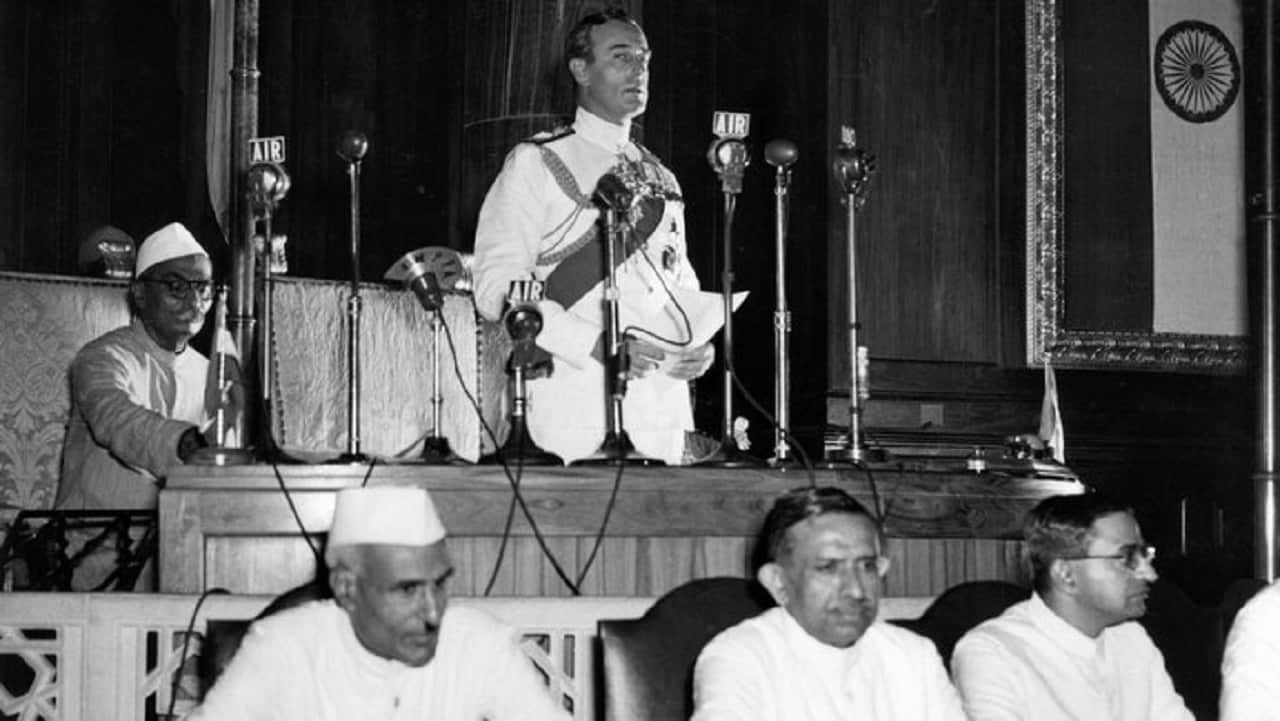
2023 marks the 77th anniversary of Indian Independence Day - the historic moment the nation became independent from Britain.
Australia was perhaps the first country to host an outdoor celebration of India’s independence after the historic announcement on the stroke of midnight of August 14, 1947.
At midday August 15, around 300 guests including the then Australian Minister of External Affairs Dr Herbert V Evatt and other cabinet ministers gathered at the Canberra residence of the new Indian High Commissioner Sir Raghunath Paranjpye.
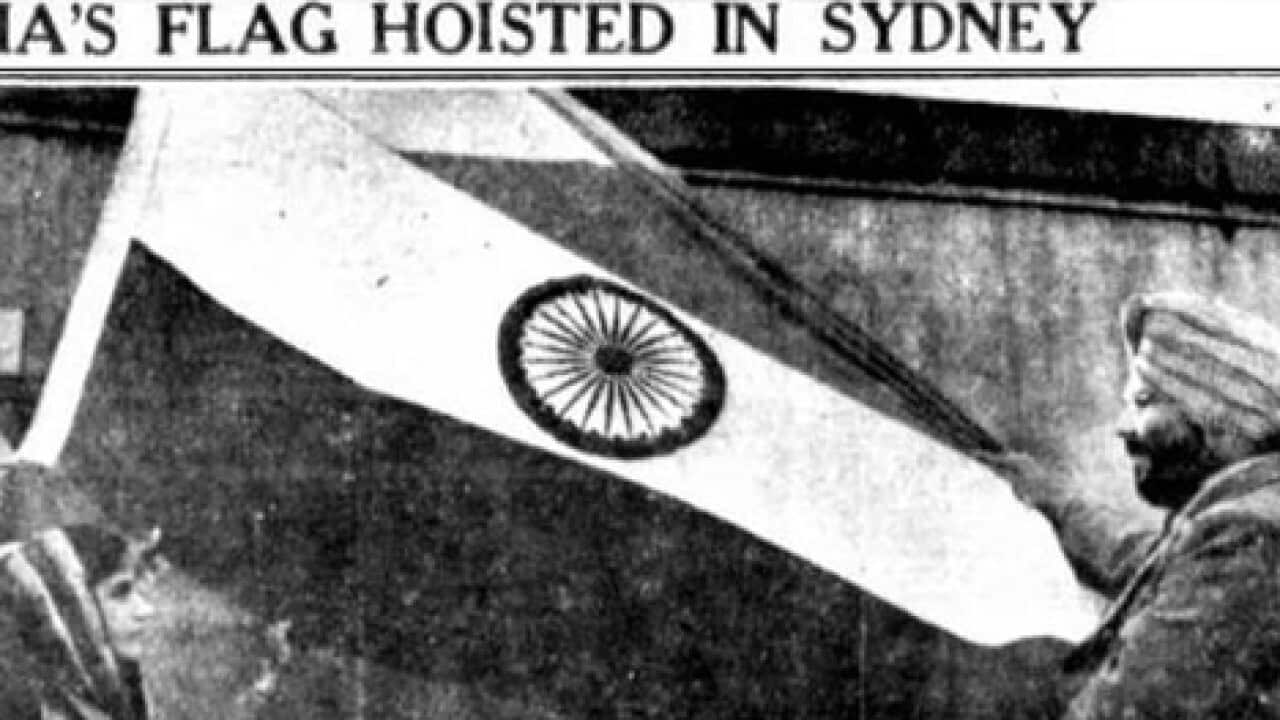
Sir Paranjpye hoisted the tri-colour flag with the words “Jai Hind” (victory to India) and explained the meaning of the saffron, white and green colours in the flag.
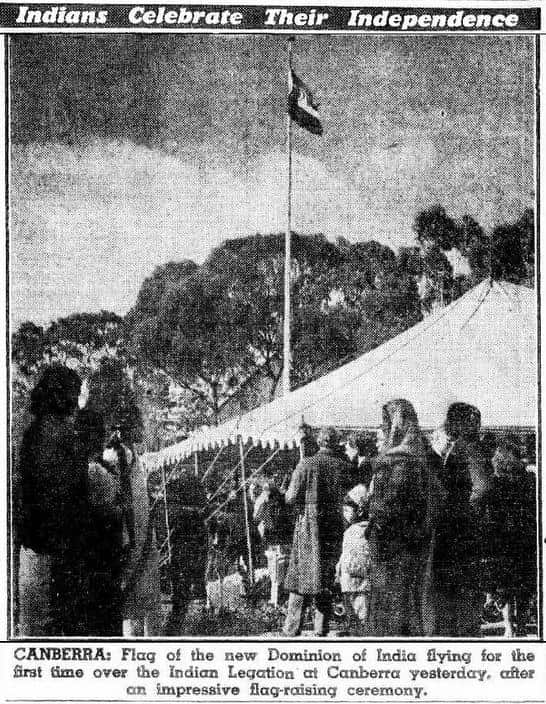
A report by the Canberra Times the previous day had explained that the flag had been flown in from India for this ceremony.
Sir Paranjpye had been the representative of united India since 1944 and became the High Commissioner of the new dominion of India when it gained its independence. In his long speech he said he hoped for reunification of India and Pakistan, as reported by the Townsville Daily Bulletin.
“… many Indians cherish the hope that, after this partition has been seen in actual working for a short time, better counsels will prevail and that the two separate Dominions will once again come together and form a United India.”
Celebrations nationwide
The official representatives of India had called for celebrations around the country and the tri-colour was unfurled in many locations.
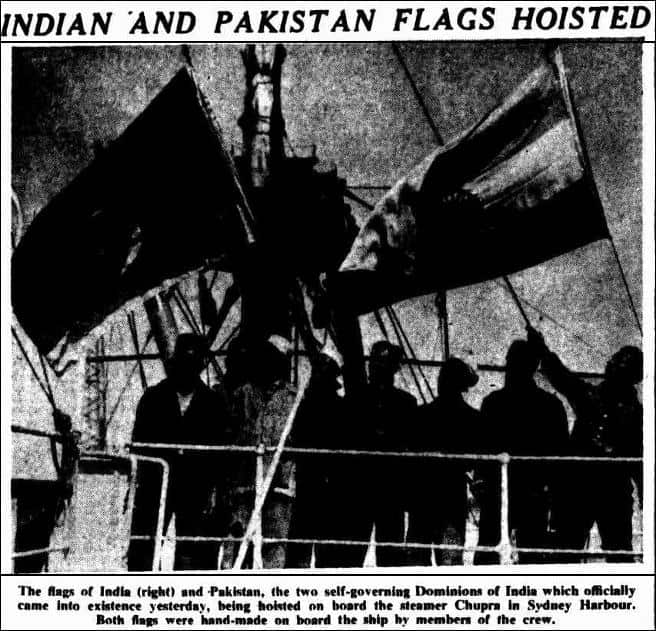
The Sydney Morning Herald had published a photograph of the hoisting of Indian and Pakistan flags on-board the steamer Chupra which happened to be at Sydney on that day. The report said that both flags were “hand-made on board by the members of the ship’s crew”.
Another report in the Canberra Times on August 16 cited that an Indian flag “was flown for the first time today on the roof of the Prudential Building, Martin Place” in Sydney. However ‘the flag broke loose later in a howling westerly wind’, continued the report.
Moslem Pakistan and Hindu India
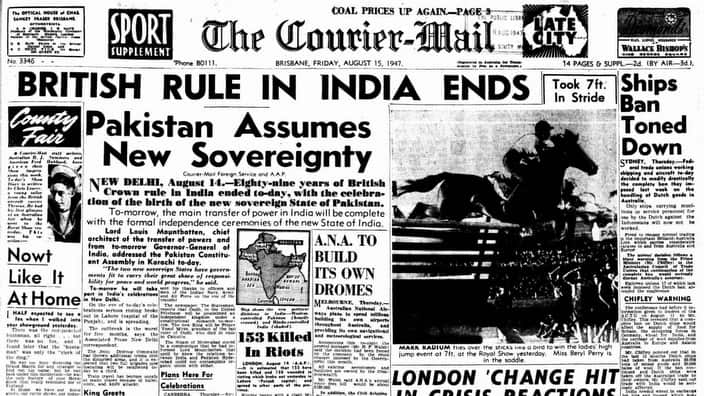
Most Australian newspapers had carried the news of India’s and Pakistan’s independence as front page lead news.
The Age – published from Melbourne – wrote on August 15: New Era in India – Pakistan and Hindustan. The next morning, they carried the headline “British rule in India ends”.
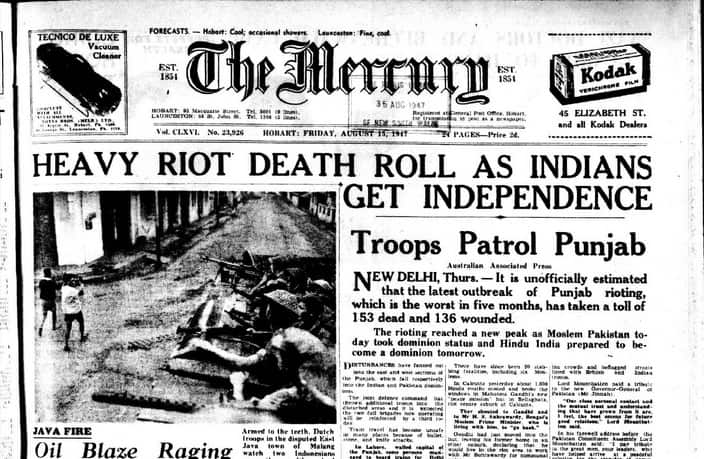
The Mercury newspaper from Hobart had clearly distinguished both newly born countries on religious lines: “the rioting reached a new peak as Moslem Pakistan today took dominion status and Hindu India prepared to become a dominion tomorrow.”
On August 15 the main headline of the Daily Telegraph published from Sydney was the formation of Pakistan.
“Viceroy proclaims Pakistan Free”, says the front page, giving focus on the riots too.
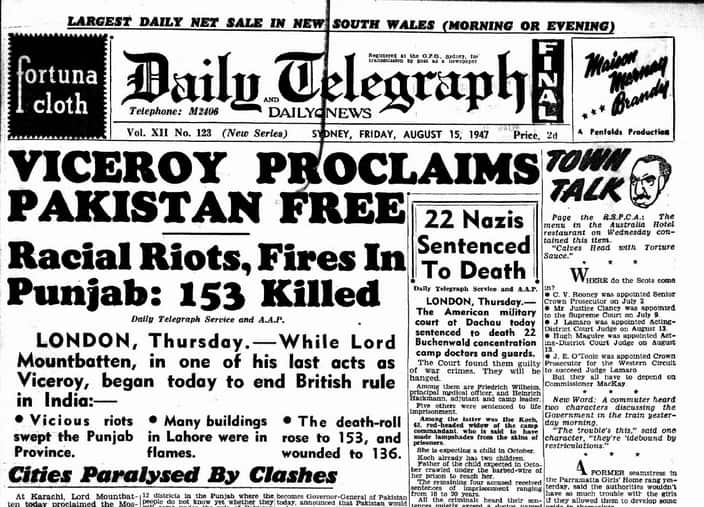
“While Lord Mountbatten, in one of his last acts as Viceroy, began today to end British rule in India:- vicious riots swept the Punjab Province; Many buildings in Lahore were in flames; The death toll rises to 153, and wounded to 136.”
All Australian newspapers gave detailed reports on the riots that followed the creation of India and Pakistan.