Ngaire Pakai
Yaama, SBS acknowledges the traditional custodians of country throughout Australia and pays respects to Elders past and present and ongoing in stewardship in knowledges since time immemorial. Welcome to Speak My Language: Disability. Listen as we share stories of First Nations people who are
engaging in their passions while living with a disability. Throughout this series you'll hear inspiring stories from leaders and advocates within the community who have successfully pursued their dreams in their chosen fields. I'm Ngaire Pakai and in this episode I chat with Awabakal woman, Tania
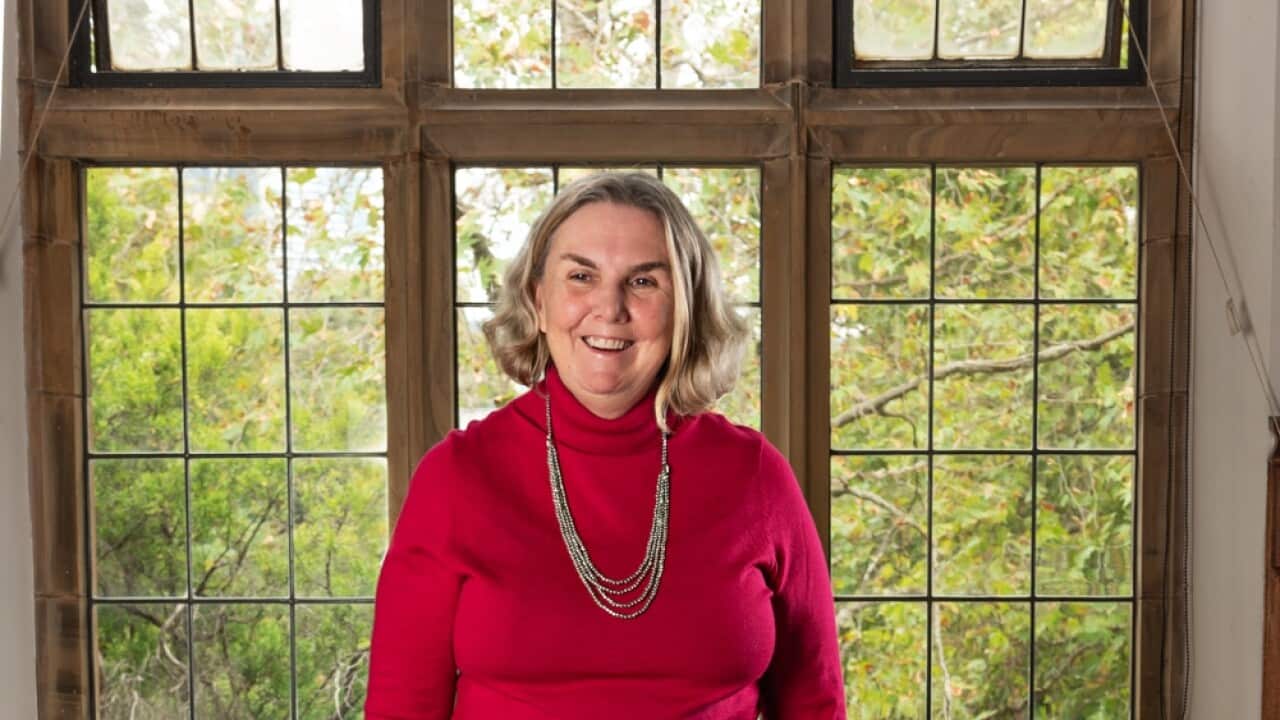
Lewis. She's a wife, mother and disability advocate. Tania lives an active life centred around the outdoors, enjoying the beach, camping and fishing while in her wheelchair. Aside from this, Tania keeps busy as an advocate for the Summer Foundation and helps run the disability peer group Koori
Connections to bring mob with disabilities together.
Ngaire Pakai
Thanks for jumping on and having yarn with us today, Tania
Tania Lewis
No, it's great. Glad to be. Thanks for having me.
Ngaire Pakai
Can you just introduce yourself a little bit? Who are you? Who's your mob? Where you from?
Tania Lewis
All right, so I'm Tania Lewis. My mob's Awabakal, so Lake Macquarie person, woman. So I'm on Country here on Awabakal Country. So yeah, I've been married 37 years to a Ngarrindjeri fellow I met out bush.
Ngaire Pakai
Can you share about your advocacy with Summer Foundation? What do they do? What's that?
Tania Lewis
Okay, so I was in a nursing home before NDIS and the Summer Foundation, they are an organisation out of Melbourne and they created SDA homes for people to move into, people with disabilities, high care disabilities like myself. People need lifters and it's hard to find accommodation that suits. So
they built purpose built houses. And they peppered them in a building here at Belmont. They bought 10 apartments and peppered them out through, through the whole building and then they had an on site office there as well. So they were involved in getting young people out of aged care. So that's,
they're the ones that helped me get out of aged care. So that's how I got on board with them and yeah, did a bit of work with them and advocate and, love it, I love it. They're a great organisation. I've been involved with them for a long time.
Ngaire Pakai
So before with your support, they had just put you in with aged care support all in one go?
Tania Lewis
Yeah, when I, I had a stroke in 2011 so from that I only had the use of my left arm. Pretty lucky I got my voice back. So that's cool, and my vision. But yeah, so there was nothing available for me. My husband couldn't raise our daughter and me, I was having a lot of medical issues with seizures and
stuff back then, and the only assistance we could get was aged care. So, yeah, I've spent three years in different aged cares before I found out about the NDIS by fluke. And then I ended up here with their help which is, I'm very grateful for.
Ngaire Pakai
You describe yourself as an outdoorsy person. How do you get access to do the things that you like to do, like going to the beach and going fishing.
Tania Lewis
Well, I'm pretty lucky. I got a four wheel drive wheelchair. So it goes on the beach, goes anywhere actually. Yeah, so I'm blessed to have that. And before I had my stroke we'd been travelling Australia for three years, so homeschooling our daughter. So it was all free camping and you know, remote
camp and we tried to stick, stick to the inner suburbs and enjoy the bush more rather than the cities. And it was beautiful. And so that was our lifestyle - we've always been into fishing, hunting, you know, camping and everything. So now in the last five years, hubby bought me a old Toyota coaster
bus and he's decked it out and rebuilt it and it now has a hospital bed in it, a lifter, it's got a ramp. So and he's got a bed in there and we got three seats, one for the dog. So we can go anywhere now with the bus. So we do trips, we're in a coaster group so we do trips and meetups with them and
spend time away together. It's just amazing because where I live now, I'm in a SDA property and my bedroom's here, with all the things I need, but his bedroom's up there. So we're not together, but when we go away camping, we're together. We're fishing down on the river together, we're walking
together, we're in the bus together. So that bus brings us a lot of joy being out, and I'm blessed to have this chair. So yeah.
Tania Lewis
Okay, so that stands for Specialised Disability Accommodation. So that is for people with high care needs. So people build houses, companies, this one was built by a company, and they created it so it was accessible, like wider doors, everything's flat, everything's automated, electric windows,
electric blinds, everything like that. So I have access just off my phone. So an SDA property is a property where you can live in for the eternity of your life. NDIS gives you a, or the NDIA, sorry, gives you an SDA payment every year in your plan, which allows you to give them that money so they
can upkeep the property and, you know, and live, and live a good life. So with the SDA, it also keeps our. our rent, I should say, because we still pay rent at a low because of the SDA. So we sit just above, you know, what you'd pay if you were in, public housing, which is really cool. So I'm
blessed. I'm really blessed. You know, like life, when I had my stroke, I didn't, you know, I, I, in them nursing homes, I've seen so much horrific stuff and I just wanted to get out of there and change and do good. And I just figured, you know, having a stroke and going through what I've gone
through, it can't be for nothing. And I come out of there with a passion, and that was to fight for others. And, you know, and that's why, I advocate. I'm always advocating. I spend my Sundays visiting in group homes with people that I've met. I'm also on the board of the Disability Council of New
South Wales as a lead panel advisor. So we're on a panel there. So we give lived experience. Life throws you curveballs, but you've just got to pick yourself up and see the good in what you got left, you know what I mean? Like, I've got a lot to offer still, you know, I've, I'm, I'm here, I'm here
for a reason. So this group, the Koori Connections that you mentioned before, like, me and another Indigenous woman from work, we created that group because, you know, there was nowhere for people with disabilities, mob especially, to go and hang out and just be with each other and understand and
chill and connect. Connection's a great thing, you know, that's what it's all about, is connecting and making friendships and having somewhere to hang that doesn't cost you money because, well, you know, we have many peer groups here. We call them peer groups like Koori Connections, and it doesn't
cost anything. We are a non- for profit, so we don't like to charge from NDIS plans and stuff like that. So that's bit I love about it, you know, where I work, I'm blessed as well. Recently, in the last month, and that same indigenous woman that I spoke of, that's in Koori Connections, we've formed
a syndicate. It's called the Chair Syndicate and Indigenous base of it. And it's for wheelchair users to come together and have power. You know, don't feel the pity and the shame of being in a chair, you know, let people know that you're there. You know, we're here still. We're not useless. We're
not to be sat in a corner. And, so yeah, we formed this peer group to come together and build connections and we've launched worldwide now, so we're gonna do some zooms every fortnight so we can connect with people all around in the world. Because I did a lot of research into it and, you know, there
was nothing for wheelchair users apart from sport or, you know, if you want to hang at the pub and play bingo or do stuff like that. And I'm not a drinker and I don't like bingo, so. And I'm not a sporty person. So, you know, I figured, and I sat on it for so long and I've always wanted to do
something for people with disabilities since I, you know, acquired my disability. And I just, it just came to me and I thought, you know, I want somewhere where people in wheelchairs can just come and, and, and feel empowered by each other, have that passion and drive. We want to do fundraisers. You
know, we want to get involved in the toy run that's coming up here soon. The motorbikes bring the toys in. But we, we figured we could probably do the last K and bring our toys in in our chairs, raise money for those people that miss out on the NDIS, because the NDIA has got the NDIS now focused on
your main primary disability. So, you know, I've got friends that have albinism, so they're blind, but because of their albinism, it also affects their joints and everything, so they don't have that stamina to stand. So they need a wheelchair. They don't see the wheelchair because it's a vision
that's the main symptom. So people like that, that's, you know, that's why we've, you know, we've got so many members in the Chair Syndicate now. It's amazing. We've got two major sponsors now. We've got a company called Motoring Mobility, a company that modifies vehicles for wheelchair users.
They're based over at Morisset, so they've sponsored us. And another company here called SAYAS Ink, they're a tattoo shop here at Jewells. They've sponsored the syndicate as well. So we're pretty Blessed that way too.
Ngaire Pakai
It must be incredibly enriching to have so much support. Not just by, like, people in wheelchairs wanting to support you.
Tania Lewis
Yep, definitely, connected in with other, like, providers. Now they've linked in with me and got their participants, as they call them, to join up and they, they see it as a really good thing for them to have somewhere to hang and chill and someone that connects in on the same level, you know, like,
I love my chair. I run amok in my chair. My chair's my legs. If I can't go, my chair's going, I tell ya. I used to ride motorbikes once, so I think, like, having a chair club, like the Chair Syndicate it's kind of like a motorbike club. So bit of a motorbike club, hahaha.
Ngaire Pakai
You do so much. It's not that you're just involved in the advocacy, but you're also creating those spaces. How does it feel being a leader in that space in Newcastle?
Tania Lewis
People talk about finding things in life that fill your cup. And at CDAH, I'm a pathways coordinator, so people come in first, you know, I'll spend time hanging out with them and that and getting to know them better and listening to them and finding out what they need in life. So to be able to sit
on the journey where I see the beginning with people and then I see the end when they, you know, when they lose that shyness, they start coming forward and they start wanting to run groups or to help out and stuff like that. So it's the little things like that that fill my cup, that drive me, seeing
other people achieve. A lot of people with disabilities, are shut down. I spent five years closing down the institutions before transitioning residents into their group homes. And, yeah, it took a long time to break the barriers of their shutdownness from being institutionalised. And they're the
people, a lot of them, that I still spend my Sundays visiting with. I love it. I just can't, you know, I can't leave them. They're my mates now. We go to music concerts together and, yeah, it's just great. Life is just fantastic. And the more I see people achieve around me, the more my cup gets
Ngaire Pakai
There must be a certain amount of healing that comes with just being there socially together.
Tania Lewis
I've got so many beautiful friends. You know, before I acquired my disability, I never had one, one friend that was disabled. I never ever hung out with anyone disabled. I worked, I did the mum thing and I travelled with my hubby and daughter and until I came, became disabled, you know, a world
opened up that I'd never seen. And now I see, you know, people, people with disabilities like being treated shitty, you know, sorry for saying shitty, but they do some of the, I've seen it, you know, and my drive is to make sure that they get, they get their voice. They get, you know, I teach, I
also run another group called Speak Up Hunter. So that's a group for people with intellectual disabilities. So we teach them, we come together and teach them how to speak up, use their voice, know that it's okay to ask for things. Like, I had one young woman ring me. She said "I'm sick of having
Weet-Bix for breakfast, every time they give me Weet-Bix." I said, "Well, what do you want?" "I think I'd like porridge." I said, "Well, in the morning when they give you Weet-Bix", I said, "Just tell them you want porridge". "No, I'll get in trouble." I said, "No, you won't." This lady's 53. I
said, "No, you won't." She goes, "Okay." So she rang me the next day. She said "I got my porridge." I said, "And what they do, did ya get in trouble?" She goes, "No." I said "There you go." So she's amazing. Like, I've known her a couple of years now, and, wow, she's just coming along. I'm also on
the board of directors for an Aboriginal company here in Newcastle called Justiz. So, yeah, work with them as well. So I, I just try and, I'm in with the women's domestic violence court. I get involved with those guys. Just recently, they launched a Indigenous youth justice system out, out at, um,
Toronto. So they created a group. So I've became a member of that group. Keeping busy is my peace. That day is my day off, I get to spend with my family. And the rest of the week I'm just busy. And that's awesome because I've been on the other side where you're not busy and you're just left in bed,
like living in a nursing home. It's not a good lifestyle. And that's what I want to show people. I might be in a chair, I might be only able to use one arm, but, mate, I can do everything that I need and more, and so can you. And I have, I have beautiful staff. Sorry, darling. I have, like, my own,
my own support circle of five staff and, and they're fantastic. And, yeah, I'd be lost, that, I call them my right arm because, you know, they literally are. But, yeah, I'd be lost without them. So they're a big part of my life as well. So I couldn't do what I do without them because they got to
drive me, they've got to help me set up and stuff like that. So without my girls, I can't do what I do. So it's a big, big hundred percent love to them.
Ngaire Pakai
So I was going to ask you what you look forward to in the future, but I think that's too broad. What are you even doing, like, next week?
Tania Lewis
We have a Koori Connections lunch at The Nex club in Newcastle. So we all come together, have lunch and figure out what we're gonna do for Christmas and where we want to be. So, yeah, we're just going to have a yarn and a feed and what else? I'm in with the deaf and blind as well. The Hunter
Deaf and Blind, New South Wales Deaf Blind Community. So I work with them every second fortnight. I run an art group every second fortnight. I'm just, yeah, I love life. I visit with part of RSL every other fortnight at Morning Melodies because everyone from all the group homes goes there. So that's
where I connect with people, you know, I want to connect with those that people say are forgot. So I spend my time there every other Thursday, connecting with them and hanging out and mate, I love it. I love it.
Ngaire Pakai
For people who want to hear your story, find you or find more information about the things that you're doing. Where can they find it?
Tania Lewis
YouTube under the Sumner Foundation or just my name. There's a CDAH Facebook page, C.D.A.H., we put a lot of info on there and, things we're doing. And also I like, I have, I run the Chair Syndicate Facebook, TikTok, and Instagram account, so you can find me there too.
Ngaire Pakai
Thank you so much for coming on and sharing your story. It's incredibly interesting, the amount of stuff that you're doing and then also how you've gotten here.
Tania Lewis
I'm lucky I made it through the stroke, so, so that's lucky. So, I'm meant to be here to do something and I think I found it. I found what I need to do and I have a passion.
Ngaire Pakai
Speak My Language Disability is an initiative funded by the Commonwealth Department of Social Services. It is led by the Ethnic Communities Council of New South Wales and proudly delivered in partnership with SBS.
END OF TRANSCRIPT