
Aboriginal and Torres Strait Islander eye health has come a long way in a short time and is on track to equal that of the non-Indigenous population by 2020.
Rates of blindness and vision loss among Indigenous Australians continue to improve significantly, seven years after University of Melbourne ophthalmologist Hugh Taylor started his plan to tackle Indigenous eye health.
In 2008, Aboriginal and Torres Strait Islanders were six times more likely to be affected by blindness than the rest of the population. At the same time, the rate of trachoma in Outback Australia was 21% higher. In the most recent data this rate hovers between 3.5% and 4% only.
“We know that some areas of closing the gap targets are not being met but in terms of closing the gap for vision we’ve actually reduced the excessive amount of blindness by half,” Professor Taylor says.
Despite the very good results, the academic cautions that there is still a lot of work to do. There are many areas to fix and making tremendous progress in one or several areas doesn’t equate to the whole system being fixed.
Professor Taylor is confident if progress continues to follow the same trend, the gap in vision and blindness could be closed as early as 2020.
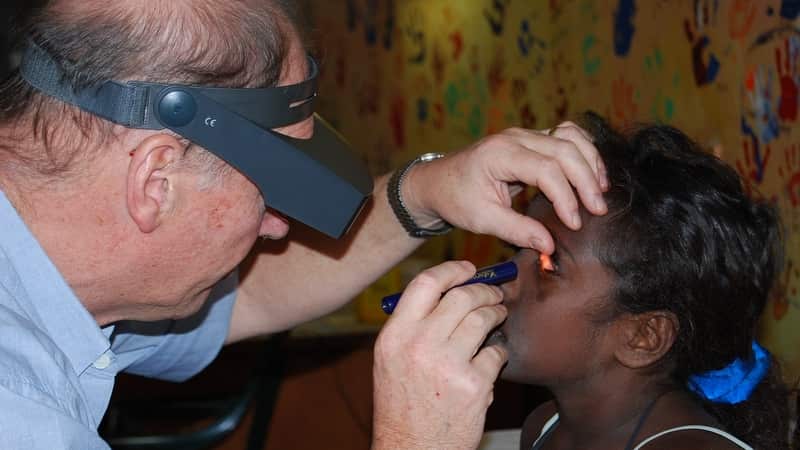
Professor Taylor says the key to this success comes from working closely with Aboriginal Community Controlled Health Services (ACCHS).
“It is critically important to coordinate that journey of case management and make sure that the mainstream services are culturally safe. What we are trying to do is link primary care, the ACCHS with the visiting specialist services in optometry and ophthalmology in an appropriate and an acceptable way,” Professor Hugh Taylor says.
Despite tremendous success in eye health, diabetic blindness is still affecting a larger number of Indigenous people. But Professor Hugh Taylor says some simple steps can help improve the situation.
"Everybody with diabetes is at the risk of going blind from diabetes. But we can stop 98% of this type of blindness by timely treatment. So, it is really important that people with diabetes get their eyes examined once a year.”
Professor Taylor also commends the progress in rolling out complex medical equipment in the community.
Tweaking some aspects of Medicare is also delivering immense benefits in eye health.
“We now have a Medicare item number for retinal photography and the commonwealth is rolling out 155 retinal cameras to each of the Aboriginal medical centres across the country. So, there is a real possibility now to get that additional screening done in the ACCHS.”
In the Medicare review proposals, for most Aboriginal and Torres Strait Islanders eye treatment will be covered by Medicare or in the public hospital system. But some people will still have to pay gap fees.
Trachoma is another cause of blindness that still causes great concern in remote communities.
Professor Hugh Taylor says the country is well equipped and, like other developed countries, Australia can eradicate trachoma.
"A number of countries have eliminated trachoma. There is tremendous pressure in Australia to also end trachoma by 2020. We’ve got twenty-four and half months to go. Some really good progress has been made but there are still some hot communities where intensive work is needed."
The combination of antibiotics treatment, improved hygiene and the availability of clean water infrastructure is helping lower the rates of trachoma infections.