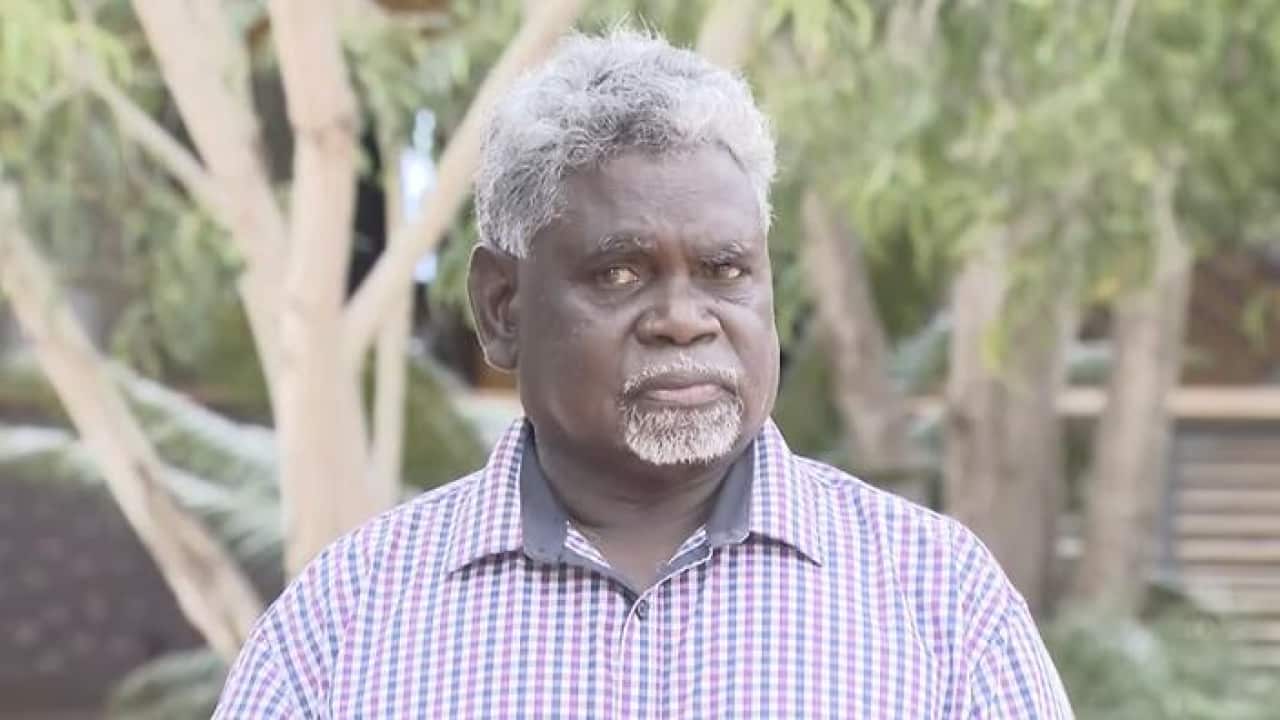

'We are survivors, no amount of money could ever repair the past' -Luritja songwriter Pascoe Braun
In 2017 came the announcement of an $11 million dollar South Australian redress scheme for Stolen Generation's survivors as the first one of its kind established by any Australian state government.
The terms of reference in the application for redress stipulates that to qualify a claimant had to have been removed by the government of SA or one of their agencies.
It is made of two components, one for individual’s compensation taking up 6 million of the total fund. Individual claimants receive 20 000 dollars compensation.
The remaining five million dollars will be awarded towards community reparations.
This amount will cover matters like setting up memorials, tallying oral histories, writing books and autobiographies as well as commissioning other forms of art relating to the stolen generations.
Journalist, musician and entertainer Pascoe Braun is one of the recipients of the redress scheme which he welcomes with mixed feelings.
For him the application process was painful and saw survivor's having their applications rejected on administrative grounds.
"I classify myself as a survivor of the stolen generation. I think it is not a club we are happy to be a member of but anything is better than victim, we are survivors."
Pascoe says his heart goes out to to the Elders who had their applications rejected and he told NITV Radio that he considers himself lucky because his application appeared to follow a seamless trajectory.
He says that his case was one of the easier ones because he is one of the youngest members of the stolen generations.
Historically and administratively it was easier to put together his application and have it processed.
Pascoe says, "I classify myself as a survivor of the stolen generation. I think it is not a club we are happy to be a member of but anything is better than victim, we are survivors."
"No amount of money could ever repair the past but it is a lot more than that. I can only talk on behalf of myself. I can never talk on anyone else's behalf in the Indigenous community but my story would be similar to a lot of other people's."
The administration of the scheme is also an area that he finds lacking.
He specifically singles out the lack of Aboriginal community controlled organizations managing the scheme.
The scheme is run professionally, it is mainly administered through agencies and organisation's that lack indigenous knowledge and culture.
"There is not that many community run organisation's that I certainly feel that I can go to. It actually feels like a glowing lack of places where I feel I can go to. And I don’t necessarily want to go to some of the other agencies."
"This is not something against Relationships Australia but, I don’t necessarily want to go to Relationships Australia and to other non-Indigenous community based support groups that I can go to. And I think from what I’m hearing that there are a lot of other people that feel like that too."
"You have to develop almost like new relationships. And that can be really confronting"
Pasoce talks about healing and relations with his biological parents an he says he returned to his community as soon as he could legally do so and reuniting with his traditional community was a relatively smooth experience.
He says that his personal experience is unique.
"When you do go back, it is not always rosy. It doesn’t just stop there, it actually starts there. That is a point that I always try to make, you have to develop almost like new relationships and that can be really confronting."
He was able to navigate the connection with his family and country easily because of his easy going nature and other favourable circumstances.
Other survivors went through a lot more difficulties when they returned to their traditional families and country and his heart goes out to them.
"When you do go back, it is not always rosy. It doesn’t just stop there, it actually starts there. That is a point that I always try to make, you have to develop almost like new relationships and that can be really confronting."
Pascoe Braun says that dealing with grief is the most difficult part of going back to community and country.
The loss of a parent or sibling in those circumstances is one of the hardest things to go through.
"My father was treated with utmost contempt. None of his rights as a parent was respected."
It’s only after he returned to his family that Pascoe Braun learned his biological father had passed away a year earlier.
He says he can’t imagine how his father would have felt when he was forcibly taken away.
Pascoe Braun believes both his biological parents would have been deeply devastated and feels particularly sorry for his young father who was a traditional Lore Man from Tjitjikala, 100kms South of Alice Springs this is something Pascoe says that he is very proud of.
"None of his rights as a parent had been respected. His name wasn’t even mentioned on the birth certificate."
His father would have found it extremely confronting and would have been deeply saddened to have his eldest son forcibly taken away from him.
Pascoe was also devastated when he became aware that his father had been treated with utmost contempt.
"None of his rights as a parent had been respected. His name wasn’t even mentioned on the birth certificate."
When Pascoe returned to his traditional family he learned of his parent's multiple but unsuccessful attempts to find him.
Pascoe says his Aboriginal mother was a beautiful woman and sadly paid for it through domestic and lateral violence.
His mother went to find him and was blocked by both the church and state.
She died very young and Pascoe was pleased they could reunite for several years.
Pascoe says his adoptive parents were told different stories about his Aboriginal family not wanting any part of him.
"Fred and Kath Pascoe were great people who I adored and looked up to very much, but they were an extremely dis-functional couple."
"They had their children who I later found out despised me for simply being Aboriginal, I couldn't get out of there quick enough."
Another confronting experience for Pascoe Braun was having to navigate is his name allocation.
On country, people always referred to him as John Henry Braun after his parents.
For the first 18 years of his life he’d been known and lived as Martin Pascoe.
Ultimately, he decided to keep both names as they are an integral part of who he is.