
4 min read
Feature
From Centennial Park to multicultural Australia: the beautiful game of Canarinhos
Key Points
- For 54 years, Canarinhos has gathered every Sunday at Centennial Park’s Brazilian Fields
- The club acts as a “landing pad” for migrants, helping newcomers find connection, support and belonging.
- Backed by figures like Les Murray, Johnny Warren, Craig Foster and Andy Harper, Canarinhos embodies football’s multicultural spirit in Australia.
This is the officially recognised Brazilian Fields — a wide expanse of open grass that since the early 1970s has become home to one of Australia’s longest-running Brazilian grassroots football club.
For 54 years a group of amateur players has gathered to play, barbecue and welcome newcomers to Australia. No membership drive. No sponsors. Just football and community.
Freire describes the Canarinhos club’s story as “a living history of the Brazilian community in Australia”.
He arrived in Sydney in May 1991, came alone, after a period in London, driven by the search of new opportunities.

“It was precisely for the opportunity of a better life,” he said.
After the 1994 World Cup, Gel became more involved with the club and the community they were building around it.
“Many who arrive here have worked hard and felt homesick. They found in football a way to remain who they were, to find connection and comfort,” Gel says.
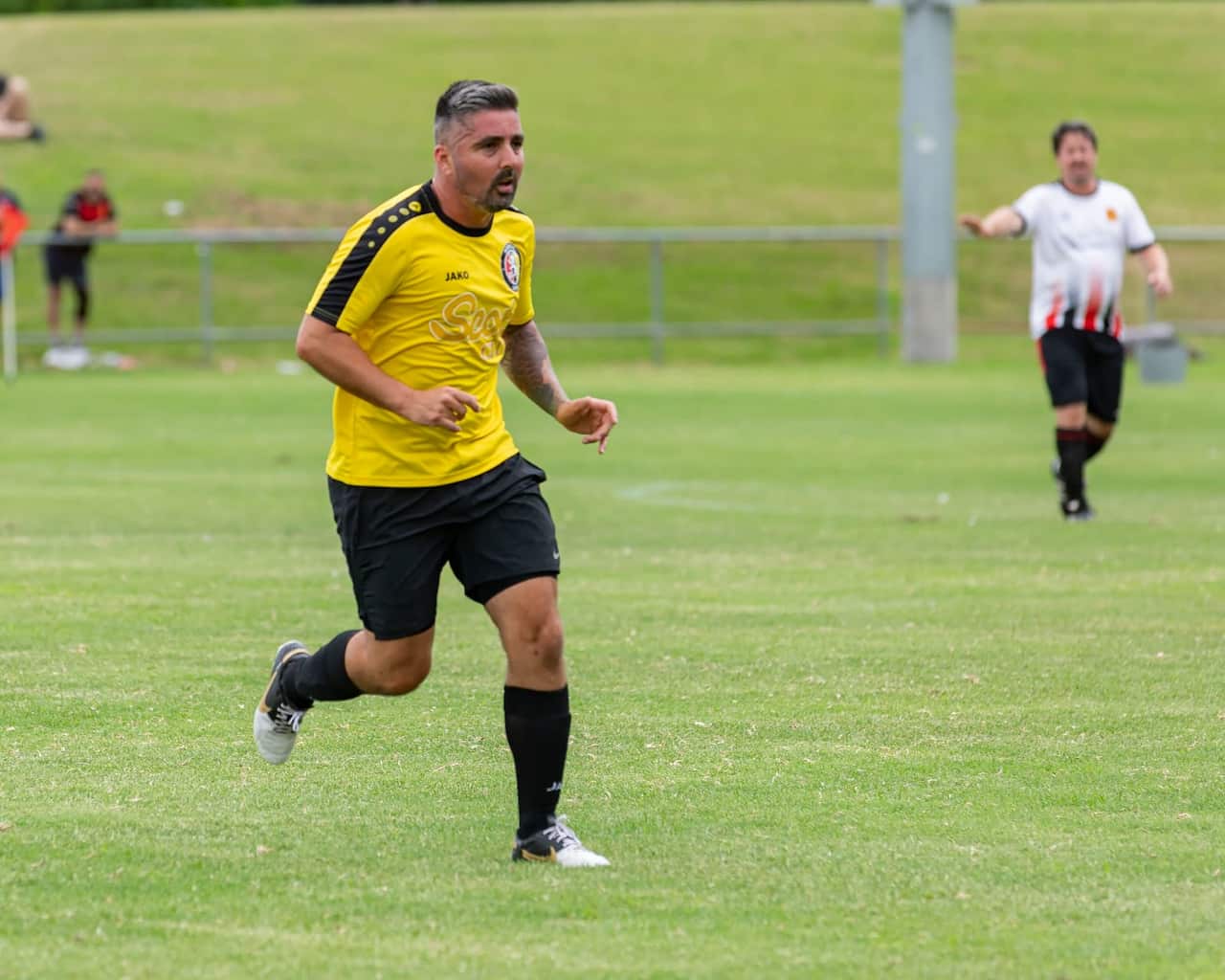
For striker Thiago Mendes, that support was personal. Thiago came from São Paulo, the capital, and arrived in Sydney in 2005.
When I arrived in Australia, I was a bit depressed… it was hard to make friends. But the support net around the club changed that. For me, it was a home I didn’t have yet in Australia… The Canarinhos is our home.Thiago Mendes, striker
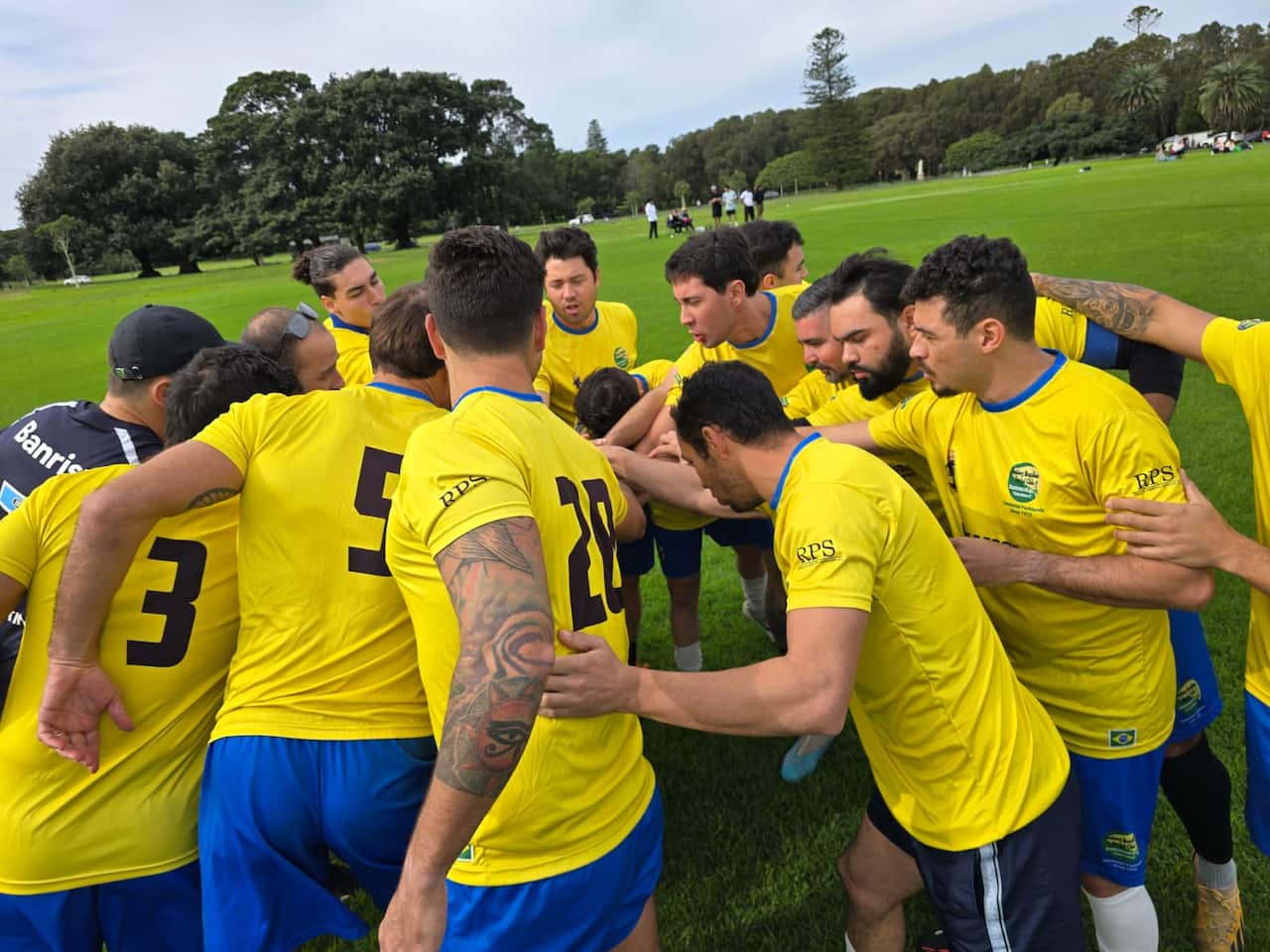
Gel Freire says that the players usually talk to the newcomers, refer them to social services and to other people they know. “One of our players is a psychologist; and is always ready to help.”
Club adviser Valter Francisco ‘Chicão’ de Oliveira, says the club operates as a not-for-profit. There is no major funding.
“The financial difficulty is our biggest challenge,” Chicão admits. But the model endures because of volunteers and common passion for football.
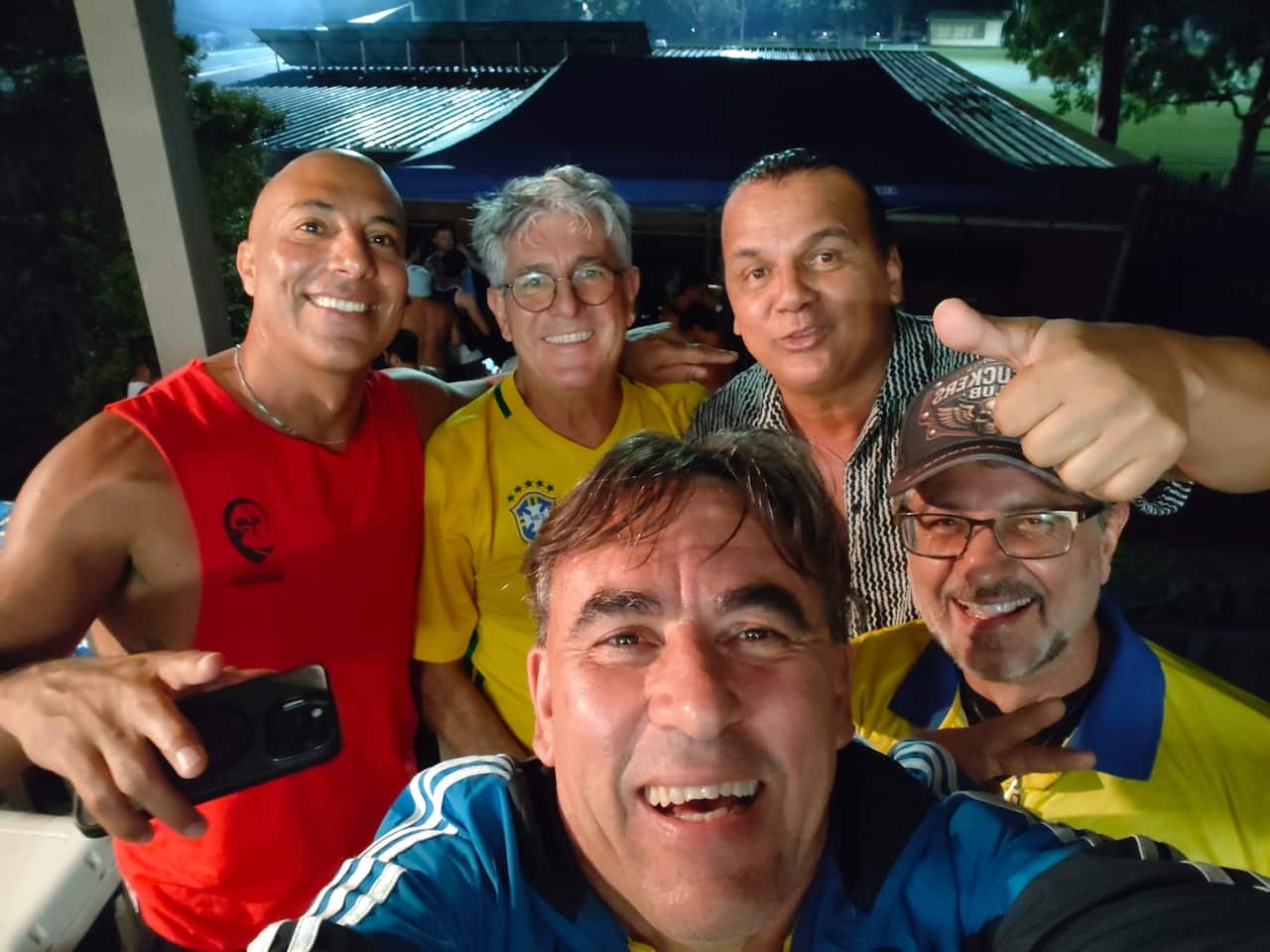
The club’s influence attracted some of the most important voices in Australian football, including Johnny Warren and Les Murray, and from there a new generation of sports personalities such as Craig Foster and Andy Harper.
The club created Les Murray Cup in 2010, honouring the late SBS broadcaster while he was still alive. After his death in 2017, the loss was felt personally.
Craig Foster has described Les as a man who defended football when it was dismissed as “the migrant game”. In that context, Canarinhos did more than host matches. They embodied the multicultural story Les championed.
“Community clubs like Canarinhos function as a “landing pad” for migrants. They allow people to integrate without losing identity,“ he said.
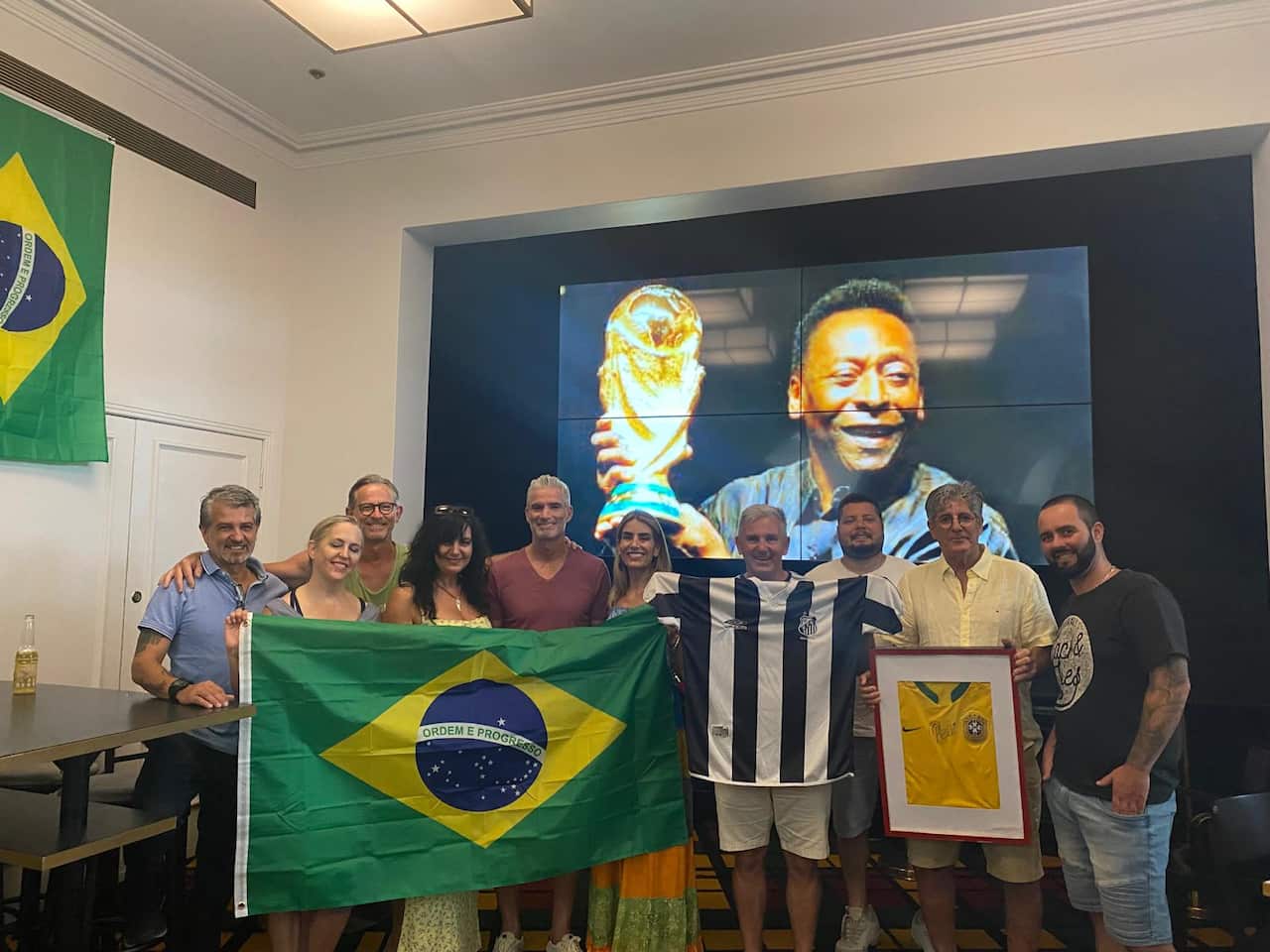
Over 54 years, that has meant nearly three generations of Brazilians — and increasingly, Argentinians, Chileans, Europeans and Australians — finding belonging on that grass.
On Sundays, you will find about 70 regular players and a wider network of more than 400 connected to Canarinhos. There is also an endless offering of friendly matches, laughter, music, and conversation.

Cida Olsen, Les Murray’s partner of 15 years, recalls how central those Sundays were in his life.
“For him, Sunday was like a religion. He had to come to Centennial Park, and kick a ball with the Canarinhos.

Andy Harper traces his connection to the Club back to Johnny Warren.
“I have to thank the late Johnny Warren for introducing me not just to the Canarinhos, but also to Brazil. It changed my life profoundly and made me a much better person, they are the brothers I never had.”
“Happy anniversary to the Canarinhos. And more, please. More, more, more.”
In closing, he leaves a sincere reflection: “I have received much more from Brazilian culture and the Canarinhos than I have ever given.”
Follow SBS Portuguese on Facebook, X, Instagram e You Tube.
SBS Portuguese is on Spotify, Apple Podcasts, iHeart Podcasts, PocketCasts or whatever you listened to your podcasts.



