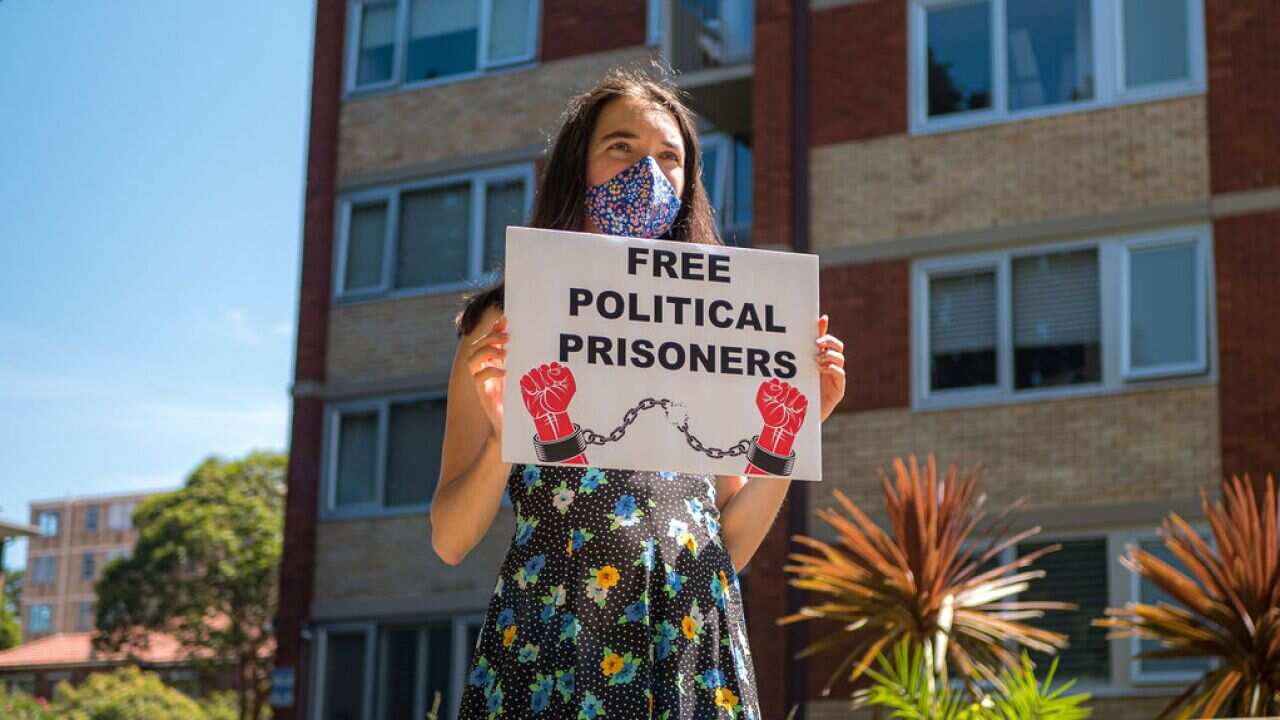
Petr Kuzmin left Russia in the turbulent 1990s to finish high school in the USA. He later moved to Australia in 2006 and now lives in Melbourne.
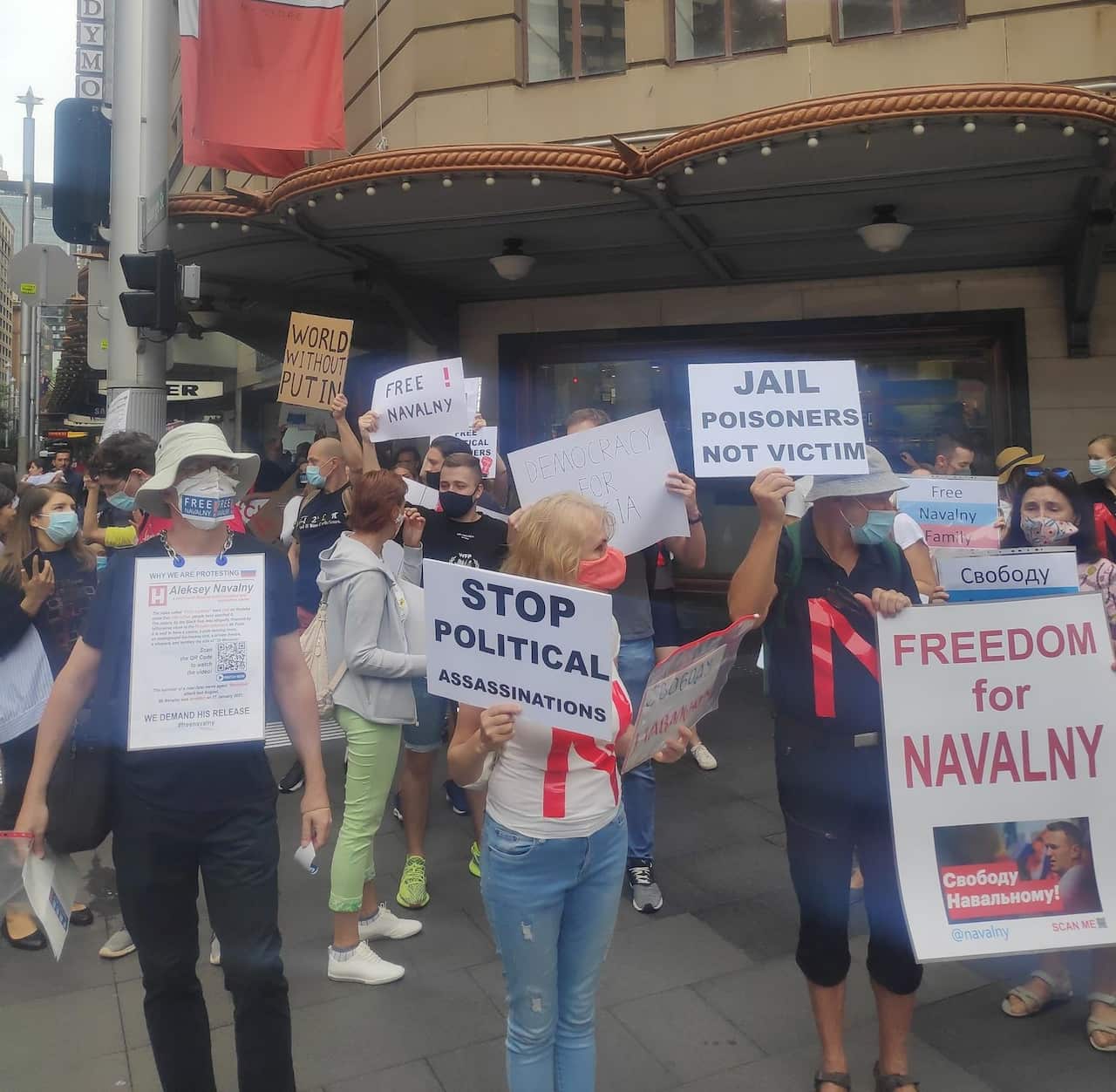
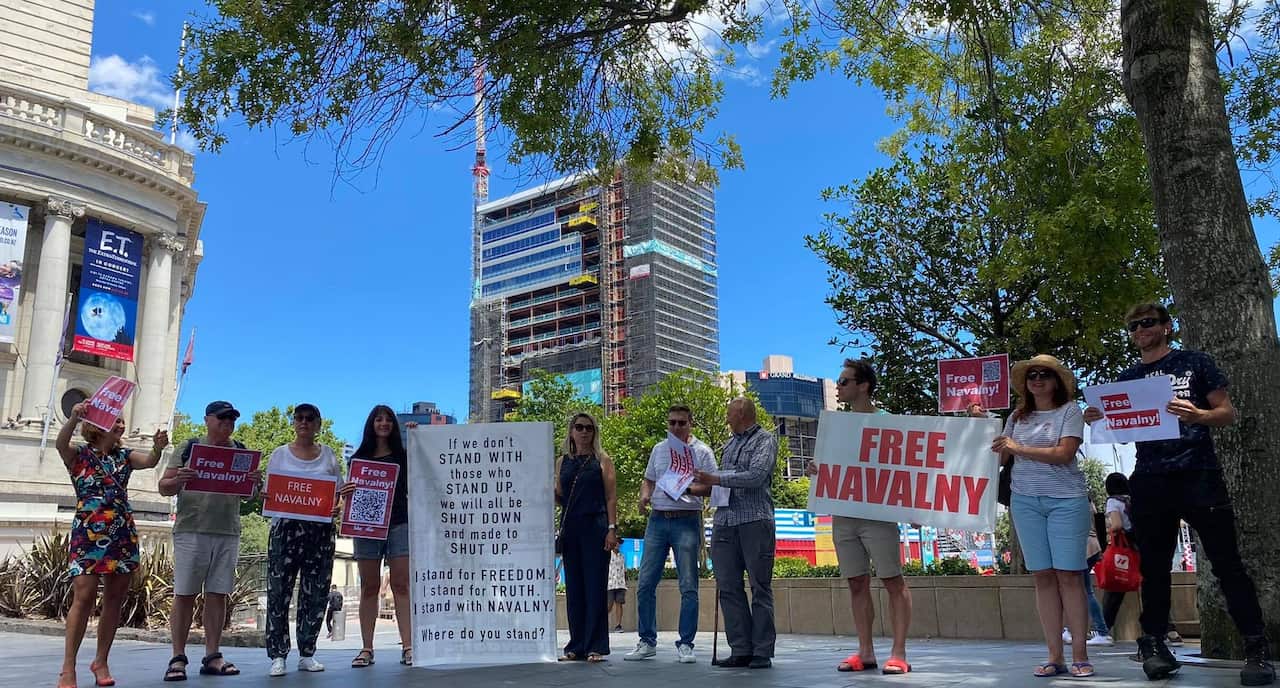
These days, he mobilises the Russian diaspora members to attend weekend protests in Australia against jailing the Russian opposition leader Alexei Navalny. He says he started following Russian politics only after arriving in Australia.
He says he hesitated from participating in any political discussion on social media.
“Unfortunately, the culture of political discourse in Russian-speaking groups of social networks is very low. I didn’t want to take part in such discussions.”
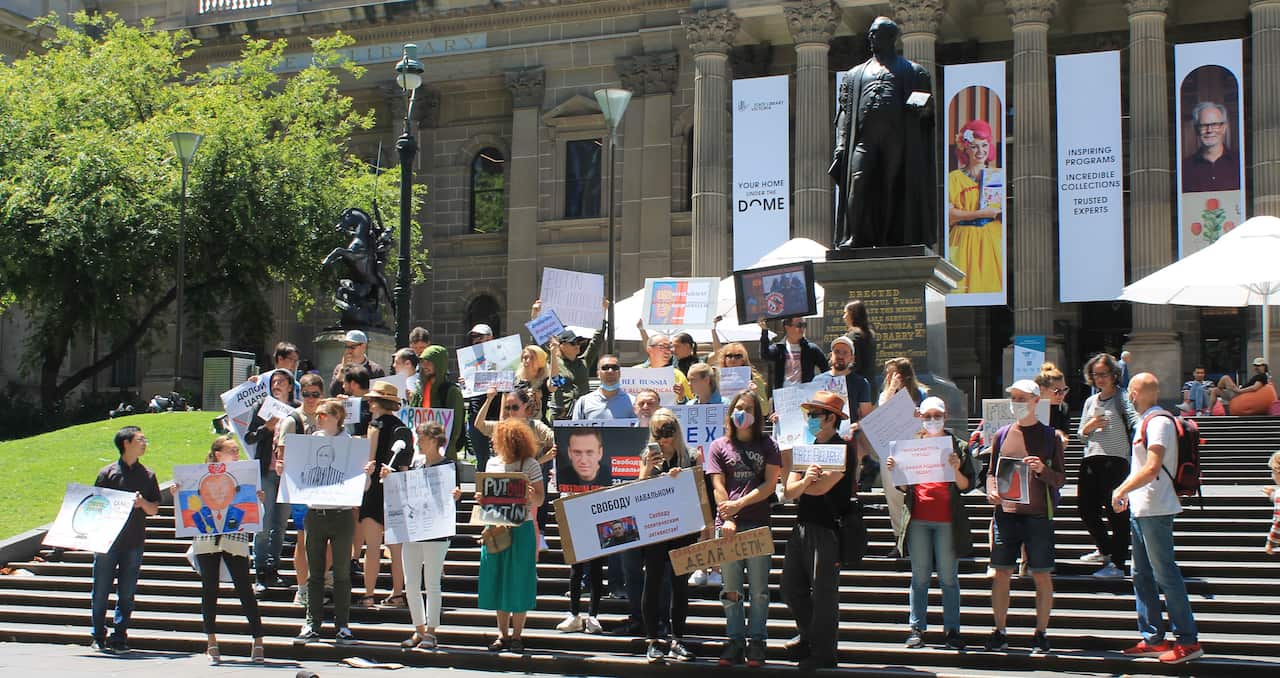
“But after Navalny’s poisoning, I simply couldn’t remain silent. Of course, I get a huge amount of negativity, some people write rude things, some are just trolls, and so have fun, but this doesn't stop me. Now is a very important time to speak up.”
He says enduring “hate-filled comments” is a small price to pay for expressing his opinion.
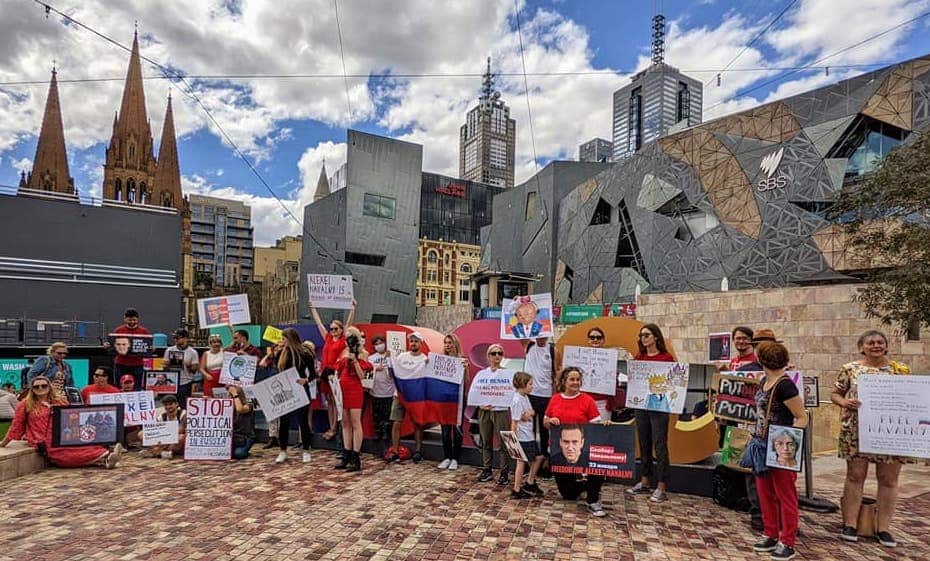
Mr Kuzmin runs a Facebook group that provides a platform to the Russians in Australia and New Zealand who support Alexei Navalny. Brisbane woman Svetlana Davydenkova joined an anti-Putin protest through this Facebook group.
She says she was prompted to come out and protest after her former classmate, a local Russian MP, was arrested on trumped-up charges in Russia.
“As a lawyer, I think this goes beyond all limits of decency. In 10 years of my life in Australia, I had never participated in any protests, but there’s a time in life when you just can’t compromise with yourself any longer.”
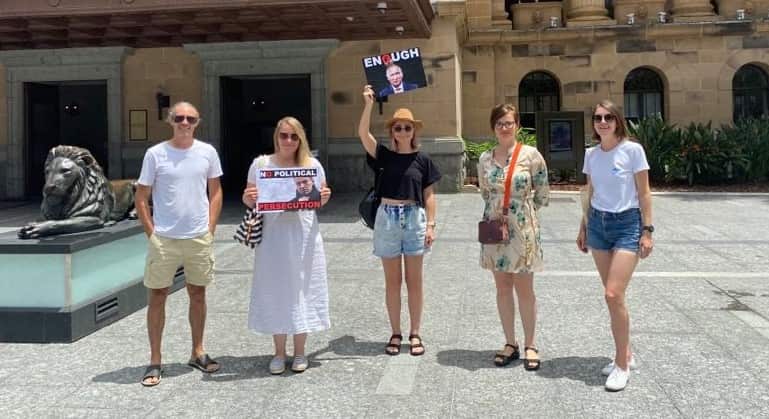
Similar anti-Putin protests also took place in other cities, including Adelaide and Melbourne.
In Sydney, up to 70 people stood silently forming a human chain, holding plaques with the names of people who the protesters believed to be victims of repression in Russia.
"Here we have named 66 political prisoners and more than 20 people allegedly killed by authorities," said protest organiser Ilya Fomin.
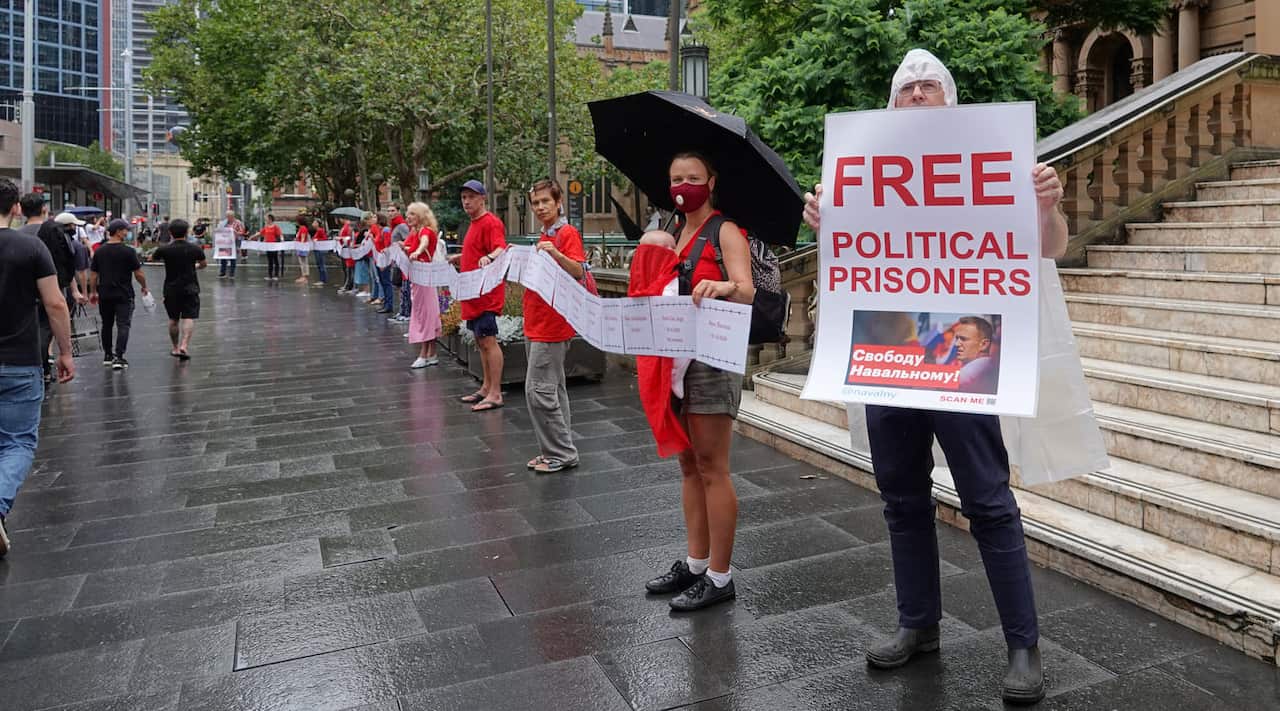
Ilya Fomin, a Postdoctoral fellow in geophysics at Macquarie University, moved to Australia only three years ago and continues to follow Russian politics closely.
He says he is most worried about the absence of “a real alternative” to Putin in Russia.
“I support Navalny because he is one of the very few alternatives to the current government. I am not even inclined to consider him a presidential candidate, but he is the one who must be in the Government as, for example, the Minister of Finance, the head of the Accounts Chamber. There must be a dialogue with him because he knows how to work.”
‘Cossacks’, ‘traitors’ and ‘instigators of civil war’
While pro-Navalny protestors carried out their demonstrations walking from Martin Place to the Town Hall, a small group of 10-15 pro-Putin demonstrators, holding life-size posters of the Russian president Vladimir Putin and Russian flags, appeared on the other side of the road.
The group, calling themselves “Cossacks” (paramilitary groups that have fought alongside Russian forces for centuries), used loudspeakers to shout down the opposing group across the road.
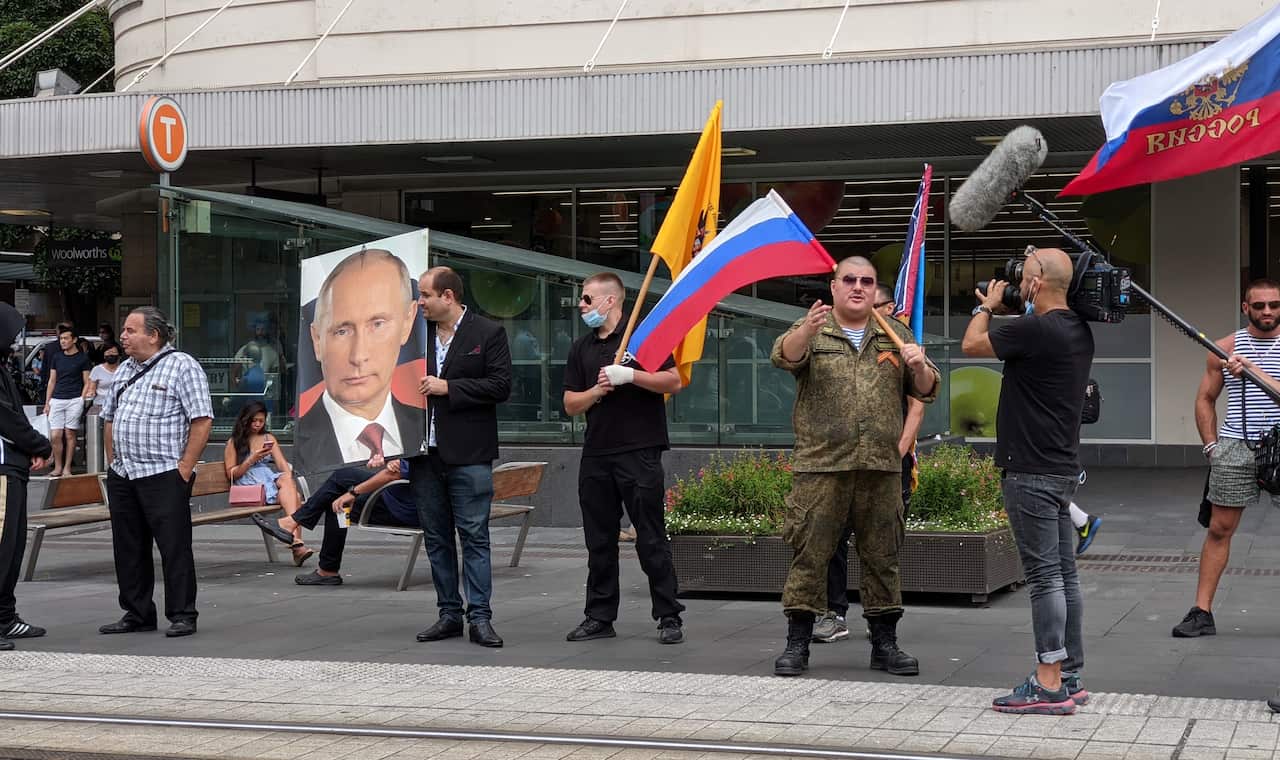
Semyon Boykov, the group leader, said the "Cossacks" would punish everyone who opposes Putin.
“We are here today to show that not all Russian people in Australia are traitors, not all of us here are against Putin. Cossacks live here, real guys who support Putin and don’t hesitate to demonstrate it.”
“Putin is our president, and we will punish everyone who is against him.”
31-year-old, Semyon Boykov is the descendants of emigrants who left Russia after the 1917 revolution. He himself was born and raised in Australia.
Among the pro-Putin demonstrators are some recent immigrants too. Yulia [did not want to give her last name] said she didn’t appreciate “rallies in support of illegal rallies”.
“I am expressing my opinion as an Australian citizen here. I see no reason for rallies in Russia since I believe that Navalny was imprisoned on legal grounds,” she told SBS Russian.
“Rallies in Russia are not sanctioned by the government, and the very fact of rallies in support of illegal rallies is strange to me. This is nonsense for me.”
Ksenia Trifonova from Sydney says opposition protesters are “instigators of the civil war in Russia” and believes Alexei Navalny’s claim about Putin’s billion-dollar palace which sparked protests in Russia are false.
“I don’t think that such a exists. If it does, it was built for personal use, and I would be very happy if the residence of our president was worthy of receiving high guests from different countries,” she said.
'An easy target of propaganda'
Slava Kitaeff, a Russian expat and scientist from the The University of Western Australia and Chief Technology Officer for Australian SKA Regional Centre, says many immigrants who left their homeland many years ago are an easy target of propaganda.
“I have noticed that many Russian-speaking Australians, who use Russian state-owned TV channels as their main source of information, tend to recite the so-called official position and often consider it to be the only acceptable one," he said.
"They not only don’t use other sources of information but totally reject the idea that information from other channels can be more truthful than state information.”
Head of the Department of Social Sciences and Security Studies at Curtin University, Dr Alexey Muraviev, says Russia’s political developments have highlighted the Russian diaspora's political division in Australia.
“The Russian-speaking community itself is very politicised. For them, what is happening in their ethnic homeland is not something alien; they still associate themselves with the process that is currently taking place in Russia. And the political division of the community is also very noticeable, which is very clearly manifested at moments like this.”
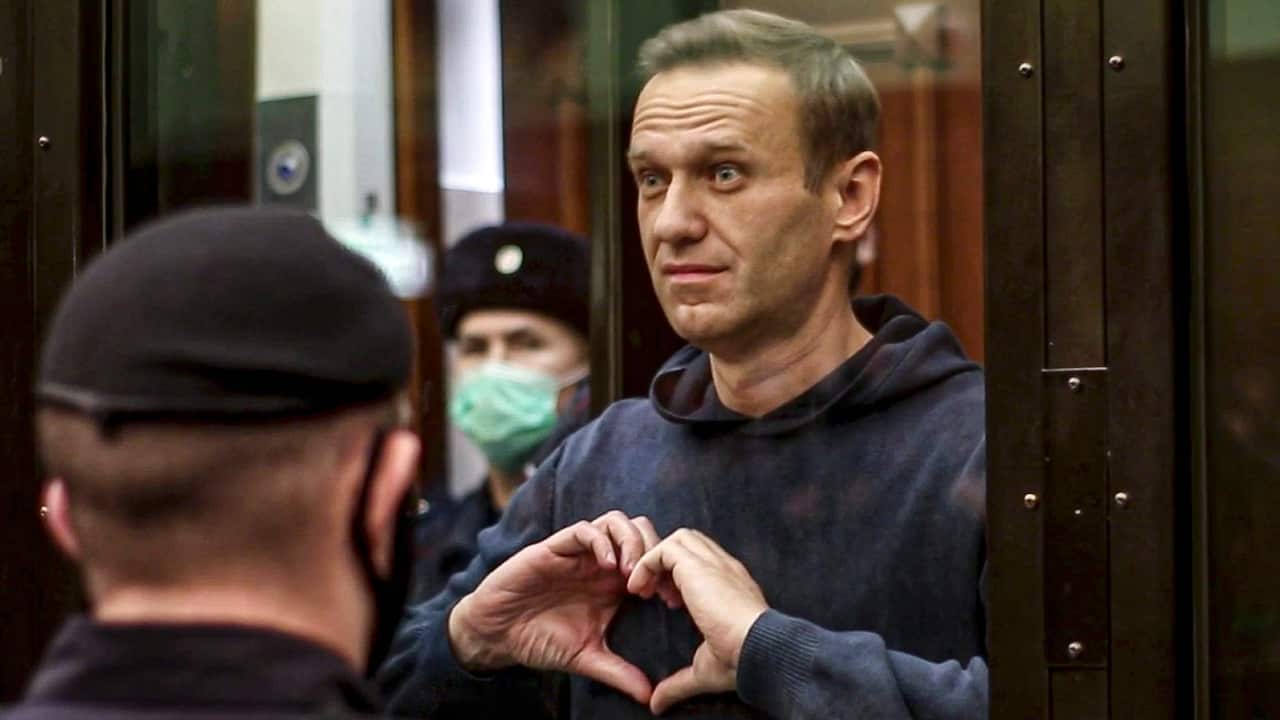
Australian Minister for Foreign Affairs, Marise Payne last week said Australia was “deeply concerned” at Navalny’s arrest and his subsequent sentencing. Ms Payne also expressed concerns at “the approach of the Russian authorities against peaceful protesters and journalists” detained in recent weeks.
In response to Ms Payne’s statement, the Russian embassy tweeted that Australia should be concerned about “extra-judicial detention of people, including children” in off-shore processing centres.
Commenting on the Russian community members' protests in Australia, press attache at the Russian Embassy, IIya Roschenkov sought to justify the crackdown against the protesters in Russia.
“We know, including the information from your programs, that representatives of the Russian-speaking diaspora here are actively expressing different points of view on events in Russia. They do this, we want to note, within the framework of the law. At the same time, I think, everyone who has been living in Australia is well aware that violation of the law is suppressed here no less severely than in Russia.”
But, Leonid Petrov, a researcher at the Australian National University of Canberra, who has been living in Australia for over 25 years, believes that the anger against the Russian government is so strong that the opposition’s movement will not die down despite the crackdown.
“This process will continue in one form or another. If not on the street, then there will be some kind of secret organisation, if not in Russia, then somewhere else,” he says.
“Water will always find cracks, and this wall will eventually collapse.”



