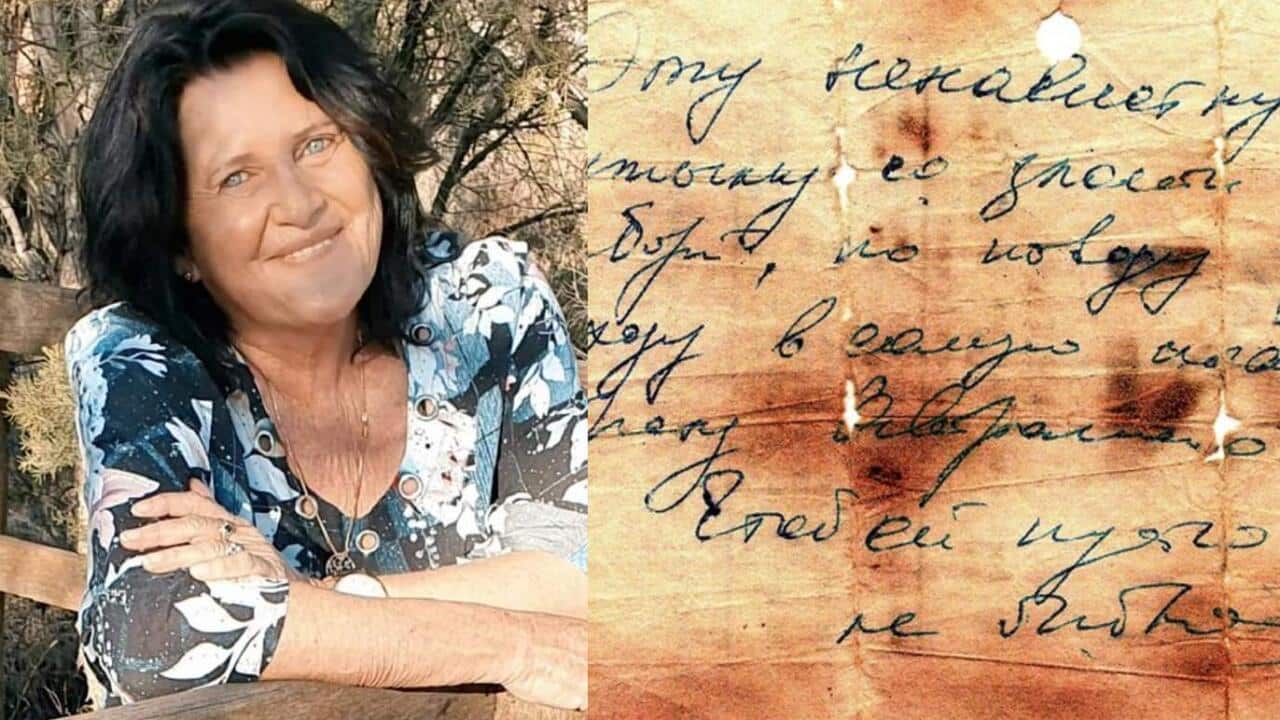
60-year-old Julie Lee speaks about her discovery almost half-a-century ago with such excitement and enthusiasm as if it was only yesterday.
In 1974, Ms Lee was 14 and lived in the farming town of Northampton, near Geraldton in Western Australia. Third oldest among her 13 siblings, she lived in a small three-bedroom house with her parents and grandfather.
"Northampton summer days were very hot with the temperature soaring above 42 degrees, lasting for weeks at a time and without cooling, our home would become unbearable most times," she recalls.
"These hot nights we would pack up tarps for bedding and fishing gear, before piling into our Land-Rover, heading west to the Mouth of Bowes River."

She remembers that her parents used to put up a tent for the night on the beach. As her father would go fishing and the children played near the water, she and her siblings were tasked with gathering driftwood along the beach for a fire to cook dinner.
The unexpected find
In order to make the task interesting for the kids, Ms Lee recalls, her mother used to announce a competition to find interesting objects, such as an unusual shell or a piece of glass.
And it was during one such treasure hunt that Ms Lee got an unprecedented victory over all her siblings.
"That particular afternoon was no different to any other day there, but gathering the driftwood I could see something reflecting in the distance. Running to it, I found a light green bottle half-buried in the sand and seaweed, up off the water’s edge, picking it up I could see a note in it," she told SBS Russian.
"My father tried to remove the cork but it was stuck hard, I had to wait patiently until we got home the next morning where father managed to remove the cork and get the note out."
But the note was written in a language that no one in the family could read.
"I won the competition that day but I wanted to know what the note said - was it a distress note or a note to a loved one?" she says.
No one in her small town could read the text but she thought it was important to understand the mysterious message. So, she kept the note in her memory box for more than four decades.
"The note travelled safely with me for the next 46 years; through two marriages, the birth of three beautiful daughters, many moves to other farming towns, over the south of Western Australia and the birth of seven grandchildren."
As social media became more prevalent, Ms Lee posted a photo of the note on Facebook in 2012, hoping that someone would be able to recognise the language and help interpret the message; but with little success.
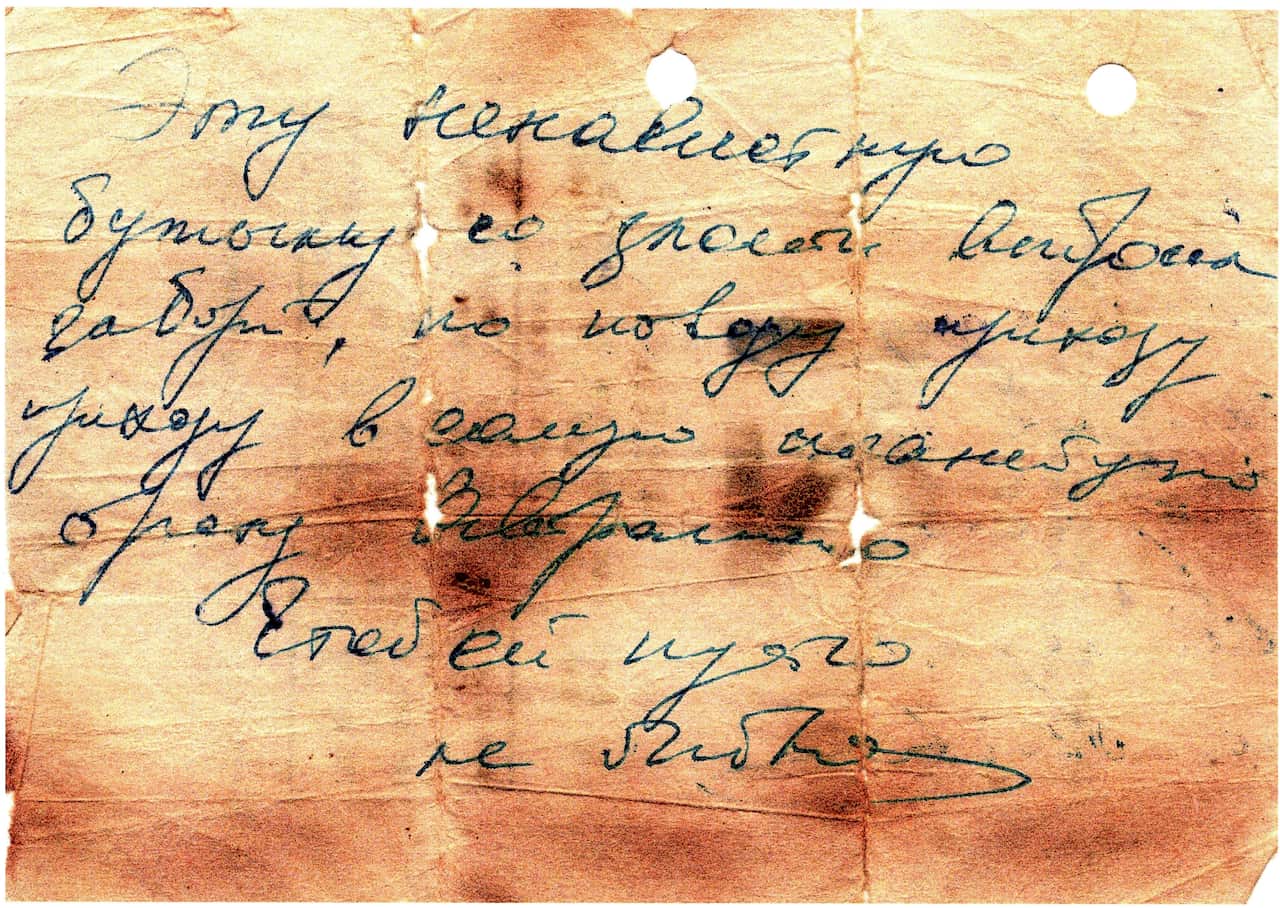
But an important breakthrough came earlier this year when she again posted a photo of the note in the 'Western Australia Pioneers and Settlers' Facebook group, she was told that the text was in Russian.
'Let it not be empty'
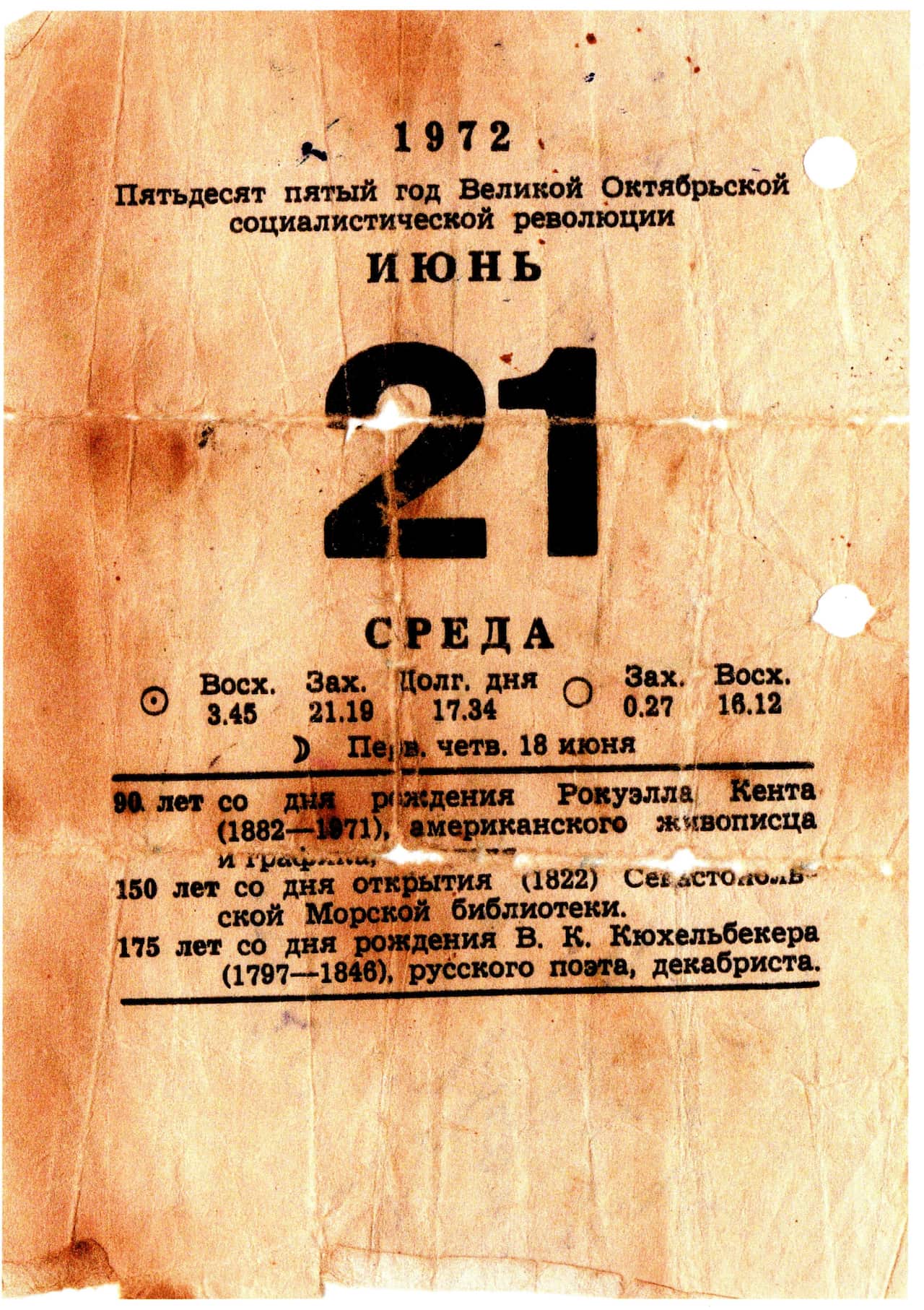
It was dated 21 June 1972, written on the back of a Russian-language calendar with sunrise/sunset/full moon and various anniversary dates for some of the Russian notaries in music and literature.
But the note could only be partially translated, and it reads 'I angrily threw this hated bottle overboard in spite of coming to the most [illegible] country of Australia. Let it not be empty'.
Edward Juhas, whose grandmother spoke Russian, helped Ms Lee with the translation and wrote to SBS Russian asking for help with the rest.
Many members of Australia's Russian-speaking community have commented on Facebook, saying the illegible word in the note is 'disgusting' and that its author was perhaps unhappy about coming to Australia.
From the mid-50s until the late 80s, Russian immigration to Australia was mostly from China and Europe. Those migrating directly from Russia often didn't want to leave Russia but had to because of the communist regime. Some on social media have commented that perhaps the writer of the note was one such unhappy immigrant.
In Russian culture, empty bottles or glasses are associated with bad luck. So, the latter part of the note - 'Let it not be empty' - indicates that the note writer didn't wish something bad on Australia.
Ms Lee says the real meaning of this note continues to elude her nearly half-a-century after she found it on a balmy night at the beach.
"Hopefully, one day I will get to know the mystery of that message in the bottle, which I have now called 'a Russian in the bottle' that I found all those years ago," she said.
She hopes that the person who wrote the note found their happiness in Australia.



