For more stories, interviews, and news from SBS SERBIAN, explore our podcast collection here.

The 12th International Summer University, “Greek Language, Culture and Media”, was held at the University of New South Wales in Sydney from 6 to 11 September under the theme “The Greek Language in Australia: From Memory to the Future”.
The International Summer University was founded by Professor Nikoletta Tsitsanoudi-Mallidi of the University of Ioannina, its Founder and Academic Director. Her long-term vision has developed the initiative into an international platform connecting language, culture, academia and public engagement.
The six-day program brought together academics, researchers, educators, journalists, artists, community representatives and business leaders from Australia, Greece and other countries. Discussions explored the future of the Greek language in Australia, the education of new generations, the role of the media, digital technologies, diaspora identity and opportunities for international academic and commercial collaboration.
Business as a partner in culture and education
The most significant part of the conference from a business networking perspective took place on Friday, 11 September, between 9 am and 11 am. The official business leaders’ roundtables ran from 9.30 am until 11 am, followed by industry and institutional networking.
The two consecutive discussions examined the role of entrepreneurship in supporting the sustainability of the Greek language in Australia. They also addressed broader questions concerning Australia’s relationship with Europe, Horizon Europe, research, innovation, trade and investment.
This part of the program was designed and organised by Konstantinos Sgouras, Co-Founder and Head of International Relations at Unity in Philia and Chairman of Professionals in International Trade.
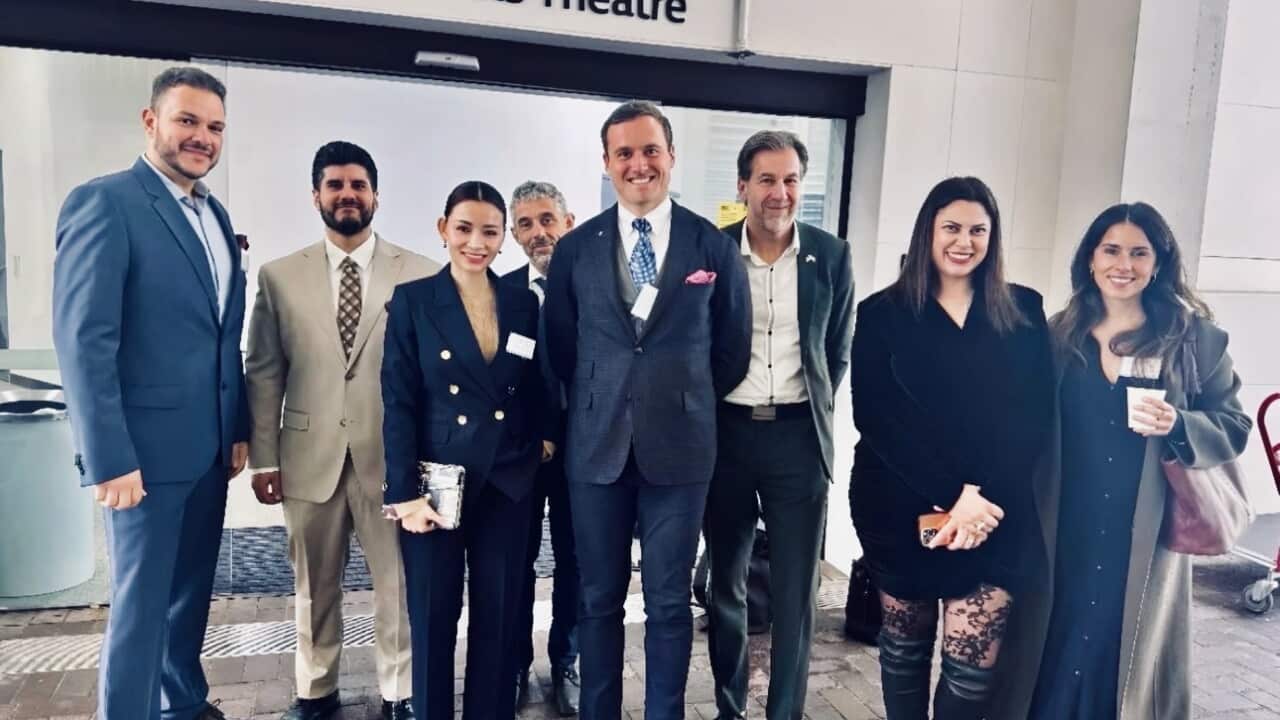
The business program was sponsored by the Australian Serbian Commerce Chamber. The Chamber was represented by Dr Nina Markovic-Khaze, while Sydney-based migration firm Solve Migration attended as one of its members.
The Chamber’s participation in a conference devoted to the Greek language conveyed a broader message. Diaspora organisations do not need to operate only within the boundaries of their own communities. They can connect expertise, capital, institutions and ideas from different parts of Europe with Australian and Asia-Pacific markets.
The panel also demonstrated that language preservation is not solely a cultural issue. Language and cultural understanding can provide a foundation for commercial relationships, student exchanges, joint research projects, investment and long-term connections between countries of origin and their communities in Australia.
A European company as an example of practical collaboration
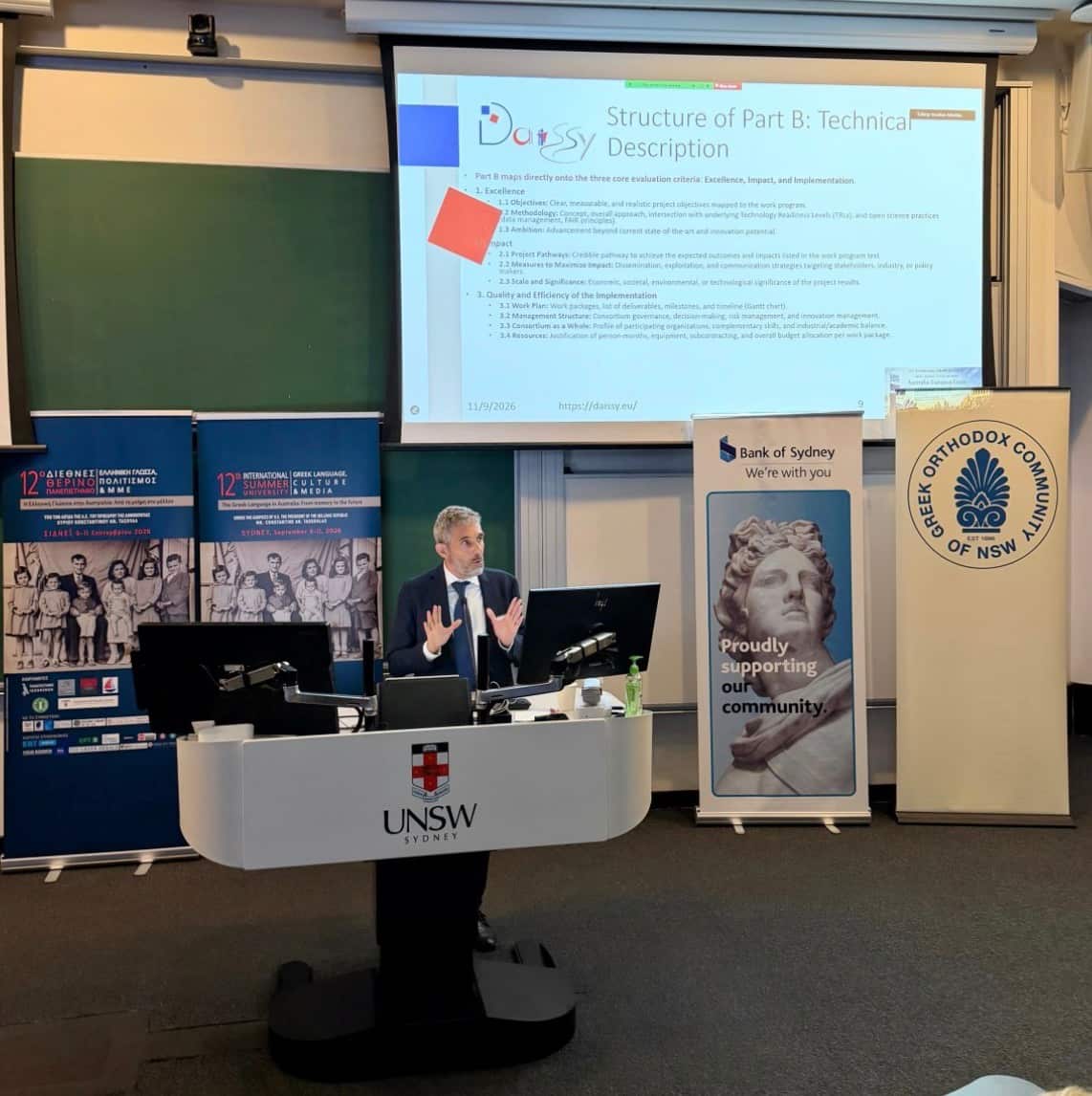
Among the companies visiting from Europe was PROVERNA Group, a Greece-headquartered group presented as an example of how European companies can develop partnerships with Australia and the wider Asia-Pacific region.
The company develops investment and institutional platforms across real estate, energy and infrastructure, food and beverage, digital infrastructure and other areas of the real economy.
Its presentation highlighted the potential of a “two-way gateway” connecting Australia, Greece, Europe and the Asia-Pacific. Under this model, Greece can serve as a strategic entry point for Australian companies seeking to establish themselves in European markets, while Australia can give European companies access to partners, industries and opportunities across the Asia-Pacific region.
The participation of PROVERNA Group demonstrated that gatherings of this kind do not need to conclude with an exchange of ideas alone. They can assist participants in identifying strategic partners, developing joint investment platforms and transforming research and business connections into practical projects.
A new phase in Australia-European Union relations
The conference took place at a particularly important moment in relations between Australia and the European Union.
Negotiations on the Australia-European Union Free Trade Agreement concluded on 24 March 2026, with the relevant legal and parliamentary processes still required before the agreement can take effect. At the same time, cooperation is expanding across research, innovation, clean energy, critical minerals, advanced technologies and more resilient supply chains.
Horizon Europe, the European Union’s largest research and innovation funding program, worth approximately A$155 billion, occupied a central place in the business program.
Australia and the European Commission concluded negotiations on Australia’s association with Horizon Europe on 9 June. From January 2027, Australian companies, universities and research organisations are expected to gain access, through transitional arrangements, to funding under Pillar II of the program on terms similar to those applying to entities from associated countries.
This will enable Australian participants not only to join international consortia, but also to lead them and develop projects that may be too large or costly for one country to undertake alone. Priority areas include critical technologies, advanced computing, health, space, climate change, clean energy and critical minerals. The Australian Department of Industry, Science and Resources states that stronger connections with European institutions will help develop research networks, innovation and new industrial opportunities.
Australian researchers are already achieving significant results. According to the European Commission, Australian organisations have participated in 239 Horizon Europe projects, with an application success rate of 24.39 per cent. Until now, Australian partners have generally had to fund their own participation or rely on limited exceptions. Association will give them more direct access to European funding. The European Commission has described the agreement as formalising a scientific partnership that is already producing significant results.
From research to commercial application
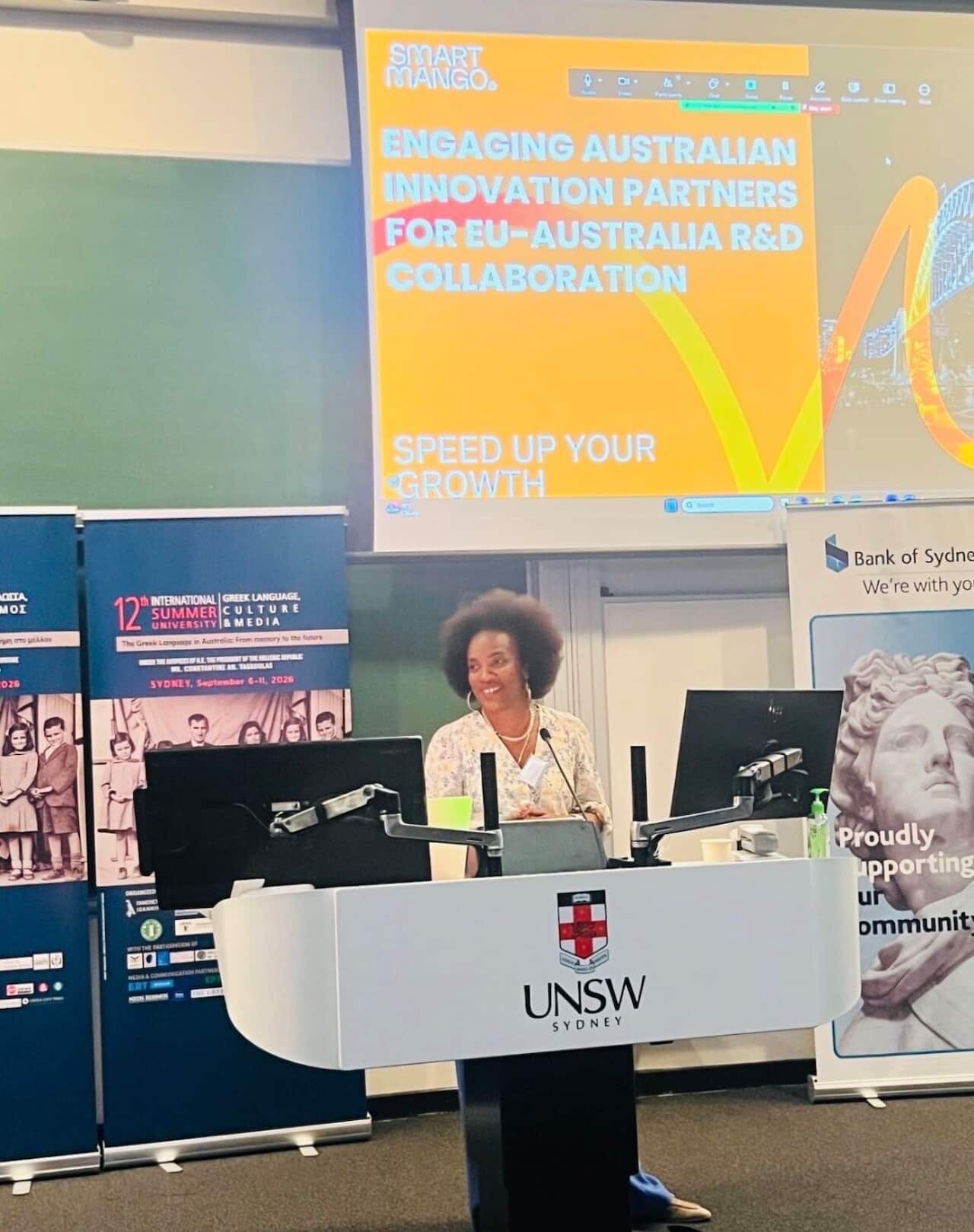
Key themes presented during the business program included clean energy and the transition to net zero emissions, health and medical technology, biotechnology, pharmaceuticals, advanced materials, critical minerals, batteries, the circular economy, food and water security, artificial intelligence, cybersecurity, automation, defence technologies and advanced manufacturing.
Participants also discussed the practical journey from a scientific idea to a commercial product. This included identifying research and industry partners, regulatory advisers and equipment manufacturers, using research and development tax incentives, protecting intellectual property and preparing applications for Horizon Europe.
Better mutual understanding will benefit Greece and Europe more broadly if these discussions are translated into practical joint initiatives. Universities and research institutions can develop consortia for European grants, researcher and student exchanges, joint laboratories and industry-linked projects. Businesses, in turn, can help transform research into products, investment and new employment opportunities.
Cultural events as spaces for connection
Alongside the academic and business program, the conference was accompanied by cultural events across Sydney.
A formal reception and an exhibition of political cartoons were held at the Consulate General of Greece. The Castellorizian in Kingsford hosted the opening of the group exhibition “Greek Spirit”, curated by Dr Vassilios Adrahtas.
Among the exhibiting artists was Serbian-Australian artist and art theorist Dr Uros T. Todorovic, also known as Ouresis Todorovich, who currently lives and works in Macau, China. His contribution presented a spiritual interpretation of the Greek experience, connecting religious and cultural imagery with the broader tradition of Byzantine art. Todorovic is associated with the University of Macau and previously studied at the University of Sydney. His University of Macau profile identifies modern painting and Byzantine aesthetics among his areas of work.
The accompanying program also included a screening of the documentary “Hail Arcadia” by filmmaker Filippos Koutsaftis, an exhibition of Greek-Australian visual artists, an evening of traditional Hellenic music and dance in Kogarah, and a closing gathering inspired by the atmosphere of a traditional Greek taverna.
These events demonstrated that cultural diplomacy is not a secondary element of international cooperation. Exhibitions, film, music and dance create spaces in which people can first develop mutual trust, making it easier to establish academic, institutional and commercial relationships.
The central message of the Sydney gathering was that language and culture are not simply forms of heritage to be preserved. They are an infrastructure of trust, providing a foundation for new partnerships between Australia, Greece and Europe, as well as stronger connections among Australia’s European diaspora communities.
For SBS Serbian Nina Markovic




