




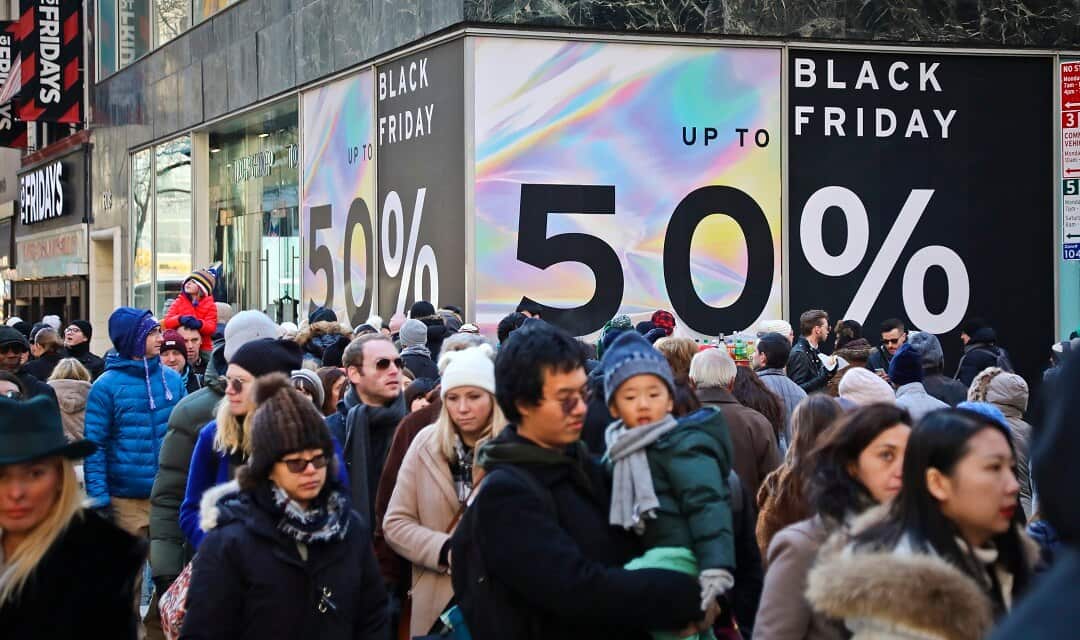
While some spend up to $250 million online, others will be campaigning for a total market boycott as Black Friday sales and "Buy Nothing Day" go head to head.
Black Friday sales are a tradition Australia has inherited from America, and enthusiastically accepted. Australian's are expected to spend up to $250 million only on online shopping as part of what has become a week long affair.
With this week kicking off the busiest time of year for retail, the Christmas period, Dr. Ha Vu from Macquaire University says it's win and lose for both consumers and retailers.
"Generally, this sale is similar to Boxing Day Sales, however it still hasn't reached the same level of popularity among consumers," says economics lecturer, Dr. Ha Vu. "This year we are anticipating a larger volume of customers and an increase from previous years."
Dr. Vu says that Black Friday is a good chance for retailers to clear old stock, analyse shopper habits and set up a game plan before the new year.
"Businesses clear inventory and the brief economic stimulus can show consumer patterns, even their confidence in the economy."
Dr. Ha Vu says that it isn't a long term economic solution, nor is it ideal situation for all retailers.
Analysts say that early expectation of discounted items can lead to changed consumer expectations, sellers become trapped in a longer sale period than usual before Christmas.
Dr. Ha Vu says this is where consumers can get a big break, but only if they're careful.
"The consumer can definitely benefit from Black Friday sales, because the emphasis going into December is already on spending," says Dr. Vu. "Consumers are likely to, regardless of sales, spend on presents and decorations for Christmas. If they go into the Black Friday sales with a plan there are huge savings to be made. Importantly, we are also talking about impulse control and if people don't have control, if you buy more than you need, then you end up in a deficit."
Dr. Vu says that so- called "Christmas debt" is a common side affect of the sales, with spenders getting too ambitious with their budgets.
While Dr. Vu says that big sales maintain popularity, there are people looking to change the statistics.
International "Buy Nothing Day" is also being held on Friday, a counter movement to the sales and some activists claim, an antidote to Christmas madness.
Tamara DiMattina is the founder of Buy Nothing New Month, an organisation with an emphasis on long term sustainablity.
DiMattina says the most obvious benefit of a Black Friday boycott is economic.
"If you break the cycle of buying new, buying during sales, buying - you find that you save quite a lot of money."
She says that "Buy Nothing New Month" is an invitation to reconsider our consumer habits.
"You can do it any time you like. it's about reassessing how we consume and comparing it to how much we actually need. We want people to ask themselves to think about how much "stuff" they own, where it came from, who made it and most importantly, what were the conditions under which this item was made? Then ask themselves, is it all really worth it?"
DiMattina says that the organisation wants to close a cycle of waste production.
"When we constantly buy new, a big question is what happens to the old? Where do these things go when we throw them away?"
Black Friday sales are without a doubt pushing products that are resource intensive.
According to WWF, a single cotton t-shirt takes 2,700 litres of water to make.
Earlier in the year, ABC's series "War on Waste" revealed that Australians are currently disposing of 6,000 kilograms of fashion and textile waste every 10 minutes.
This is the problem DiMattina wants to tackle.
"Buy Nothing New Month is about stopping the habit of buying things we don't really need. Yes, we focus on food packaging and similar environmental issues, but really what we want to stop is the excessive clothes, shoes, toys and material items that have become an addiction. Our organisation doesn't want to choke the economy, rather we are looking to the second-hand economy. Buying things that already exist, finding ways to borrow or exchange, anything that will prevent resources from being pushed into production."
Australia's biggest retail names in home wares, digital and electronics, and clothing are going to be slashing prices by up to 50% tomorrow.
Meanwhile, the French government is considering a nation-wide ban with the country's ecological transition minister, Elisabeth Borne, calling the sales "frenzied consumerism".