
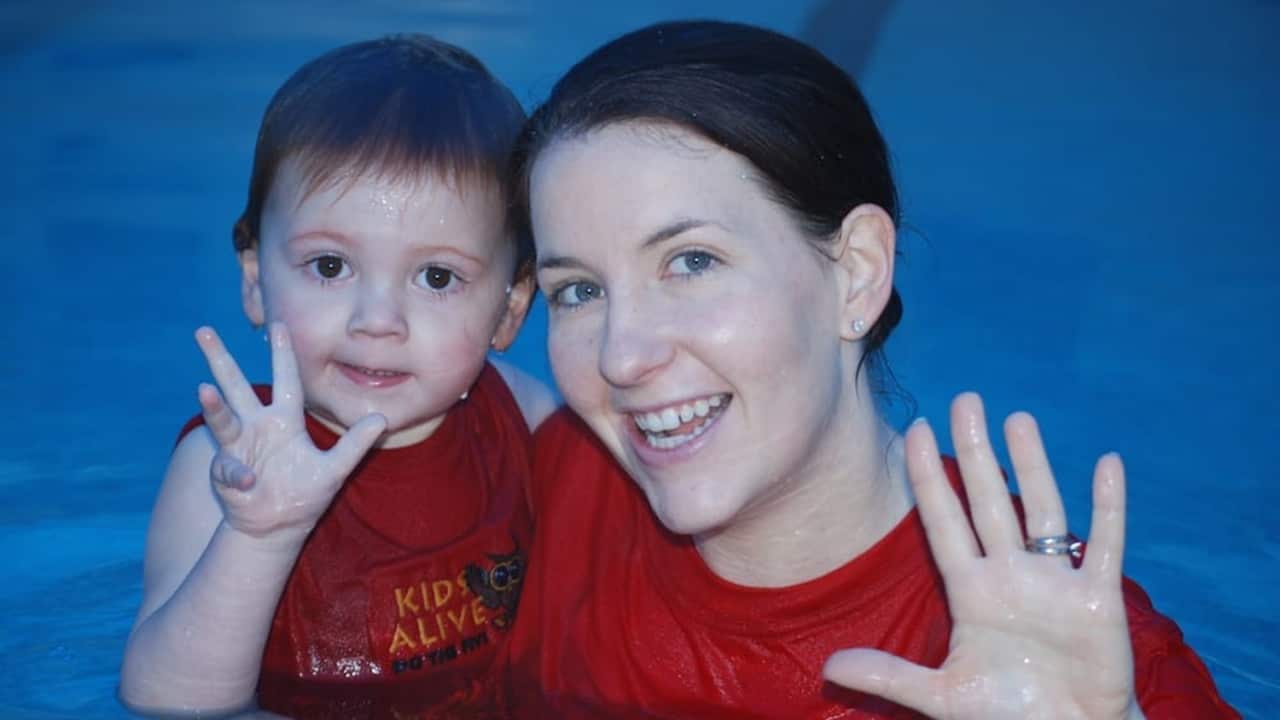

With drowning deaths in Australia reaching their highest level in nearly three decades, and hundreds of thousands of children presenting to emergency departments each year due to preventable injuries, the need for life-saving knowledge has never been greater. Many of these incidents happen not in public spaces—but at home, where parents and caregivers are often the first to respond. A new initiative aims to change that. The Heartbeat Club, launching this May, offers free, accessible online training in CPR and first aid for babies and toddlers. To learn more, we spoke with Emma Lawrence, Operational Director of Kids Alive, about the risks, the realities, and how simple skills can make the difference between life and death.
For more stories, interviews, and news from SBS SERBIAN, explore our podcast collection here.

Drowning deaths in Australia have reached their highest level since 1996, with 357 lives lost last year—prompting renewed calls for greater awareness and education around water safety and emergency response.
Emma Lawrence, Operational Director of Kids Alive, says while Australians naturally gravitate towards water, this lifestyle comes with significant risks—especially for young children.
“Australians love spending time around the water, whether it’s a backyard pool, the beach, or a creek,” she says. “But unfortunately, drowning statistics are at an all-time high.”
For children under the age of five, the home environment presents the greatest danger. Backyard swimming pools remain the leading location for drowning incidents in this age group.
“At home is where children are most at risk—not just from drowning, but also burns, scalds, and choking incidents,” Lawrence explains. “That’s why it’s so important for parents and caregivers to know what to do in an emergency.”
Beyond fatal incidents, non-fatal drownings also carry devastating consequences. For every child who drowns, up to eight others are hospitalised, often suffering long-term or lifelong disabilities.
“These are life-changing outcomes that can often be prevented with the right knowledge and quick action,” Lawrence says.
To address this, Kids Alive, in partnership with Royal Life Saving Western Australia, is launching the Heartbeat Club—an online initiative designed to equip parents and caregivers with essential CPR and first aid skills.
The course is free, takes just one hour to complete, and is tailored specifically for those caring for babies and toddlers.
“It’s about giving people the confidence to act,” Lawrence says. “If you know what to do in an emergency, you can save a life.”
The training includes video tutorials on performing CPR on young children, as well as guidance on handling common household emergencies.
Importantly, the initiative also aims to overcome barriers that have traditionally prevented people from accessing CPR training.
“We know people are time-poor, and formal courses can be expensive,” Lawrence explains. “This is a simple, accessible way to learn the basics and make your family safer.”
She also stresses that CPR skills need to be refreshed regularly, as confidence can fade within months of training.
“Even if you’ve done a course before, revisiting those skills is crucial,” she says. “At the moment, the key thing to remember is 30 compressions and two breaths—and any attempt at CPR is better than none.”
The first few minutes after a drowning or cardiac incident are critical, with immediate action significantly improving survival chances.
“If you can provide CPR at the scene, you can double a person’s chance of survival,” Lawrence says. “Quick response can make all the difference—not just in survival, but in recovery.”
While the Heartbeat Club is not a formal certification, Lawrence says it serves as an important first step.
“This is about education and building confidence,” she says. “People can always go on to complete formal training, but this gives them the knowledge to act when it matters most.”
The course is available throughout May via the Kids Alive website, with organisers hoping it will empower more Australians to take potentially life-saving action.
“We want parents and caregivers to learn how to save a little life,” Lawrence says.






