

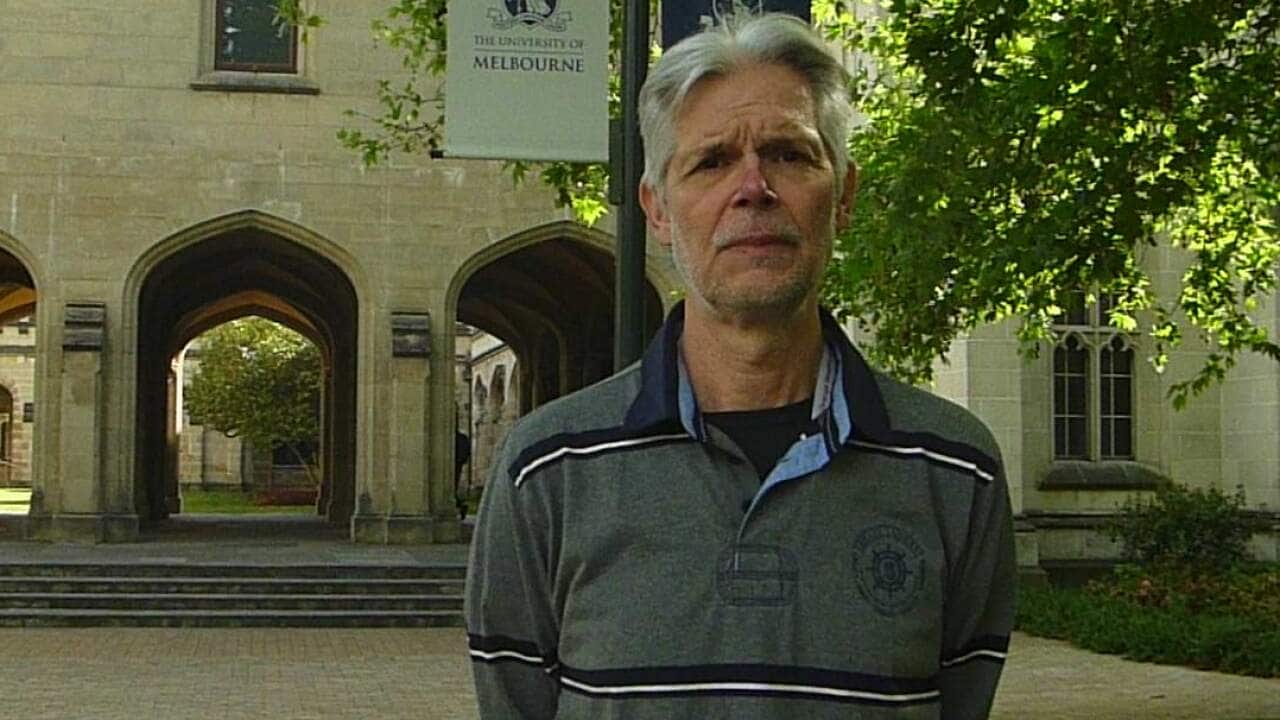
Arriving in Australia during the early '90s after graduating from the University of Chile as a dental surgeon, Prof Rodrigo Mariño completed a doctorate and later became a lecturer at the University of Melbourne.
He picked up the English language after arriving and adapted to the Australian way of life, but his strong accent frequently posed obstacles, especially in the classroom.
"Several [students] have said that they want teachers who speak the English language," Prof Mariño says.
"It is not the majority, but in every evaluation that the students make on the performance of their lecturers, there are some who express their annoyance with my accent."
While he admits that he has a strong accent which could be hard to understand by some, he says that "at this stage" of his life it is impossible to get rid of it.
"It is what it is and I have to accept it. The English language is complicated. It has many exceptions in terms of where a word might need to be accentuated or where the emphasis of a word should be placed. The pronunciation of some consonants is not easy for many Spanish speakers,” he said.
"For example, I remember once I went to the supermarket to buy vanilla beans and I couldn’t find them so I asked an employee for help. But he couldn’t understand what I was looking for. I thought it was funny that he couldn’t understand me because it was such a simple request. I told my young daughter about it and she told me I was saying 'banilla beans' instead of ‘vanilla beans'."
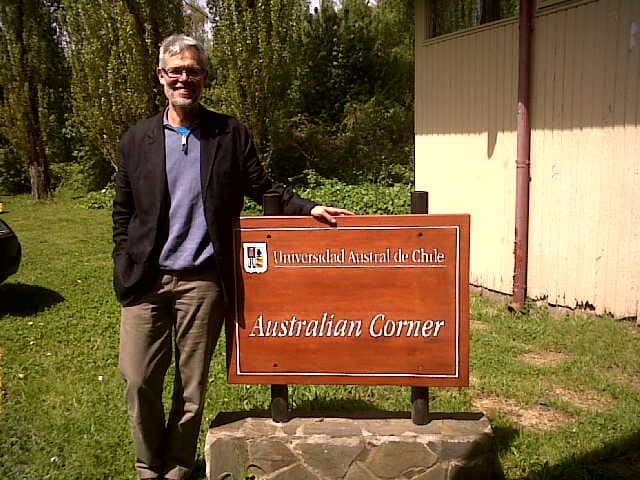
He immediately recognised the mistake, pronouncing "B" instead of "V" in the word vanilla, which is a common linguistic practice among people from several Latin American countries.
"That's why sometimes I say 'Bictoria' instead of 'Victoria'. It sounds weird for Australians so many don’t understand me."
For this reason, the academic says he accepts his students’ demands and doesn’t think they’re unreasonable.
"I have to accept that I speak with an accent and that it is inevitable, and that people are frustrated with having to understand my accent," he said.
"I do my best by writing all the information on digital screens with all the instructions to help the students follow what I’m saying."
Almost half of all Australians (49 per cent) were born abroad or at least have a father or mother who was born in another country, according to the Australian Census data.
Prof Mariño says acquiring familiarity with all different accents is not an easy task.
"You have to get used to the way a person speaks to understand them. At first, your accent can complicate communication," he said.
"For example, I ordered a cognac at a party once and pronounced the word with the accent on the 'a', as you would in Spanish, but it turns out that in English the accent goes on the 'o' and that's why they couldn’t understand me."
Prob Mariño says that he is not the only foreign lecturer at the University of Melbourne and he adds that often people are surprised to discover that he has an extensive English vocabulary.
"They tell me that I have a very rich vocabulary. It’s because I speak Spanish which gives me a sound base for Latin and that helps me with English, therefore English is easier for Spanish speakers than for people who come from Asia or Arabic countries."
But he still finds it difficult to talk on the phone and usually prefers face to face conversations.
He says that when he tries to organise anything complex over the telephone with people who don’t know him, the person on the other end often hangs up on him because they don’t understand him.
But the professor has a healthy sense of humour so he finds the funny side to every mispronunciation.
"In the end, when we adopt a new language we mix things up because you start thinking in two languages, English and Spanish," he said.
"I still have the accent, but compared to my situation when I first arrived, I think I have improved a lot."
He’s also married to an Australian woman who steps in if he ever needs any help, so he says he’s fortunate.
"It is impossible to speak English without an accent if you were born abroad and came to Australia as an adult; there is not much I can do about it, but I think that if a person wants to improve their accent it is good to try and speak English as much as possible and interact with native speakers as much as possible, to improve your pronunciation and to understand the way words are ordered in any communication in English. It’s also good to listen to the radio and watch Australian television."
He says that anyone who comes to Australia will eventually improve their spoken English.
"You have to accept the challenges and remember that eventually you will end up speaking two languages in Australia and that is an advantage that not everyone has, most people who live here are fluent in one language,” he said.
For this reason, he believes there’s no place for feeling embarrassed about speaking English with an accent, nor should it be seen as a problem.
"They should not feel inferior, on the contrary, in a certain way it is an advantage over those who speak only one language. Despite the difficulties, I was able to complete a PhD and on several occasions, I was selected for positions where I competed directly with Australians. For that, I feel extremely proud,” he said.



