Key points:
- Nine Asian elephants were relocated from Melbourne Zoo to a new home at Werribee Open Range Zoo.
- The growing herd reflects the success of Australia's conservation efforts.
- Three elephants were gifted by Thailand as a part of 'elephant diplomacy'.
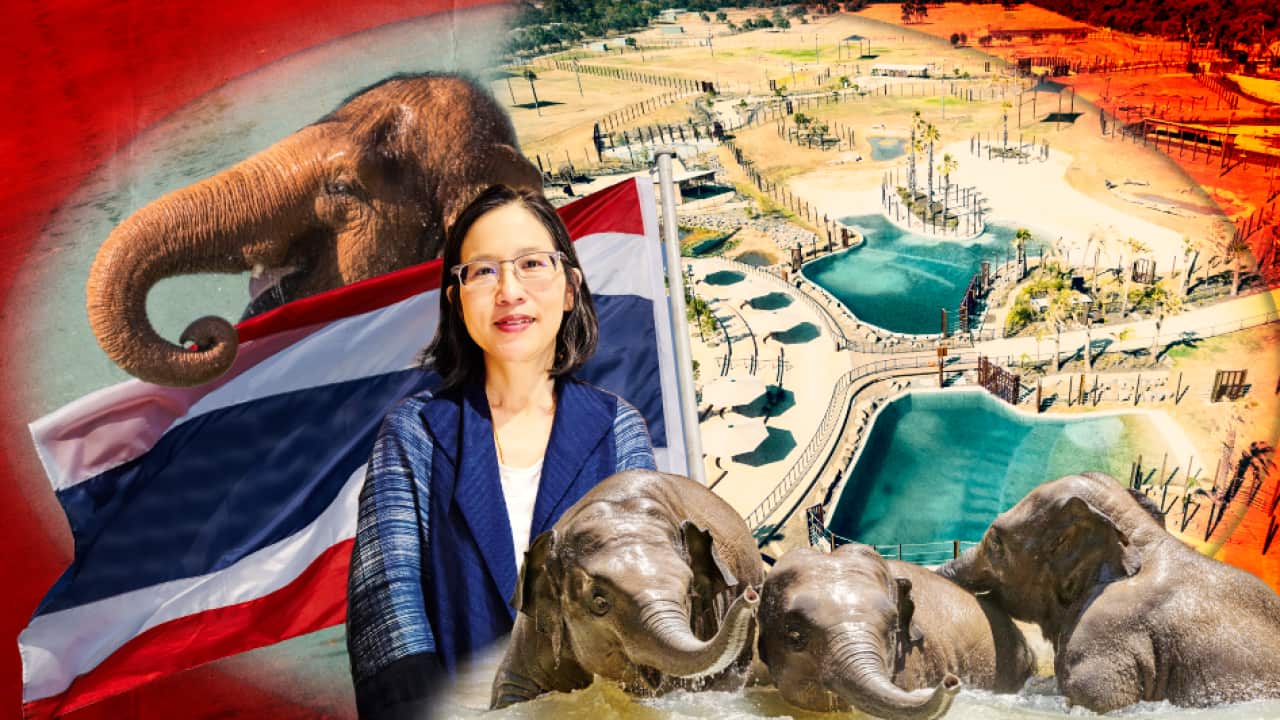
With a combined weight of almost 23 tonnes — equivalent to that of a humpback whale — nine Asian elephants recently made the 40km trip in custom-built crates from Melbourne Zoo to a new purpose-built enclosure at Werribee Open Range Zoo.
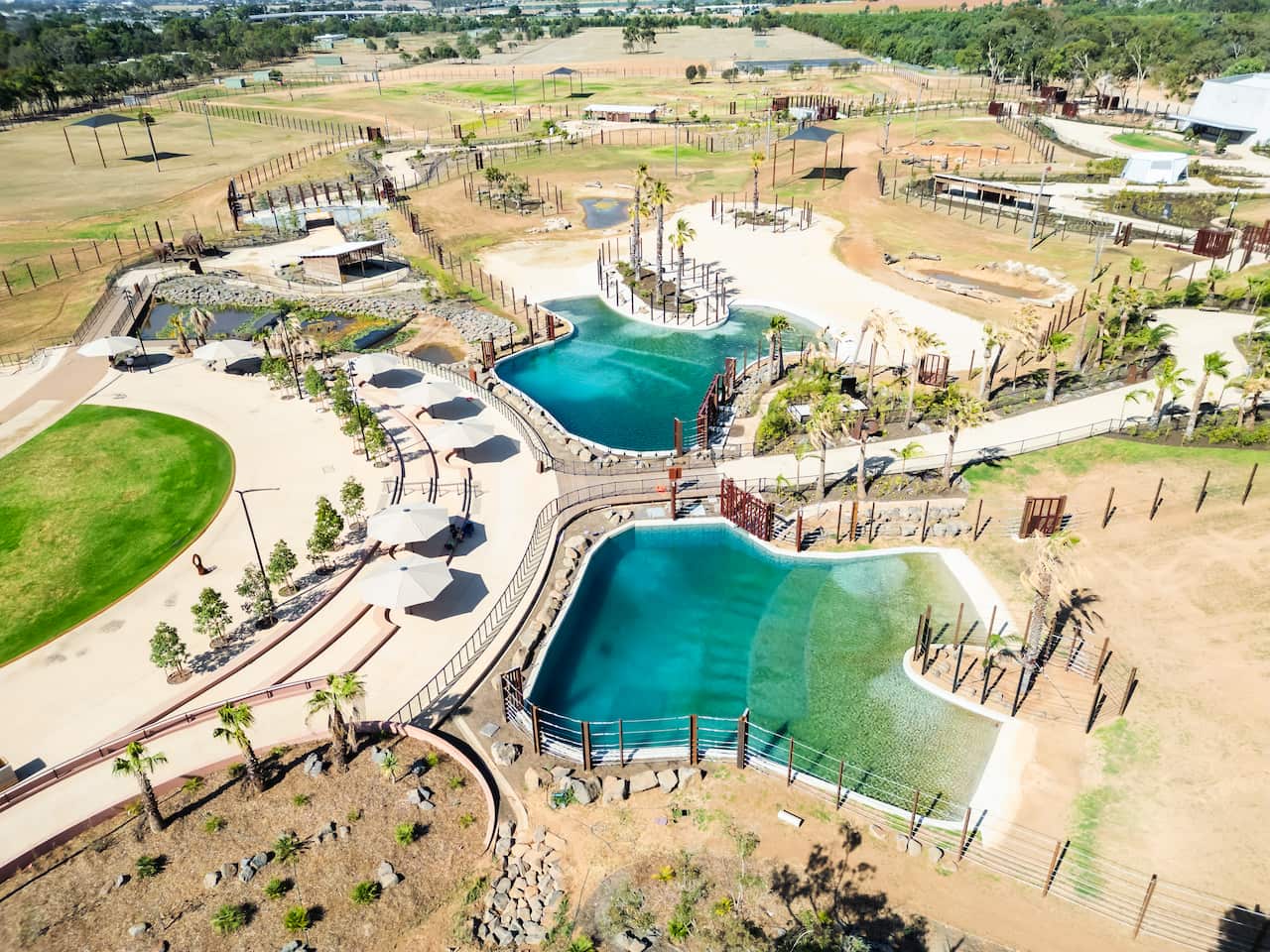
The herd found a new home at The Elephant Trail, part of the zoo's newly opened $88 million elephant sanctuary.
What visitors to the park may not know is that three of the nine were originally gifted to Australia from Thailand as part of a conservation partnership aimed at increasing the population of endangered Asian elephants.
In 2006, eight Thai elephants made the journey from Thailand with three — Dokkoon, Nam-Oi and Kulap — settled at the Melbourne Zoo, while the rest were sent to Taronga Zoo in Sydney.
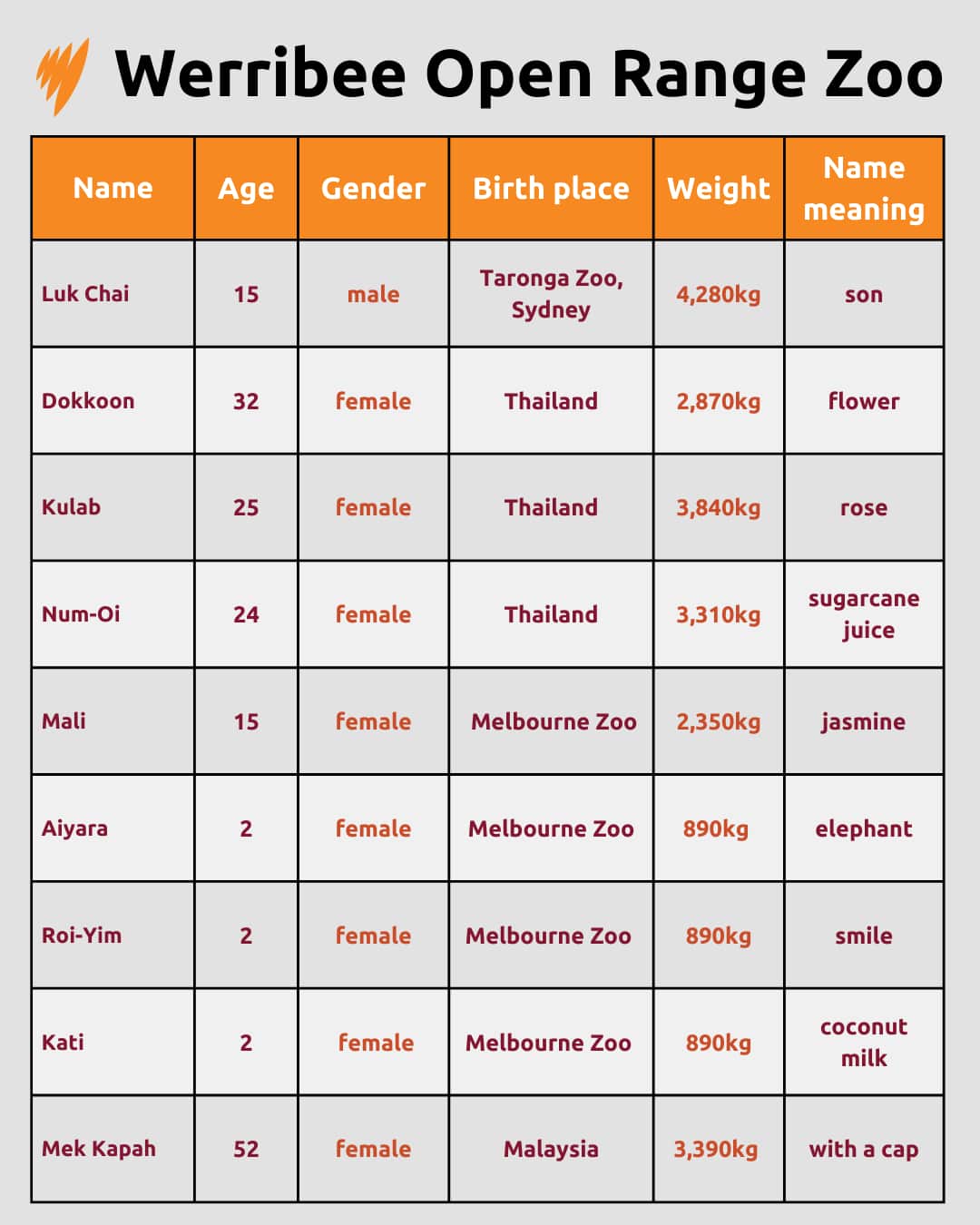
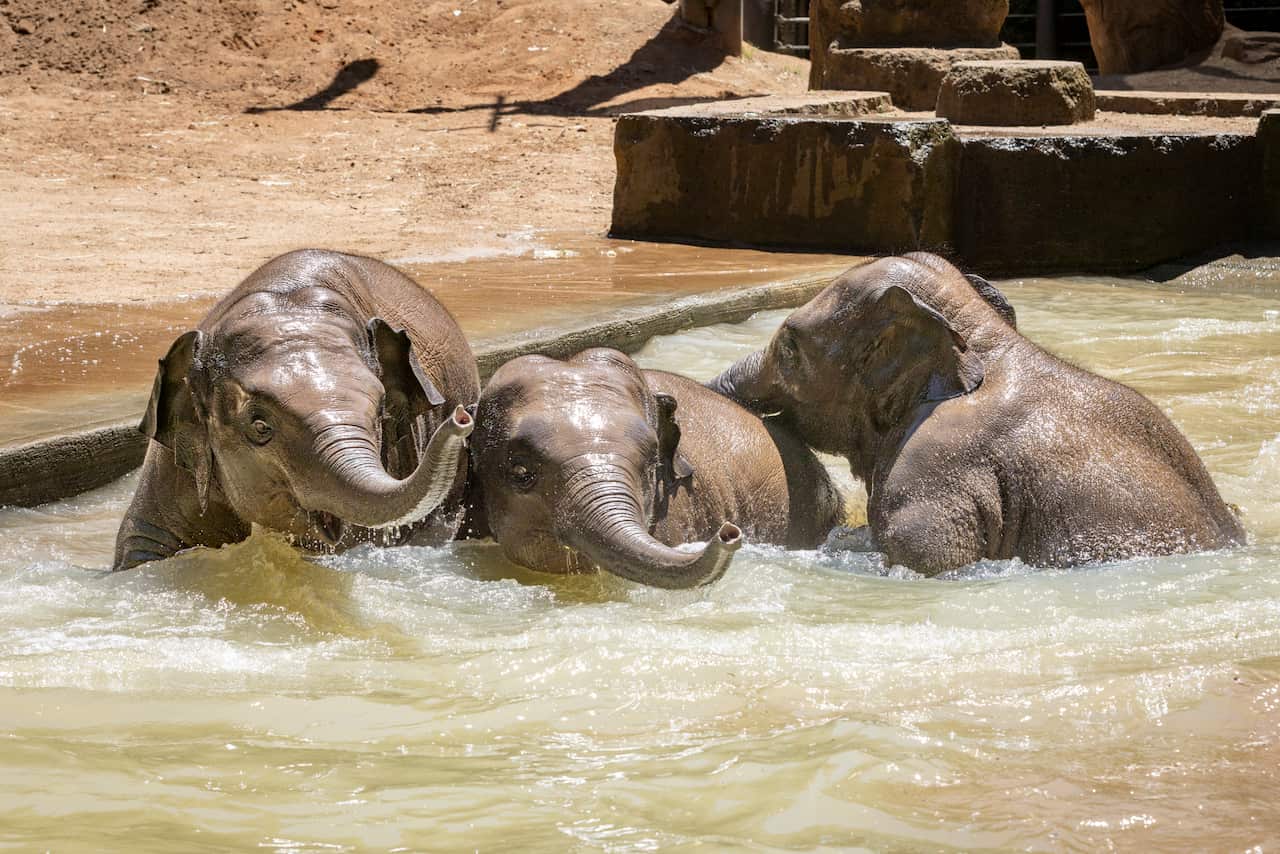
The relocation in February was prompted by the arrival of three new calves to the Melbourne Zoo herd between November 2022 and January 2023 — Aiyara, Kati and Roi-yim.
Other elephants in the herd include 15-year-old male Luk-Chai - born at Toronga Zoo in 2009 - who weighs 4,280 kilograms.
Mali, born to Dokkoon in 2010, was the first female elephant born in Australia, while Mae Kapah is from Malaysia.
This form of exchange is a way to build close and strong ties, Thailand’s ambassador to Australia Arjaree Sriratanaban said.
"(It also shows the) trust we have in our partners' countries to care for these significant animals. It also reflects our shared commitment to raising awareness and promoting elephant conservation," she told SBS Thai.

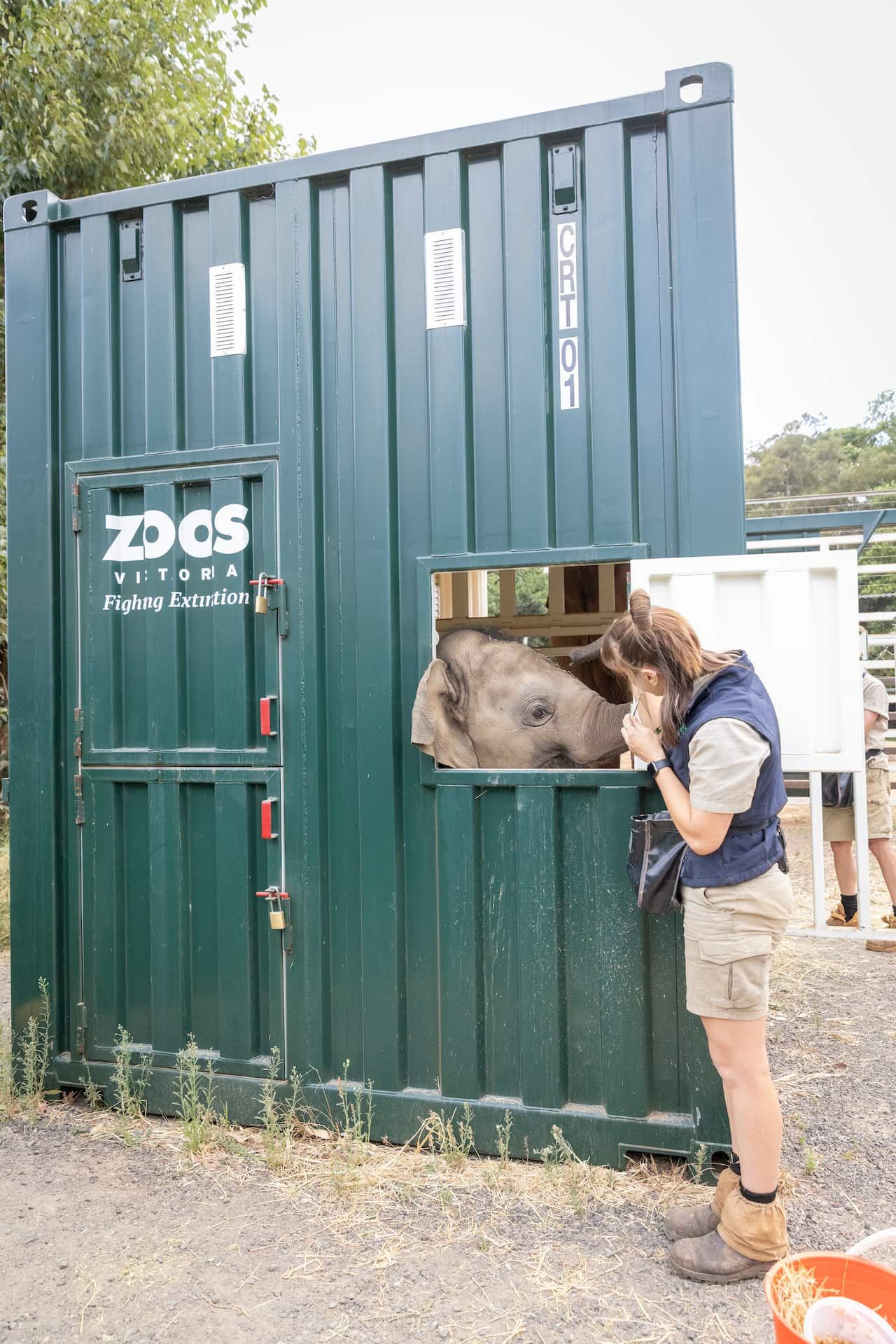
The relocation of the herd took five days and involved a team of 21 keepers, logistics experts and veterinarians.
Preparation for the relocation was five years in the making, including months of crate-training elephants to ensure safety and comfort.
Victoria's Premier Jacinta Allan described the facility as a unique bridge between the worlds of elephants and humans.
"It's a new home that is 21 hectares in size, the equivalent of five MCGs in space for the elephants. And it's got facilities for both male and female elephants," she said.
The Elephant Trail at Werribee Open Range Zoo began after extensive research into elephant behaviour in the wild, and was designed to closely mirror the natural environment of Asian elephants.
It features six habitats, a swimming pool, waterholes, herd barns, and a separate bull barn.
Dr Jennifer Gray, CEO of Zoos Victoria, said the habitat set a new benchmark for elephant care.
"We have a team that have been committed to letting elephants be elephants," she said.
"We've seen them change, they've exercised more, (and) they're calmer. They’re more relaxed than they've ever been, and they really are loving this new space."
Powerful cultural icon
Woven throughout Thai history, elephants play an important role in various aspects of Thai people's way of life.
"In the past, elephants have played an important role in (the) agricultural sector, logging, transportation, including in times of wars," Sriratanban said.
"The image of elephants can now still be seen as a symbol on our flag, including ambassadors' flags displayed at the ambassadors residences overseas."
Their importance is formally recognised with Thai National Elephant Day on 13 March each year.
"Elephants are not native to Australia, so they cannot be seen here in the wild," she said.
"Along with seeing elephants here, there are also (cultural) stories about the elephants that are important to share with the visitors. Their presence helps connect and inform the public in Australia about Thai culture."



