


Neuroscience and Molecular Biology researcher Deniz Ertekin works at the Queensland Brain Institute at the University of Queensland. She and her team are working on a project that’s studying sleep and attention in fruit flies.
She says flies are a great model for the study of human sleep as the experimental environment can be tightly controlled.
“We can also study how neurons in their brain communicate, and how they keep them awake or put the fly to sleep.”
She says there are many similarities between flies and humans in the way they sleep.
“Young flies sleep longer, just like babies need more sleep or when flies are given coffee, they stay awake. The fly sleep is under the circadian clock, meaning that they go to sleep at night just like us. They are also lucky to have a midday siesta," Mrs Deniz told SBS Turkish.
Researchers are trying to identify novel genes affecting sleep in fruit flies as they share, besides sleep behaviour, 75 per cent of the genes that cause disease in humans.
The project involves video recording the activity of individual flies over multiple days and analysing their behaviour with customised software. This allows researchers to measure how long and how deeply the flies sleep.
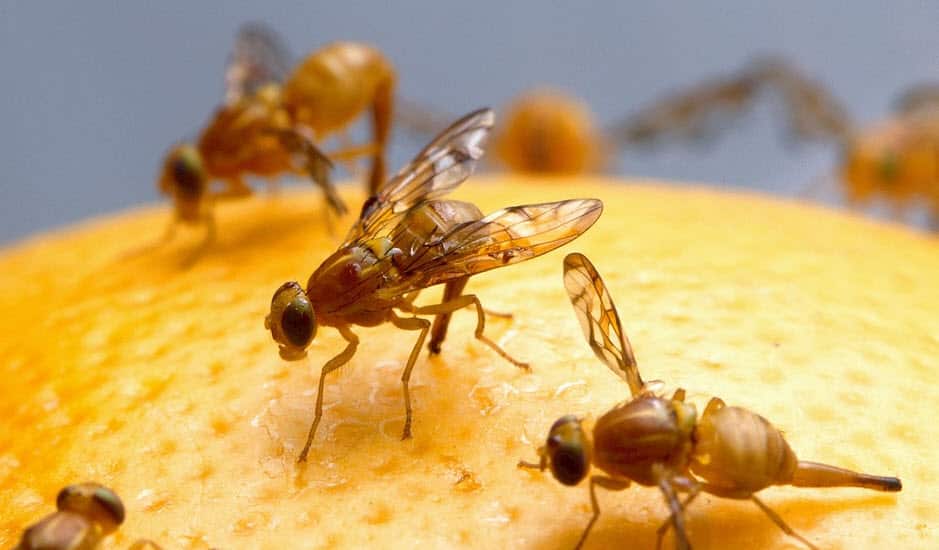
To measure how deeply a fly is sleeping involves 'tickling' the fly every hour to see if it wakes up.
To most people, fruit flies are just pests. But to scientists, she says, fruit flies are an important model organism and understanding what goes on within these tiny insects can reveal important things about the basics of human biology.
NASA is studying fruit flies in space to help understand the effects of long-duration space missions on an astronaut’s body and the way the body responds to new and stressful environments. Fruit flies and mammals have similar structural, functional and genetic components.
“They are not humans with wings, but we do have some of the same genes to make organs,” Mrs Deniz says.
'Ethical dilemma'
Her job also requires Mrs Deniz to work on other animals to understand the mysteries of the human brain. But she says she isn’t comfortable working on some animals.
“I couldn’t work on mice because of my ethical concerns.
“I am comfortable working on flies. I have been working on them for seven years. I remove their brains under a microscope and look at the neuron cells in their brain,” she says.
Although there is no ban on operating on fruit flies in laboratories but there are rules that requiring minimizing pain and distress to animals in the lab.
“We keep them in tubes with food and operate within ethical rules. They shouldn’t feel pain, so we put them to sleep before we operate,” she says.
The mysteries of the fruit fly brain have kept Mrs Deniz busy for the last seven years and she says it will continue to do so for several years to come.



