On Tuesday last week, 8 March, when Switzerland's Court of Arbitration for Sport (CAS) ruled against Franco Pellizotti and Pietro Caucchioli and banned them for two years, Friday arvo drinky-poos at the UCI probably got brought forward for what many are regarding as a landmark decision in favour of the biological passport program.
They might've even gone bonkers in Aigle and opened a few cans of cocktail frankfurts to accompany the champagne, Nestlé chocolate and Swiss cheese. (For those weak of stomach, don't try this at home.)
CAS found "strict application of such a program could be considered as a reliable means of detecting indirect doping methods". UCI spokesman Enrico Carpani told the New York Times that, "We were always convinced that our program was good" and "We are proud of what we have accomplished"; David Howman, director general of the World Anti-Doping Agency (WADA), said the CAS ruling "has proven [the biological passport program] can withstand legal and scientific challenges"; and Slipstream Sports' CEO and team manager of Garmin-Cervélo, Jonathan Vaughters, was perhaps most effusive in his praise, saying it was "monumental for our sport".
I would agree the decision is significant and praise should be given to the UCI for their efforts. But as far as I'm concerned, the biological passport program, still three years young, does not warrant complete vindication.
"I don't think we're at the point where anybody is throwing up their hands and saying, 'Oh no, we can't possibly do this [use EPO by micro-dosing] anymore'," doctor Prentice Steffen, Garmin-Cervélo's team physician, told me in a phone interview last week while at the Paris-Nice cycling race.
You can still get away with it?
Floyd Landis, who now goes by the familiar moniker of "Disgraced champion of the 2006 Tour de France", has said on a number of occasions since May 2010, when he finally admitted to PED use throughout his professional cycling career, that micro-dosing of EPO and careful timing of reinjecting stored blood, otherwise known as an autologous blood transfusion (as opposed to using someone else's, or homologous blood doping), is still an avenue by which to avoid detection.
As VeloNews' Charles Pelkey noted in one of his terrific 'Explainer' columns (story here), the urine test used to detect recombinant erythropoietin, first used at the Sydney Olympics and now more than 10 years old, can only pick up synthetic EPO within a 72-hour timeframe; after that and it's over to the blood tests and the biological passport to pick out above or below average variations in haematocrit (percentage of red blood cells) and/or reticulocytes (new red blood cells). Furthermore, injecting EPO intravenously, as opposed to the more common subcutaneous method, is said to shut the 72-hour window down to a mere few hours.
Still, as Dr Steffen, a fellow of the American Academy of Emergency Medicine, says, the "opportunity", for want of a better word, to dope without detection is narrowing, which, logically speaking, should therefore reduce the propensity to cheat. "I think the power of deterrence is just a bit stronger, and I think it's going to weed out a few of the people. And I think some of the people that are going to continue are going to get caught, because the margin of error is again that much narrower," he said.
But with such a long culture of tackling up to the eyeballs and getting away with it, "When you are trained to get away with things on the field, it must spill over into conduct off the field," wrote Sydney Morning Herald columnist, Paul Sheehan, this week. He was referring to the perennial week-in, week-out indiscretions of rugby league players, or to use his headline, "mongrel-headed gladiators" – though his sentiments apply across all sporting codes.
When doping is in your DNA
Which brings me to Riccardo Riccò.
If you believe Frenchman Jérôme Pineau, Tricky Ricky had been doping for half his life: "I have some Italian friends who, when they raced with him at 15 years old, told me he boasted that he doped and even showed them how he did it," said the Quick Step rider in his blog for Vélo Magazine, days after Riccò was busted for EPO-CERA at the 2008 Tour de France.
How do you change someone like that? Doping is part of his DNA. It's who he is. A poor excuse for a biker racer, and a worse excuse as a human being.
"Anyone who's doing a lot of the things – and even if you listen and believe only half of what Landis is saying – people succumb to pressure," Scott Sunderland, a former sport director with Team CSC (now Saxo Bank) and Team Sky, told me. "It's just chemically in these people's minds that they have to do this; they want the success, and they're willing to take the risk and pay the price if they're caught.
"Particularly if they're been making good money till then and they can support themselves," said Sunderland. "Teams pick them up within 12 months, like your [Ivan] Bassos and that. These guys have got a lot of ability and they're dedicated to the training they do. So they're going to be back."
When did Riccò get back on the program?
But what I want to know is this: After his suspension in 2008, when did Riccò start doping again? Because Vancansoleil, had they known he was a rotten egg with a mindset polluted as the Ganges river, could certainly have done without the publicity, which almost cost them a start at the Giro d'Italia. And the estimated A$1.5 million salary they agreed to pay Riccò could have easily bought them two or three very good riders instead.
I asked the UCI whether he was tested during his 20-month break where he seemed to learn nothing about repentance, to which Carpani replied by e-mail: "Riccardo Riccò has always been part of our protocol of monitoring along the 20 months of its suspension (as well as it is the case currently with Valverde). "All 'major' riders are submitted to the same treatment: in other cases we restart following and checking them during the last 6-12 months."
I then asked him: By following UCI anti-doping protocol, was both urine and blood testing conducted on Riccò during this time? And how many times was Riccò tested during his 20-month suspension? "Yes both urine and blood were tested, but I can't tell you how many times," replied Carpani.
So signore Riccò was a 'major' rider, and was tested according to the protocols and spectrum of tests required by the biological passport program – but at no time during his suspension was his new team notified of any anomalies. And according to La Gazzetta dello Sport, two days prior to being admitted to hospital for an alleged botched blood transfusion, he underwent – and passed – a mass-haemoglobin test as part of an independent screening programme his former trainer, the late Aldo Sassi, demanded he undertake as part of the deal to work with him.
So who's to say, had he stored his blood at the right temperature and the transfusion went smoothly, Riccò would have been caught?
"Once an idiot, always an idiot"
While sending him to the moon, or being a prison beyotch, as is Fabian Cancellara and Mark Cavendish's respective wont for the Cocky Cobra, is not the answer, there is no place in the peloton for Riccò – who, now that he's recovered, still has the audacity to say he didn't dope on 6 February; the day he was rushed to hospital with his life in the balance. His place is in the psychiatric ward of Modena hospital.
"We are faced with a young guy who is sick inside, intoxicated by false messages, those of fame and success at any cost and by any means – who has lost all sense of the reality of life," Renato Di Rocco, Italian cycling federation president, told La Gazzetta.
Said Cancellara to L'Equipe: "Once an idiot, always an idiot."
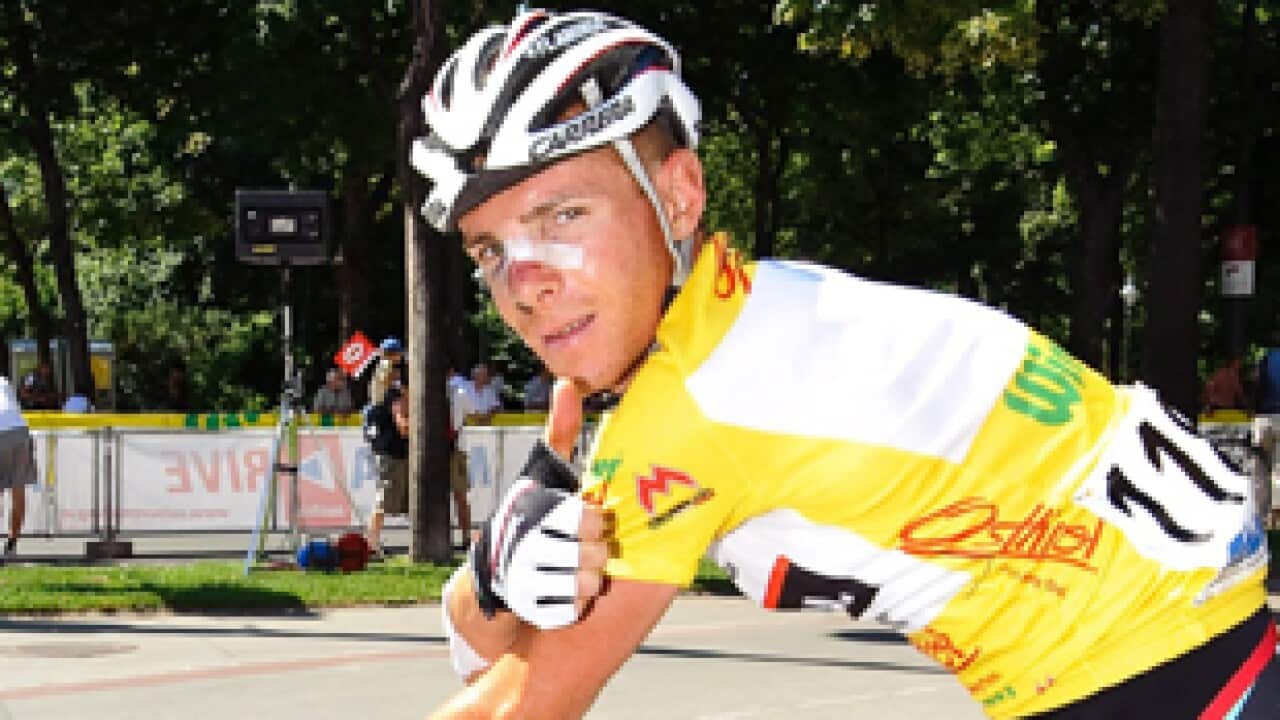
It's why I was delighted to see Vancansoleil, whose only crime is their blind faith in Riccò, duly receive their invite to the Giro, and the team, in particular stage winner and yellow jersey wearer Thomas De Gendt, perform so admirably in the Paris-Nice just past, and ride with equal verve at Tirreno-Adriatico.
To the UCI, keep working on refining the bio passport and augmenting its scope and reliability. We haven't won yet. It's not the time for complacency. It's time to ramp it right up.

Watch the FIFA World Cup 2026™, Tour de France, Tour de France Femmes, Giro d’Italia, Vuelta a España, Dakar Rally, World Athletics / ISU Championships (and more) via SBS On Demand – your free live streaming and catch-up service. Read more about Sport

Have a story or comment? Contact Us



