You may envy them for their wealth and fame and being able to ride a bike for a living. If it makes you feel any better, there's likely scores of pro's who hate what they do.
Former tennis great Andre Agassi's revelations last week that he took recreational drug crystal methamphetamine, or "ice", in 1997, then lied to the Association of Tennis Professionals (ATP) in an attempt to explain a positive drug test didn't really surprise me.
Now, in another extract of Open, Agassi's memoir, it's suggested that his father supplied amphetamines to his son before a tournament in Chicago - that raised my eyebrow.
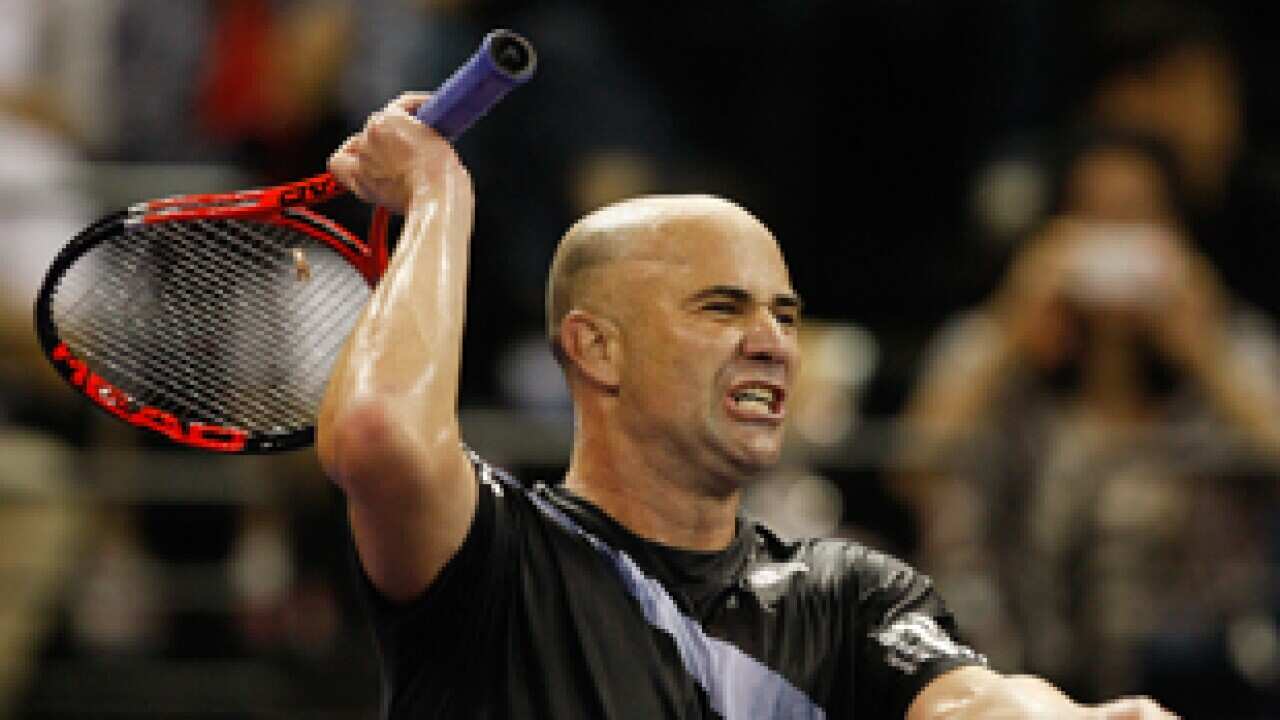
But what I find intriguing - though less surprising, as I've long held a theory about it - is Andre Agassi's love-hate relationship with his chosen sport. Or more accurately, hate-hate, since he hated tennis with a passion.
Wrote Agassi in 2006: "I play tennis for a living even though I hate tennis, hate it with a dark and secret passion and always have."
According to an article I read in UK newspaper the Guardian on the weekend, Garmin-Slipstream's David Millar and Chris Boardman - the man who won three Tour de France prologues and still holds the world record for the four kilometre individual pursuit – have admitted to not liking cycling. "Boardman liked winning, not cycling," it said.
Few deny the euphoria associated with victory, but the need to win and the physical and emotional stress that is part and parcel of the highest level of competition can lead to a wretched addiction.
Said Victoria Pendleton after the first of three gold medals at the Beijing Games last year: "I was an emotional wreck beforehand. I worried that I would be the one person who let down the team. So winning was just a relief. And even that felt like an anti-climax. It was very surreal on the podium, and as soon as I stepped off it, I was like, 'What on earth am I going to do now?"
What did the woman who the UK press hailed as "Queen Victoria" decide to do after Beijing?
"I soon worked out that the only thing I could do was to get another gold medal. I need one. If [the] 2012 [Olympics in London] goes to plan, winning the Olympics on my home turf, I might finally feel I've achieved the ultimate for me."
In professional road cycling at least, there is a difference worth noting when compared to tennis, in that an individuals win is often viewed as a team victory - otherwise we'd have 179 losers each day at the Tour! - and apart from the overall prize, there's plenty of minor competitions to strive for.
Tennis, like boxing or the match sprint in track cycling, is a martial game: eliminate or be eliminated. There can be only one winner. This in part explains the high rate of burnout among teenage and twenty-something tennis stars – there's no one else to take the slack.
Irrespective of sporting vocation, however, it does make you question that old adage, "It not whether you win or lose, it's how you play the game."
Nowadays in pro cycling, with so much money and pressure riding (pardon the pun) on individuals and the teams they ride for and the companies they represent, the phrase appears to be used less often.
For the weekend warrior or the Francophile whose eyes are glued to the box for three weeks each July, it may be hard to fathom that there are riders out there who look at their profession as "just a job".
But when you think about it a bit more, it's not that mind-boggling. These people simply have the capacity that enables them to make a living from riding a bike; it just so happens their trade is one that many - including myself - find fascinating, enjoyable to follow and entertaining to watch.
The Guardian article says Pendleton's "pleasure-free, angst-ridden drive to win is almost a defining characteristic of the great sports stars […] A terrible fear of failure is one of the problems but there are others: horrendous training schedules, endless travel, foul fans, boredom and lack of privacy."
When I read these words, I can't help but think of Bradley Wiggins and Mark Cavendish and even Cadel Evans, whose minds seem to constantly teeter on the brink of that love-hate relationship with cycling.
The surprise for me is not that many top sportsmen hate their job - it's that so many people are surprised to hear it.

Watch the FIFA World Cup 2026™, Tour de France, Tour de France Femmes, Giro d’Italia, Vuelta a España, Dakar Rally, World Athletics / ISU Championships (and more) via SBS On Demand – your free live streaming and catch-up service. Read more about Sport

Have a story or comment? Contact Us