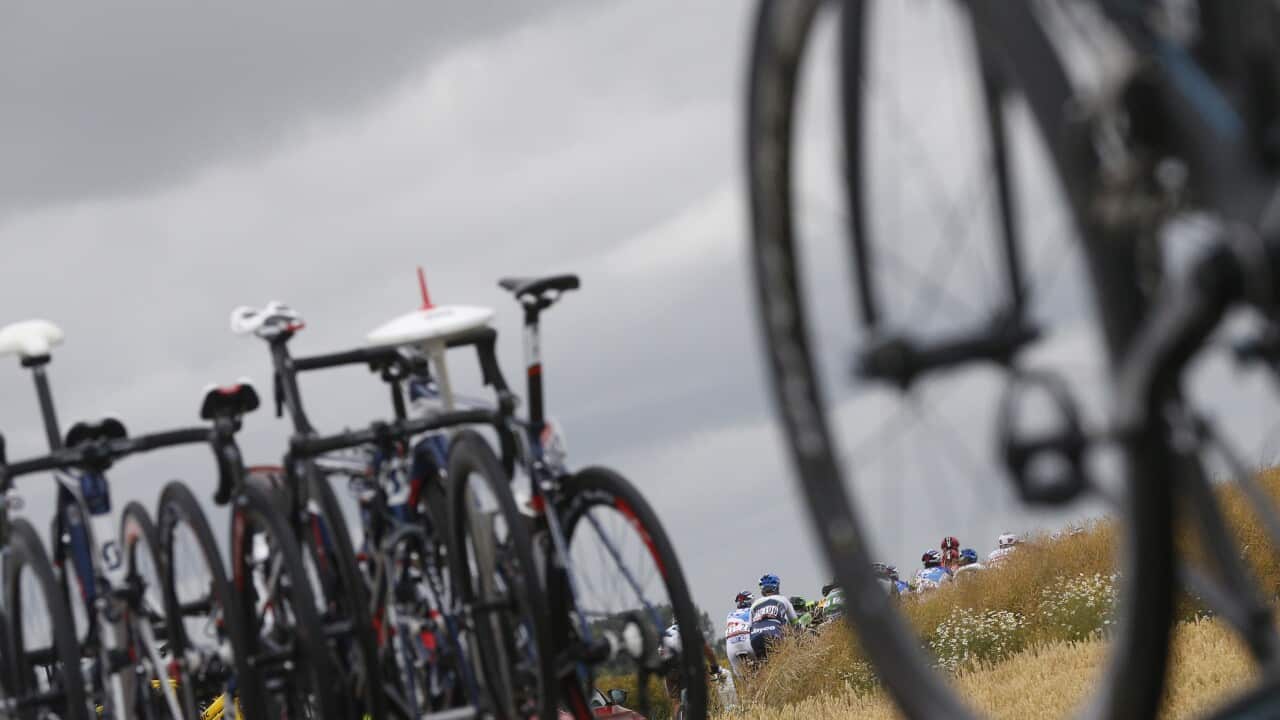
Of the 22 teams in the 2015 Tour de France, six have a bike brand as a naming-rights sponsor: BMC Racing, Cannondale-Garmin, Giant-Alpecin, Trek Factory Racing, Bora-Argon18 and Lampre-Merida. The cycling industry invests huge sums into the racing realm and the return is strong. “It’s not a cheap exercise,” one industry insider told me a few years ago, “but if we don’t have a WorldTour team, the decline in sales for that season is so obvious that our CEO – who had once questioned the value of supplying bikes to professional riders – insisted we find another team to sponsor.”
There was a time when new products were unveiled during tradeshow season towards the end of the year. It allowed distributors and retailers alike sufficient time to learn about the equipment and place their orders so it was available in time for the new calendar year. That was then, this is 2015.
June 2015 was Time To Launch! All around the world cycling brands were showing PowerPoint presentations to anyone who would listen and talking about “stiffer”, “lighter”, “stronger”, “more aerodynamic” products. Everything that was good, is now better – that’s the message many companies will have us believe. And more often than not, the claims are correct.
The improvement in cycling products over the past 20 years is immense. New materials, technology, design methods and a general refinement of certain aspects of a bicycle that had long gone unchanged means that there are now better bikes on the market.
Twenty years ago there were only a few carbon-fibre frames in the peloton at the Tour de France, the predominant material in 1995 was aluminium with a few still made from steel and perhaps a team leader or two using titanium. These days it’s only carbon-fibre… well, to say ‘only’ is to debase the fact that it’s the ideal material for building bike frames (and many components).
The Official Tour de France Guide (on sale in newsagents around Australia) features a summary of all the bikes used by teams in the Tour de France. The photos were taken at the beginning of the year and many of them are still in use by riders in the Tour… at least the model featured is still in use – but, generally, new bikes are issued in time for the Tour. Some, however, have been ‘upgraded’ to the new model but the hype of the launches isn’t always reflected in the selection made by the cyclists – some simply prefer to ride what they’re used to.
In the lead-up to the Tour some of the brands that hosted lavish launches included: Ridley, Merida, Lapierre, Trek, Giant, Specialized, Cannondale, Scott and Bianchi. Only a few of these new bikes are being raced in the 102nd Tour de France – but they will soon be available in the shops.
The pro peloton is important for the cycling industry but most important of all is that people like the bikes they ride and enjoy the act of riding.
(For more, see a review of ‘Launch Season 2015’ in RIDE Cycling Review issue #69 – on sale in September.)

Watch the FIFA World Cup 2026™, Tour de France, Tour de France Femmes, Giro d’Italia, Vuelta a España, Dakar Rally, World Athletics / ISU Championships (and more) via SBS On Demand – your free live streaming and catch-up service. Read more about Sport

Have a story or comment? Contact Us