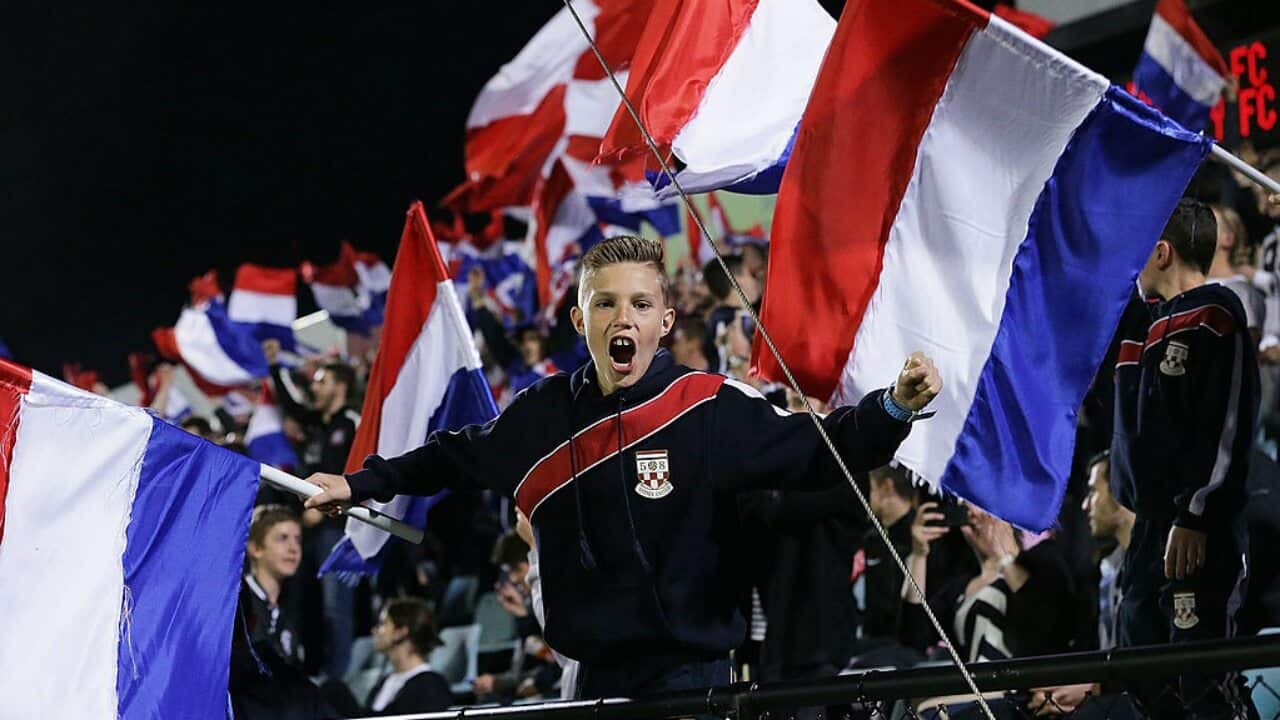
Fans will also be allowed to bring national flags into stadiums, having previously been banned under the NCIP.
Teams such as Sydney United 58 will now be able rename themselves Sydney Croatia, as they were initially known before the Bradley Report in 1990 recommended that clubs lose their ethnic image.
Although Sydney United are yet to decide whether they will change their name back, NPL side Charlestown City Blues will revert to their original name of Charlestown Azzurri to pay homage to their Italian roots.
The new principles will still discourage mono-ethnic identifiers but they are more guidelines than enforceable rules.
"These new principles are not intended to be enforceable regulations. They are really about helping clubs be more inclusive and welcoming of people from all cultural backgrounds," FFA CEO David Gallop said in a statement.
"The way a club identifies itself to its community can have a significant impact on whether a person feels welcome and included at that club.
"Following extensive consultation with the football community and independent industry experts, FFA recommends that clubs embrace broad identities that are not tied to a single specific culture.
"Clubs that celebrate diversity, promote inclusion and make people feel like they belong regardless of their cultural background are more likely to succeed.
"At the same time, FFA understands the importance of clubs being able to respectfully recognise their heritage and the specific communities that were instrumental in establishing and developing them.
"So long as they are not offensive, each club in Australia is now free to register the name and logo of its choice, including by incorporating a cultural identifier."

Watch the FIFA World Cup 2026™, Tour de France, Tour de France Femmes, Giro d’Italia, Vuelta a España, Dakar Rally, World Athletics / ISU Championships (and more) via SBS On Demand – your free live streaming and catch-up service. Read more about Sport

Have a story or comment? Contact Us