
I can still hear the voice thundering from my former colleague Mike Cockerill as if it was yesterday. It would be a line he would repeat, over and over, often while we drove into Gosford or Newcastle, or when Wellington came to play.
If it’s the big clubs who bring commercial benefits, it’s the small clubs who bring the pure joy and points of difference. They provide the richest stories that we, as sports lovers, are eternally drawn to.
And so it was with Mike’s words still ringing in my ears that I set off for what might just be the “smallest” match in the arguably the world’s best league.
Eibar and Huesca was not so much David versus Goliath; more David versus David’s younger brother in a battle to claim the title of Spanish football’s biggest underdog.
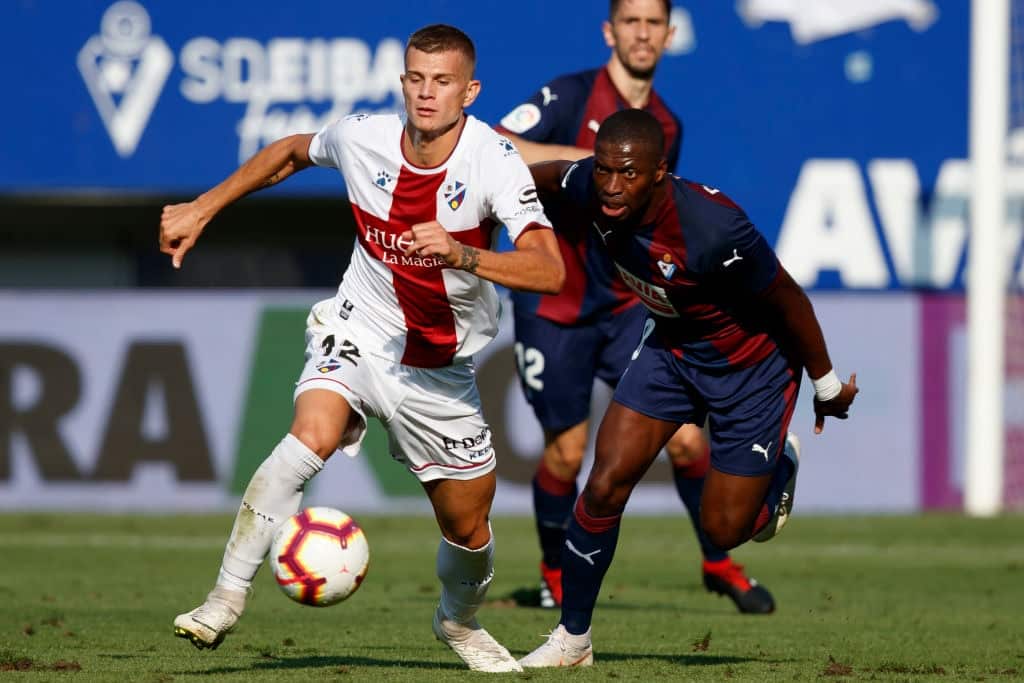
By Australian standards, these clubs would be in the same realm as most of our National Premier League clubs – but here they were, meeting on the biggest stage.
Yes, this is La Liga. The same La Liga which has become so big that, earlier in the week, it agreed to export annual matches to the USA. But this is as far from Madrid, let alone Manhattan, as you can get.
The story of Eibar is indeed Hollywood-esque. Set between San Sebastian and Bilbao in a small valley high up in the mountainous Basque Country, the town isn’t terribly easy to get to.
Eibar has only 27,439 people living in the entire municipality. That’s not even a tenth the size of Central Coast. It’s not even a third of the La Trobe Valley, home of the smallest club to ever play in the National Soccer League, the Morwell Falcons.
Despite that, the Ipurua Municipal Stadium is a beautiful, four-sided, all-seater stadium that meets all of UEFA’s standards and seats 7000 people.
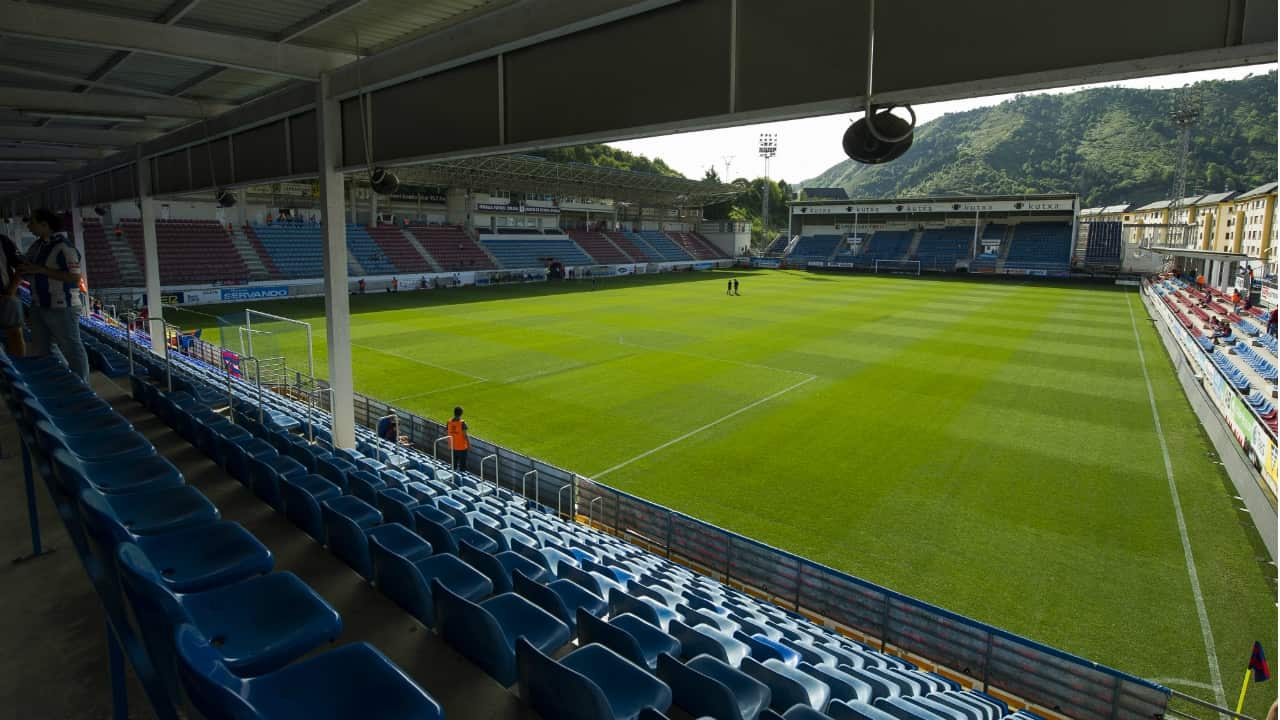
It is an impossibly tight venue: fans can touch the back of the net – literally – and those taking corner kicks are given barely a run-up. It’s therefore perfect for football, both players and spectators alike.
Every year since they were famously promoted in 2014, Eibar have improved their ladder position each year, ultimately finishing ninth last season.
And yet, as feel-good as their story is, was and continues to be, their rivals last Sunday may well out-do them in the far-flung stakes.
Promoted to La Liga for the first time ever in their history, Huesca (a town of just 52,000 people) can squeeze just 5,500 people into their stadium, Estadio El Elcoraz.
Huesca had several goes at forming a professional club but the only time the idea stuck was in 1960, when a group of Barcelona supporters – separated by 270 kilometres from the club they loved – decided put together their own team. In tribute, Huesca still wears the colours of the Blaugrauna.
For the first time ever, Huesca visit the Camp Nou in a fortnight as equals. Their only previous visit came in the 2014 Copa del Rey as a third-tier club, leading to an 8-1 slaughter, tallying up to a 12-1 aggregate defeat.
But after stunning Spanish football to win promotion via the play-offs last season, Huesca is planning, for want of a better expression, to “do an Eibar”.
And judging by how they played on Sunday, they might be in with a chance. Despite losing manager Rubi to Espnayol in the off-season, Leo Franco – the former Atletico Madrid and Argentine goalkeeper who finished his career at Huesca – enjoyed a memorable managerial debut.

More than anyone, he has Alex Gallar to thank. Huesca’s first La Liga goal was truly one for the books, as the hard-running Gallar outwitted three defenders and then finished beautifully.
A player who has spent most of his life playing for little more than petrol money in the third and fourth tiers, Gallar then curled in a free-kick that no defender could get a touch on. He’ll have to go a long way from Eibar to ever have a day like this again.
Despite dominating possession, the hosts could only rustle one goal late on and despite a relentless barrage, it was Huesca who defied all the odds to hang on to a famous victory. Their fans, many of who made the day-long journey, sung to the final whistle and probably all the way home, too.
We may yet be seduced by the Clasicos and more this season, but until then, let’s never forget to celebrate the smaller clubs.
After all, it is they who have the power to remind us of what can happen with a big dream and a little luck. Even in La Liga.

Watch the FIFA World Cup 2026™, Tour de France, Tour de France Femmes, Giro d’Italia, Vuelta a España, Dakar Rally, World Athletics / ISU Championships (and more) via SBS On Demand – your free live streaming and catch-up service. Read more about Sport

Have a story or comment? Contact Us