If they do that they would realise that an imbalance of power weakens a competition by eliminating the element of unpredictability and consequently diminishing its appeal among the fans at large.
The A-League installed its maligned cap to protect the competition from the excessive imbalance that reigns in Europe.
It is a sacrosanct fact that only a handful of teams can win the championship in Spain, Germany, England, France and Italy.
It would take a shock of massive proportions for a Granada, a Hoffenheim or a Southampton to prevail against the game's big guns that have bottomless pockets.
The same applies to the UEFA Champions League.
When was the last time a club from outside the five big leagues reached the final? Well, it was FC Porto, which beat Monaco in the 2004 final. Before that it was Ajax, which lost the 1996 final to Juventus.
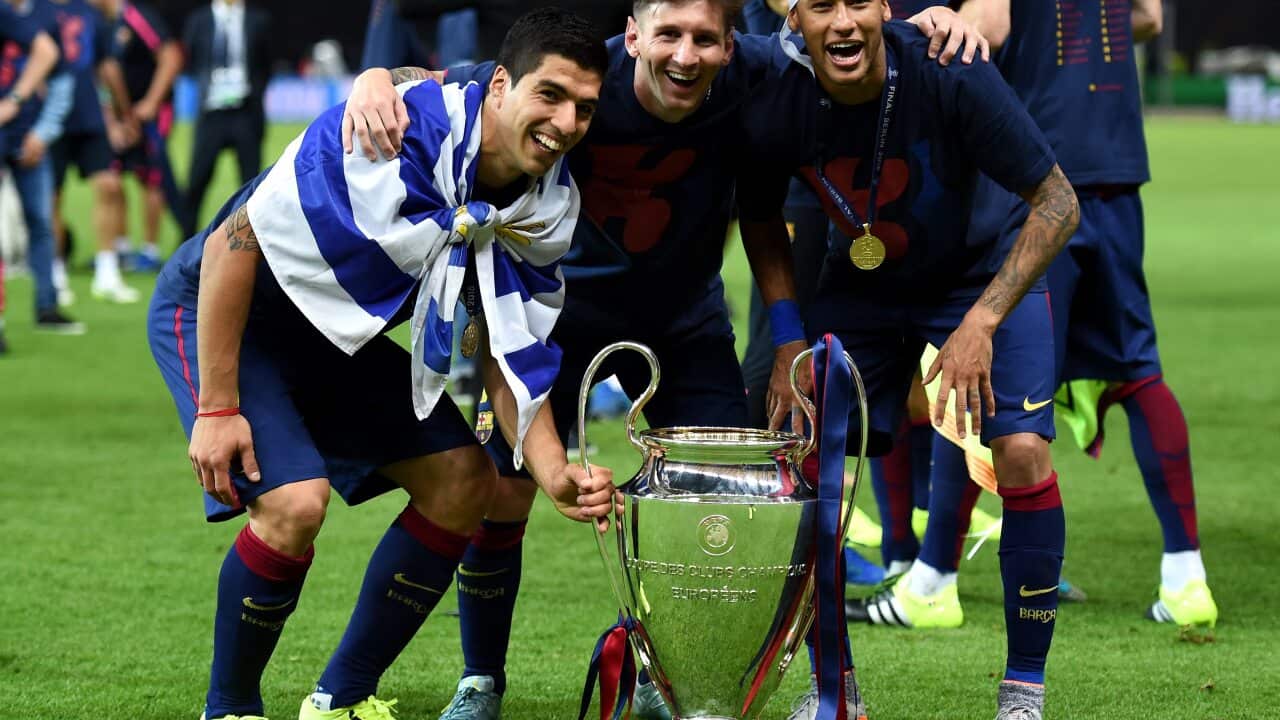
Europe's wealthiest clubs are all out in force in this season's Champions League, which is easily the best and strongest competition in the world.
Some say the quality of football in the UCL is better than that usually seen at the FIFA World Cup, although I have grave misgivings about this.
The problem with the Champions League, in any case, is that the competition only gets really serious from the knockout phase onwards.
The reason is obvious: the disparity in resources among the 32 participants makes picking most of the qualifiers from the eight groups a rather easy and straight-forward exercise.
This season's UCL groups are:
A: Paris Saint-Germain, Real Madrid, Shakhtar Donetsk, Malmo.
B: PSV, Manchester United, CSKA Moscow, Wolfsburg.
C: Benfica, Atletico Madrid, Galatasaray, Astana.
D: Juventus, Manchester City, Sevilla, Borussia Monchengladbach.
E: Barcelona, Bayer Leverkusen, Roma, BATE Borisov.
F: Bayern Munich, Arsenal, Olympiacos, Dinamo Zagreb.
G: Chelsea, Porto, Dynamo Kyiv, Maccabi Tel-Aviv.
H: Zenit St Petersburg, Valencia, Lyon, Gent.
It is blatantly clear that clubs like Real Madrid, Manchester United, Manchester City, Barcelona, Bayern Munich and Chelsea are virtually assured of progress to the last 16, essentially because their economic might enables them to acquire any player money can buy.
Of course, we all know that anything can happen in the funny world of football but even if any of these super teams has an off-day and falls to an outsider, the group phase gives it ample opportunities to recover and get back on track.
According to sportingintelligence.com Madrid's estimated income in 2014 was more than $848 million while Man United's was $816 million, just ahead of Bayern's $769 million and Barcelona $762 million.
When you compare this astronomical income with that of Sweden's Malmo ($62.8 million) and Croatia's Dinamo ($34.5 million), for example, you begin to understand why some fans are not too keen on some aspects of the Champions League's group phase and cannot wait for the knockout phase to start.
Group D is probably the most open of the lot and there is a glaring reason for this.
There is not much difference between the resources of the four clubs and it is fair to say that this relative economic balance has produced the most unpredictable group of the lot.
The situation facing Zenit, Valencia, Lyon and Gent is so tight that any one of these four clubs can progress to the next phase.
It's a perfect scenario because the group's outcome will more than likely be decided on Matchday 6 so it's anybody's game.
Which is precisely why the A-League needs to persevere with the salary cap.
Footnote: Madrid's starting XI for its weekend match against Real Betis did not have one single youth team product. Not since October 1965, when Ferenc Puskas was still playing, have the Madrilenos taken the field without any 'canterano'.

Watch the FIFA World Cup 2026™, Tour de France, Tour de France Femmes, Giro d’Italia, Vuelta a España, Dakar Rally, World Athletics / ISU Championships (and more) via SBS On Demand – your free live streaming and catch-up service. Read more about Sport

Have a story or comment? Contact Us



