In this era of billion-dollar TV rights the biggest concerns facing top-flight fans involve extortionate ticket prices and the increasing buy-up of the game's soul by brigades of prawn sandwich-eating executives.
Sometimes it is hard to imagine that as recently as thirty years ago going to a game of football could turn out to be a matter of life and death: the fire which ripped through a rickety wooden stand at Bradford and claimed 56 lives; four years later, the unimaginable horrors of Hillsborough.
Within the series of tragedies which left an indelible stain on the game and the reputations of those who governed and policed it, what happened at the Heysel Stadium in Brussels on 29 May 1985 rests somewhat uneasily.
Not for the shocking negligence with which the authorities allowed the 1985 European Cup final between Liverpool and Juventus to be played at such an horrifically inadequate and eminently unsafe venue.
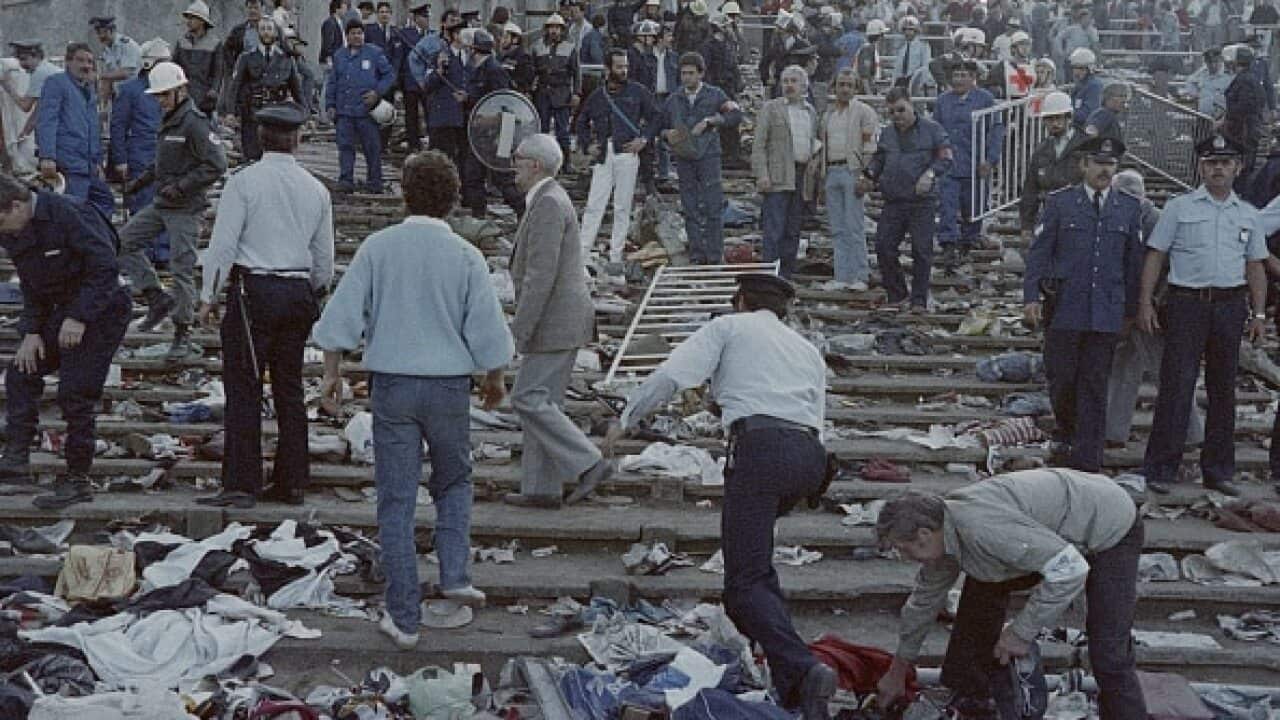
Not for the incomprehensible decision to go ahead with the game while the bodies of the 39 innocent victims were still being counted - plus 600 injured, and the unpalatable frivolities which greeted both Michel Platini's penalty winner and the presentation of the trophy itself.
But for the blame and guilt which swirled among supporters in its aftermath; understandable emotions which were still palpable 20 years on when the two clubs met for the first time since the tragedy in a Champions League quarter-final at Anfield.
Liverpool fans held placards spelling the word "Amicizia" - "Friendship" - and while the gesture was applauded by a large number of Juventus supporters, there were others who made a very public point of turning their backs.
The events of the night have been documented countless times but no amount of poring over the finer details will ever summon a sufficient answer - a cause not helped by the absence of an official inquiry - to the question of how on earth it was allowed to happen.
Liverpool fans told of gaining access to the crumbling stadium through holes in the perimeter wall; fans were kept apart by hopelessly inadequate stretches of chicken wire fencing, and the terraces were strewn with rubble.
Missiles were being hurled by both sides long before a charge from Liverpool supporters led panicking Italian fans to retreat and be crushed by a wall which toppled under the pressure.
Memories of the night have always sat awkwardly at Anfield, a stadium whose acquaintance to tragedy is movingly evident in the eternal flame and red marble memorial to the victims of Hillsborough.
Reference to Heysel is, understandably, harder to find: a small memorial plaque dedicated to the Heysel victims is inside the club museum, with the shirt worn by Kenny Dalglish on the night draped alongside.
If Liverpool as a club and a city struggled to come to terms with the events of that night in Brussels, English football as a whole was destined to never be the same again.
While events at Bradford and Hillsborough were to have a more direct effect on the ushering-in of a new era of all-seater stadia, Heysel focused the mind on hooliganism.
Heysel caused all English clubs to be banned from Europe for five years, with Liverpool serving an additional one year exclusion, a move which effectively ended an era of unprecedented dominance by English clubs in continental competitions.
Under the enthusiastic leadership of Margaret Thatcher, the British government passed a swathe of new laws designed to prevent known troublemakers attending matches abroad.
There were repercussions within UEFA too, with long-serving general secretary Hans Bangerter given a three-month suspended sentence by a Belgian court for negligence leading to involuntary manslaughter.
New generations of fans weaned exclusively in all-seater stadia must read the accounts of what happened at Heysel and wonder how on earth it came to pass in the name of football.
While blame and guilt inevitably still linger in some quarters when discussions turn to the blackest of football nights, in that respect, at least, the lessons have been learned.
Here, Press Association Sport looks at some key quotes of the Heysel tragedy:
"It wasn't until we were leaving the ground and there were ambulances everywhere and blue lights flashing, and lines and lines of soldiers and policeman, that it became clear it was something serious," - lifelong Liverpool fan John Mackin.
"There should never have been a European final played there because the ground was not up to it and the segregation was not good enough," - former Liverpool and Juventus striker Ian Rush.
"Something inside me died. I didn't play football to see 39 people dead in the stadium - this is not my philosophy of football," - then Juventus striker Michel Platini.
"It was a crazy night which swept away a joyful event to celebrate football and claimed 39 innocent victims," - official Juventus statement, 2012.
"Had Hillsborough not happened we may have dealt with it, but there has been a feeling that we just need to forget Heysel and hope it went away. That was always dangerous," - sociologist and Liverpool fan John Williams, 2005
"We have reached the stage now where football is at the crossroads. We cannot and are not willing to let this game be killed by irresponsible elements who have no place in football stadiums," - UEFA secretary Hans Bangerter, 1985
"We have to get the game cleaned up from this hooliganism at home and then perhaps we shall be able to go overseas again," - Prime Minister Margaret Thatcher on the subsequent ban on English clubs competing in Europe.
"With Juventus, I won the Scudetto [Italian league], the Italian Cup and the European Cup-Winners' Cup. But I don't feel as if I won the European Cup, not that night against Liverpool," - Juventus striker Paolo Rossi, 2005.
"The players knew about all of the events that night, including that people had died. We should never have played the game. Uefa insisted because they believed that the violence could have continued in the streets. But I certainly said I did not want to play," - Liverpool goalkeeper Bruce Grobbelaar.
"It was an embrace that died against a wall of indifference, which was unfortunately coloured black and white," - Gazzetta dello Sport report on Liverpool's gesture of friendship ahead of its first meeting since the tragedy in 2005.

Watch the FIFA World Cup 2026™, Tour de France, Tour de France Femmes, Giro d’Italia, Vuelta a España, Dakar Rally, World Athletics / ISU Championships (and more) via SBS On Demand – your free live streaming and catch-up service. Read more about Sport

Have a story or comment? Contact Us