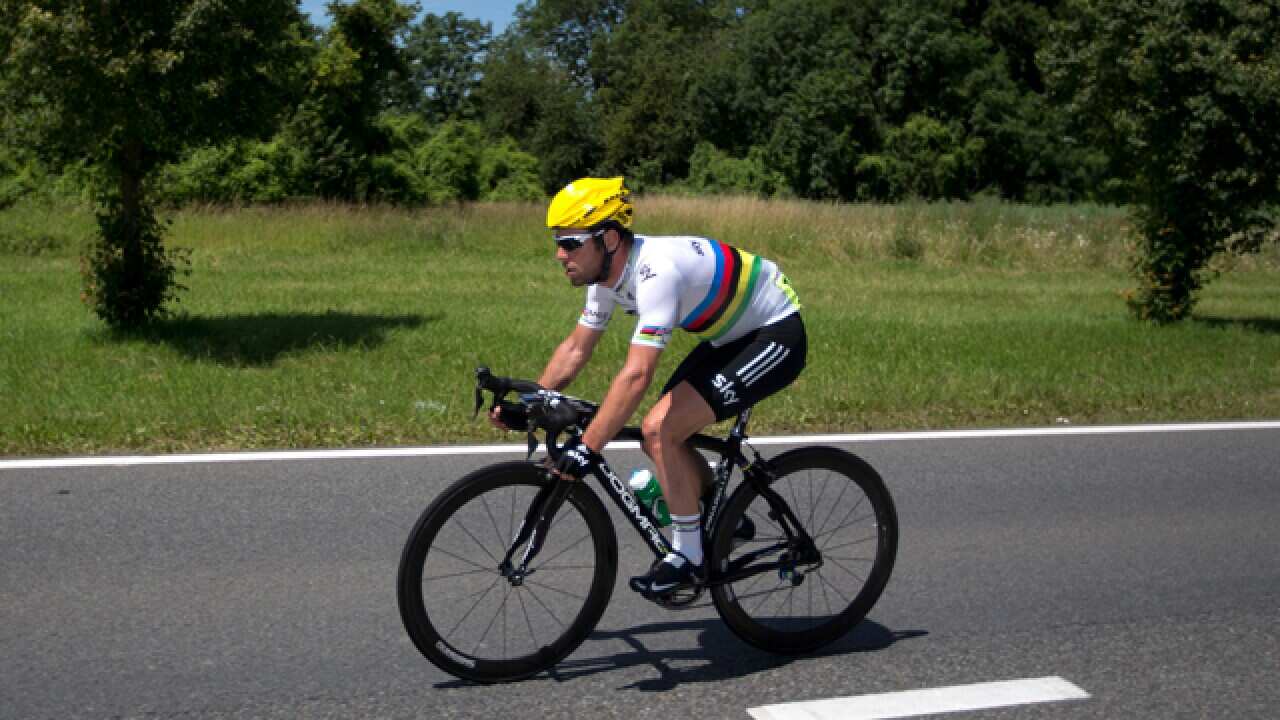
The haphazard organisations of trains under Mario Cipollini in the Saeco days, and Alessandro Petacchi in the Fasso Bortolo and Milram era, was taken to a whole new level under Bob Stapelton at Highroad.
Its ability to perfectly time its efforts was akin to the Tokyo Metro system. Well-oiled, effective and something that could always be relied upon.
With Tony Martin, Bernard Eisel, Mark Renshaw, Matt Goss and of course Mark Cavendish, it's fair to say that the team was also not lacking firepower.
But to put the success of Highroad down only to the composition of the train would be an injustice.
It's a mistruth that devalued the efforts of Cavendish. Cav was always quick to praise his team in the post-stage interviews of yesteryear, but it would be a mistake to say the Manx Missile was gifted wins, or that Highroad wasn't doing something special.
It's a mistruth that has been perpetuated all year, that Cavendish would require more than half of Sky to be competitive at the Tour de France, that Andre Greipel and Matt Goss's trains at Lotto-Belisol and Orica-GreenEDGE respectively would trump the world champion's solo efforts.
What was revealed in Tournai at the close of Stage 2 was a two-fold message.
Putting together a sprint train is a clinical process that is more complex than Highroad was ever given proper credit for honing. Lotto-Belisol, with all its sprint riches (Juergen Roelandts, Marcel Sieberg, Greg Henderson and Greipel) were left at the front slightly too early and it cost them.
Mistakes were also present in Orica-GreenEDGE. Boxed in and unable to give Goss clear air, the Australian had to be happy with third past the finish line.
Pulling off a train is not quite so simple as perhaps the past few years would have you believe.
Cavendish, meanwhile, went about his craft and as any master artisan does, producing a consistent result from a well-practiced effort. Winning is synonymous with the Mark Cavendish name.
Winning alone less so, but that Cavendish had a train at Highroad was more happenstance than prerequisite for him winning. He did it alone in Copenhagen, at San Remo, and on countless occasions before.
Of the top 20 riders over the line in Stage 2, not one is an unrecognised name in the world of sprinting.
This was no mean feat. For all the posturing that went on before the stage, before the Tour, Cavendish simply allowed his pedigree to shine through, and was a deserved, if slightly self-doubting winner.
With Peter Sagan of Liquigas-Cannondale in such good touch, Cavendish firing, and Greipel an angry man after the finish of Stage 2, this year's sprints, and the battle for the maillot vert, are going to be a treat.

Watch the FIFA World Cup 2026™, Tour de France, Tour de France Femmes, Giro d’Italia, Vuelta a España, Dakar Rally, World Athletics / ISU Championships (and more) via SBS On Demand – your free live streaming and catch-up service. Read more about Sport

Have a story or comment? Contact Us



