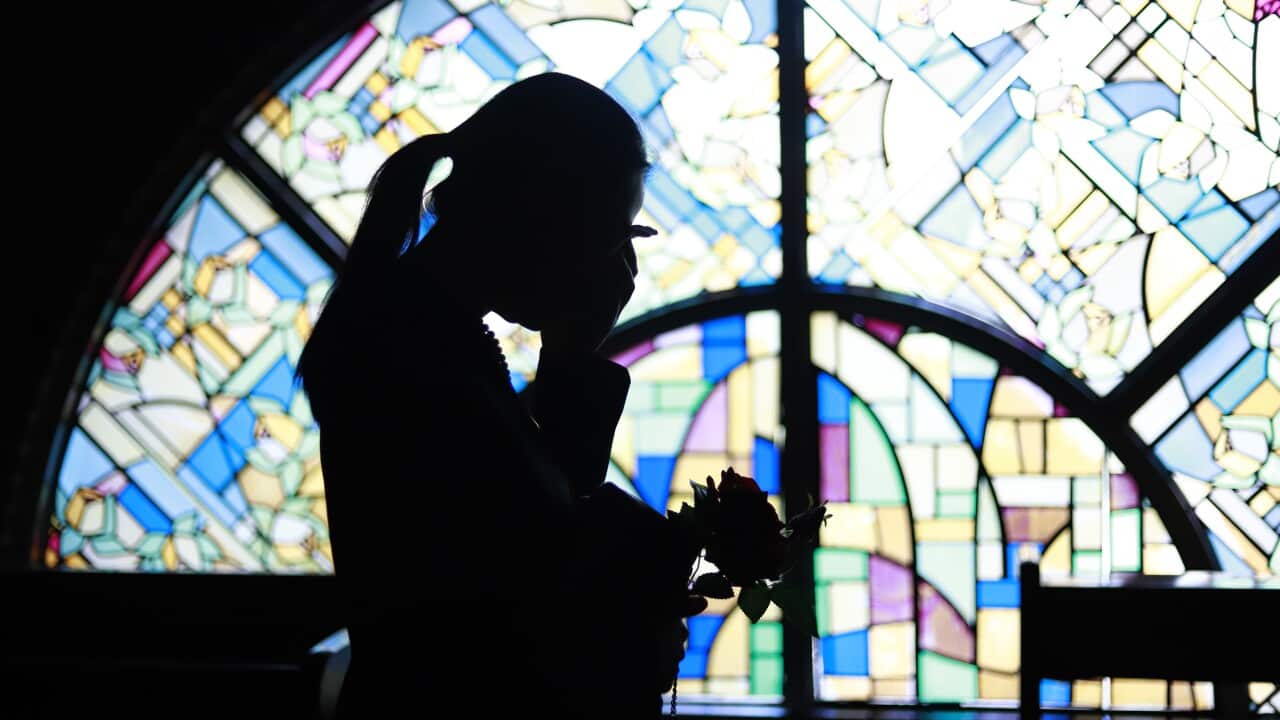
I’d never heard of homosexuality before. In my homeland, in Southeast Asia, it was almost non-existent.
My first exposure to it was in boarding school. People wouldn’t say the word “lesbian,” they’d just say “L” – if two girls were too close, too touchy-feely, someone would say “oh, they’re L.” I knew they meant it in a bad way.
During secondary school, I didn’t have the words for how I felt about my relationship with my friend Sam. When I heard we were being called “L,” I got very defensive and would always say we weren’t. But if another girl got too close to Sam, I would get jealous.

Sam ended up moving to Australia to study. I didn’t think too much about my sexuality at the time – I felt Sam was a very special person in my heart, and that is all there was to it.
After Sam left for Australia, I became active in a bible study group and was very involved with church. When I was in college, I also started dating men, thinking that was the way to go. It wasn’t until I moved abroad for a university scholarship that the conflict between my faith and my sexuality became a lot more pronounced to me.
I learned about the harm of discrimination against LGBTQI+ people, and the high suicide rates in the community.
At university, I learned about the harm of discrimination against LGBTQI+ people, and the high suicide rates in the community. As an international student, my church friends were my family. I spent so much time with them in and outside the church. Being young and idealistic, I thought my loving church would consider opening their doors to welcome queer people, so I spoke with my church elders.
The response from my church was that homosexual people are “sexually broken people” who commit sinful behaviours and need repentance. I couldn’t reconcile that, and they would not consider or change their views.
Somehow, within the same year, I started having feelings for a girl from another church. I confided to my close Christian friends about this and the news spread really quickly. Whenever I met up with them, all they wanted to do was to pray my gay away. The same bible verses that taught me about using faith to overcome challenges in life had turned into condemnation. I was told that I did not have enough faith and that my spirit was weak. I felt extremely rejected and broken, and I decided not to get hurt again by the church. That’s when I stopped going to church.
Fortunately, other people I met while studying abroad were more accepting. I was invited to LGBTQ events, and I made many new friends who were open and inclusive. These people from LGBTQ communities were not like what my old church described them to be. They were kind, non-judgemental, and genuine.
I had the space to find myself, and decided to start a relationship with that girl from the other church. I was slightly more comfortable with my newfound sexual orientation, but the girl I was dating was not ready to come out. It was a very difficult year for us, and we decided to move to a new country together to start over.
During my years as an international student, Sam and I had stayed in touch – we wrote each other letters, phoned each other (when I had enough money to buy a calling card) and chatted on MSN. She supported me during this difficult time.
After moving to a new country, my female partner and I continued to experience discrimination. In less than two years, she decided to return home, alone. It was a very dark and confusing time for me, and I did not have anywhere to turn.
Things started to improve for me when I met my second girlfriend, who was more mature than me and a God-loving person. I connected with her on a queer dating website, because in her profile she wrote about how much she loved God. Together we attended an affirming church lead by a gay pastor. I reconciled my faith and sexuality. When I stepped into the church and saw the writing on the wall, “welcome home,” I cried immediately.
I got baptised soon after. I actively attended bible study. The more I studied the bible, the more I realised the bible has never condemned a loving, committed, Christ-centred relationship based solely on gender.
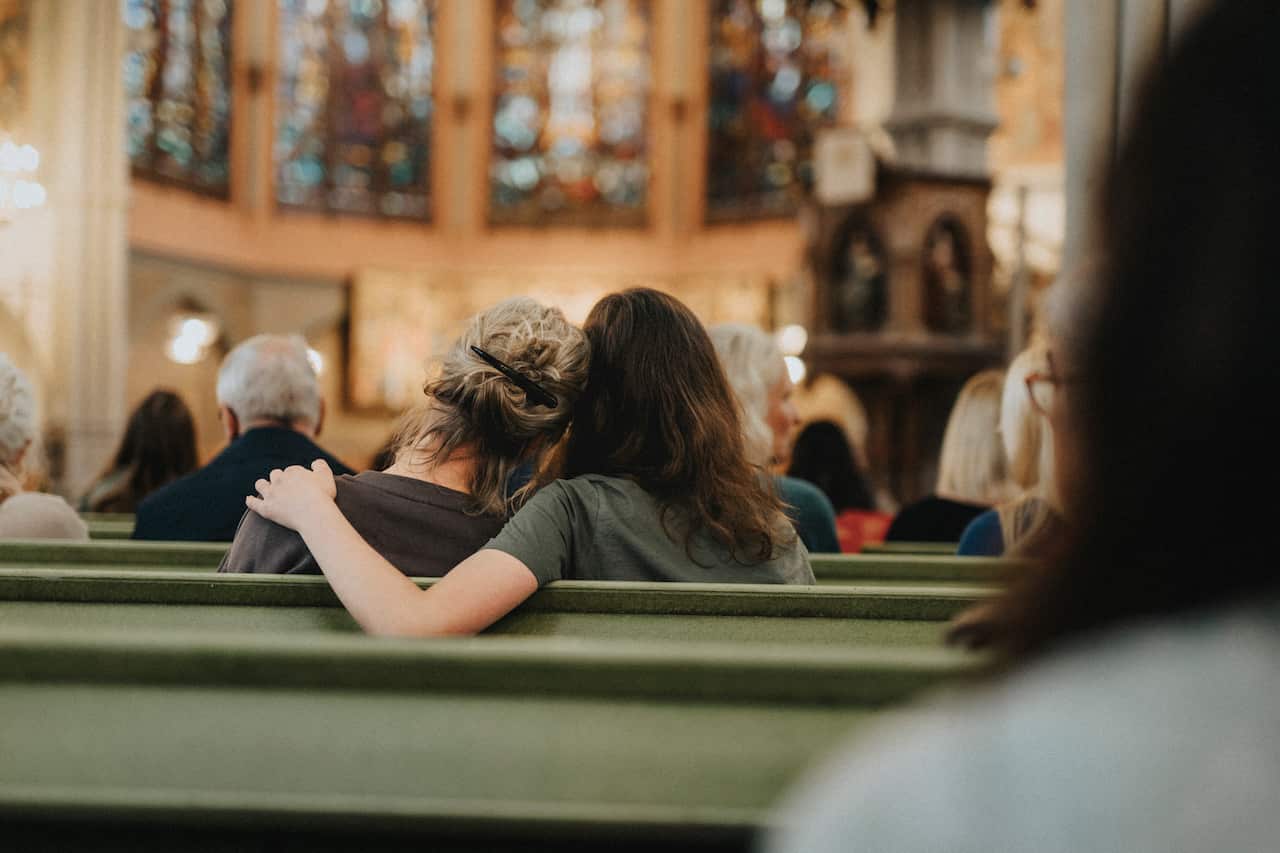
Because of my stable relationship and having a supportive church behind me, I came out to my parents. With my Christian parents, their concerns were not so much about religion. Rather, they worried about how others would see me and my family (aka ‘saving face’).
Meanwhile, Sam and I continued to communicate, and we visited each other with our girlfriends. We were close friends.
Then one day, we both started to consider the possibility of us having a relationship that was more than friends. The possibility turned into a deeper conversation and without realising it, we both fell in love with one another.
We put all our cards on the table before we decided if we were going to pursue a relationship or not. For Sam, it was that he identified himself as a trans person. He wanted to medically transition, and it was always on his mind. I hadn’t known that at all; he had never mentioned it. But I thought about it and realised that, yes, I loved Sam as a person, not his gender.
I ended my relationship with my previous partner, but she and I remained good friends. She taught me so much about being authentic, and putting God first before anything else.
I then moved to Australia to live with Sam. I had some difficulties in finding a home church. For the first couple of years, I attended a church without revealing my sexual orientation. It was so hard when people asked about my personal life, because I was scared they would reject me, but I also did not want to lie, especially inside a church.
As a Christian, I loved talking about the gospel and bringing people to Christ. One day, I invited two friends – a straight couple who identified as LGBTQ allies – to the church. Imagine the embarrassment and disappointment when the pastor decided to use the podium to talk about how same-sex attraction is unnatural and can damage the covenant of marriage and the future generation. Surely enough, my friends never returned to the church again, because they felt that Christianity is full of discrimination and judgement.
Imagine the embarrassment and disappointment when the pastor decided to use the podium to talk about how same-sex attraction is unnatural and can damage the covenant of marriage and the future generation.
It is not easy being a queer Christian. Among my queer community, discussion regarding religion is often frowned upon. I often feel like I’m caught between two worlds.
At work, a colleague of mine commented that I should not wear my cross necklace because I am displaying too much of who I am and my personal beliefs, but said I can keep wearing my rainbow pin. This is so confusing and sad. My faith and my orientation are equally defining of who I am.
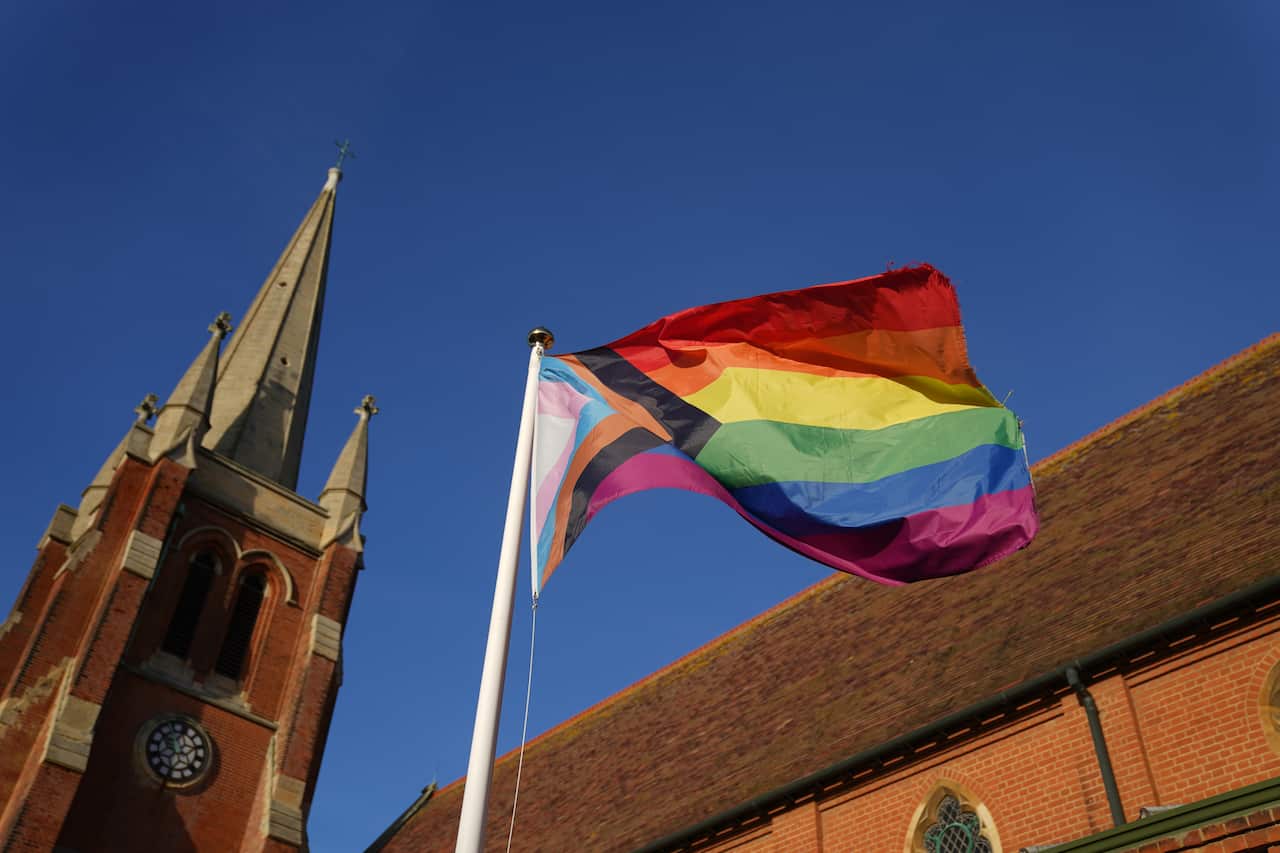
My faith has also played out within my relationship. Sam is not religious at all, and while he supports me going to church and even attends from time to time, our very first fight as a couple was about whether or not to send our future children to Sunday school. He thinks our kids should grow up and then decide for themselves. But again, love is about compromise.
When we got married, Sam welcomed my pastor to solemnise our marriage. I started attending an inclusive church, and served in different ministries. The congregation is made up gender diverse people, rainbow families, and parents of LGBTQ children. The church encourages people to “come as you are”, and that’s what I did. I feel so blessed to have found affirming churches in my life that helped me to reconcile my queer identity and faith in God.
I feel so blessed to have found affirming churches in my life that helped me to reconcile between my queer identity and faith in God.
It has been more than 20 years since the day I passed the note to Sam to ask him to be my friend. There was nothing despicable or sinful in that interaction. Looking back, Sam and I were two human beings connecting, accepting, and loving one another. Now when people ask me about my personal life, I tell them I am married to my first love.
Names have been changed.
Watch Coming Out With Faith on SBS On Demand.