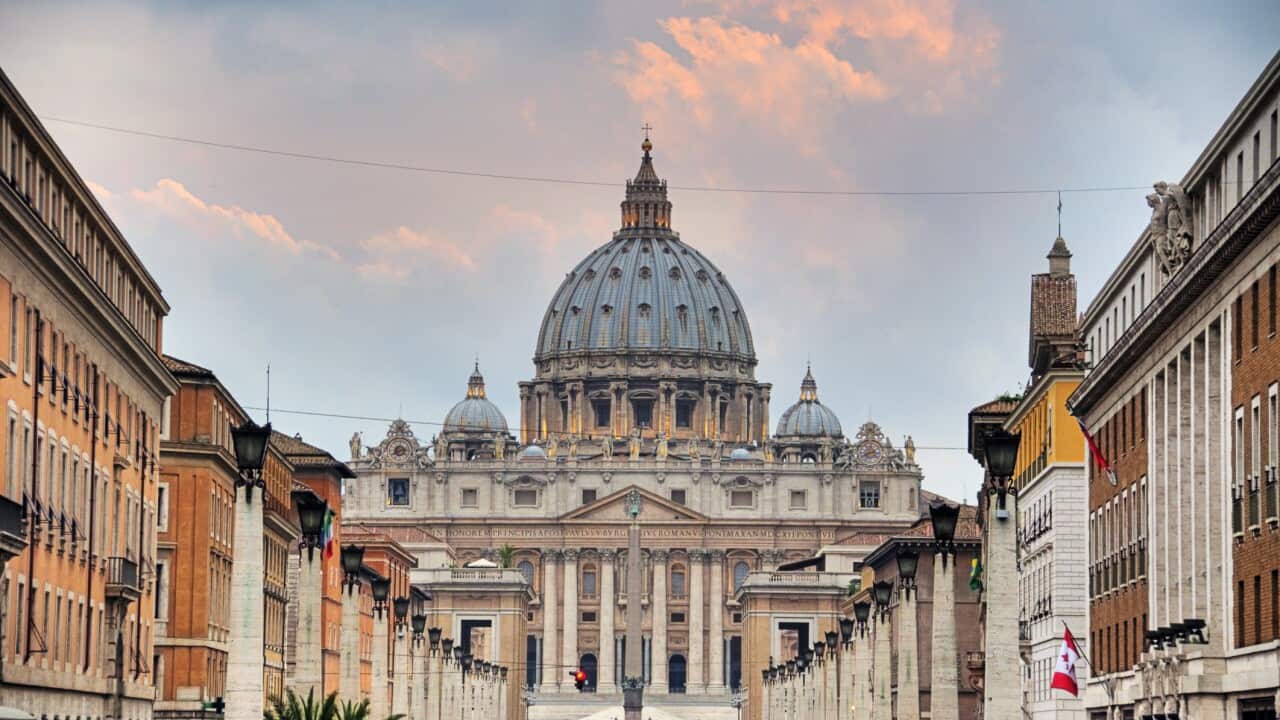
The Catholic Church ruffled feathers yet again last week when Pope Francis made a comment that appeared to equate homosexuality with mental illness. In a press conference en route from Ireland to Rome, Pope Francis told journalists that parents should not condemn or ignore their gay children. “When it shows itself from childhood,” he said, “there is a lot that can be done through psychiatry, to see how things are. It is something else if it shows itself after 20 years.”
Many have been confused as to what this statement actually means - is Pope Francis saying that gay children shouldn’t be condemned because they need love and support from their family and church, and that often counselling is important for queer youth due to the impacts of bullying and discrimination? Or, does he recommend that gay kids see psychologists because, unlike a gay adult, there is still time to be changed with prayer and treatment? It’s not hard to see this as in line with the broad majority of Christian thought that says it’s okay to be gay, as long as one doesn’t do gay (ie, act on one’s desires). Whilst there has been not insignificant progress made with regards to LGBTI people under Pope Francis’ leadership, it’s important to remember that the Church still rejects marriage equality, and continues to make a distinction between homosexual orientation and homosexual acts.
What’s interesting about this is that the Vatican’s retraction of the comment continues a trend we’ve also been seeing in politics recently, of the staff of political figures watering down charged comments. When the press conference was written up for the Vatican’s official website, the comment about psychiatry was left out. A Vatican spokeswoman stated that the omission was made to “avoid changing the thoughts of the Holy Father".
“When the pope referred to ‘psychiatry’, it is clear that he was doing it to highlight an example of ‘things that can be done’. But with that word he didn’t mean to say that [homosexuality] was a ‘mental illness’.”
For his staff to smooth over his comments feels odd, considering the Pope is viewed as a conduit to God’s own views. And yet in a time when words are increasingly weaponised, it’s necessary for the Church to do damage control on what is a minor PR problem, for fear that comments about homosexuality may be construed as a political standpoint.
This was a story for a day or two, which is all it could be allowed when the big story about the Catholic Church right now is, and rightfully so, the continuing revelations of sexual abuse within the Church, and accusations that Francis covered up Cardinal Theodore McCarrick’s abuse of seminarians. Amidst widespread calls for the pope to resign, Harriet Sherwood for the Guardian has called this the “worst crisis” of Francis’ five year papacy, while Chico Harlan for the Washington Post calls it a “watershed moment”.
I think it’s important, though, that we address this comment made to the Irish press. Not solely for its content, but for how it represents a cultural shift in the role of the pope to a more political figurehead - a shift which is not backed up by a similar desire to speak out on more prickly issues. In 2013 Francis made several comments criticising the Church’s “obsession” with discussing abortion, contraception, and homosexuality, saying they had made the mistake of “putting dogma before love” and insisting that he would not spend time on such topics. Now, however, he seems perfectly content to comment on the plight of queer youth, whilst studiously ignoring the insurmountable evidence that he has covered up abuse within the Church.
The truth is, who the Pope is matters about as much to how screwed up Catholicism is, as the leader of the Liberal party on any given day matters to how screwed up Australia is - while there may be superficial changes in the beliefs of the Holy See, the Catholic Church is bound by centuries of tradition that can only evolve at a glacial pace.
As a lapsed Catholic, to debate the pope’s political viability feels inherently wrong, not only because my first impulse is to argue that God is above politics, by its definition the concern of the human and not the divine.
As far as Christian mythology indicates, the first pope was Saint Peter, who was appointed by Christ himself and entrusted with the keys to the kingdom of Heaven. Originally the role of Pope was considered a custodial position - the Pope was the “rock” upon which the church was built, a conduit for the voice of God, a pastoral figure as much a shepherd and role model to religious leaders as he was to the laity. It wasn’t until 1870 that the role was re-conceived as the almighty ecclesiastical jurisdiction it is today. Before 1860 the Pope was not considered the head of state in Vatican City, nor was he believed to have any secular or “temporal” power (though he certainly possessed secular influence in his ability to “spread” Catholicism through colonialism). Now he is considered by many to be the “most powerful man in the world” based on the magnitude of his cultural and diplomatic influence, whilst Christians simultaneously argue that his role is purely one of spiritual leadership and that he cannot be held to account for his politicised remarks.
As a lapsed Catholic - who was pious, sure, but never a theologian - I don’t have an answer to whether the pope should have the widespread influence he does. I just think that now, when the Catholic church is inextricably tied up with secular law in light of how its leaders continue to break it, he doesn’t get to have it both ways. He cannot be a political voice when it comes to encouraging gay kids to seek therapy while they’re young or discouraging Cuba from allowing marriage equality, and a purely spiritual one when it comes to having likely covered up rampant sexual abuse.
One might say he can’t point out the speck in society’s eye without first dislodging the veritable forest in the eye of the clergy.