I was the Only Blak Queer in the world. I had many
difficulties.
I didn’t know how to tell my family.
I hadn’t seen Steven Oliver can’t even on Black Comedy yet,
we hadn’t watched it together over dinner. TV didn’t save
me.
I hadn’t seen Electric Fields perform in a sweaty old meat
market with a group of friends who had similar feelings.
I hadn’t heard Zaachariaha’s deadly voice singing ‘Nina’.
I hadn’t yet read Lisa Bellear. And cried sitting on the carpet
in the library over sharply written work that spoke to me
and my experience.
I started a blog. I got many comments. People were always
asking me what it was like to be Blak and Queer.
I hadn’t yet started thinking about gender as a colonial
construct. Or examined my ideas of masculinity and
femininity.
I hadn’t yet realised that my relationship was interracial.
I started another blog. Thoughts about interracial queer
relationships featured.
I hadn’t got a crush on Kayemtee yet and listened to her
track that samples Cold Chisel: will your cruel attitude last
forever?
I wondered if my parents would ever accept my future
partners, if I’d ever have the chance to legalise my
relationship, have children, ask for more, not for less.
Some nights were really lonely and I created Cathy Freeman
as a lesbian and Prince as an Aboriginal.
I got trolled, deleted my social media accounts and the only
known evidence of Blak Queer existence was destroyed.
I hadn’t yet seen the doco on Uncle Jack Charles and met
Blak Queer Elders who knew of a previous time Australians
had to vote on the rights of a group of people. These Elders
knew what it was like to hear their rights discussed by
people outside of their group.
I hadn’t yet worn my flag singlet tucked inside my Calvins
as a gammin fashion statement.
I hadn’t yet been to Mardi Gras.
I saw the white gays and the white gaze I was used to and
then I saw Blak Queers everywhere and every conversation
was an insight into a Blak Queer past, the street becoming a
site of multi-time, the past-present beat, the future love, and
forty years of Blak Queer pride spread into more than sixty
thousand years of we-have-always-been-here.
My dance joined a big dance. I saw a Wiradjuri/Yorta Yorta
lesbian couple who had been marching since the beginning,
who chanted, ‘Stop Police Attacks! On Gays, Women and
Blacks!’ in 1978 and they told me off for knowing fuck-all.
Every chant is a line of a continuing poem and I am
learning the words.
I saw the flag sparkle, I saw gays from everywhere from
Moree to Perth, I saw a Blak Captain Cook, Malcolm Cole,
in 1988, the year of the first Aboriginal and Torres Strait
Islander float, that float should have been the first float that
year, but mob didn’t open the parade until 2005, when
Aunty Karen Cook and Aunty Lily Shearer walked out each
with a coolamon of curling leaves, smoking the parade. The
small leaf fire was started on the corner of Liverpool and
Elizabeth Streets and in parade time, it never stopped.
I thought properly about what it meant to be marching
on stolen land. And that Roger McKay in 1982, when
he carried the flag in the march, made the point that the
Sydney gays’ golden mile was the unceded land of the
people of the Eora nation. It was our modes of community
and belonging white queers craved, and this influenced how
they made their ‘scenes’.
I woke up on a mattress in a queer share house with a text
from the other Blak Queer asking to go on a date.
I consumed Blak Queer art, and I created it.
I saw Paakantyi/Barkindji artist Raymond Zada’s work at
the Art Gallery of South Australia and cried. I felt the heavy
loss for all of the ones killed, murdered, missing. For the
erasure of Blak Queers in every capital, small city and town
in Australia.
And I told myself I was lucky to have stayed alive and
counted the times I thought I would die. I began to know
the stories of more and more and more Blak Queers who
had died. I knew them as Ancestors.
I read Natalie Harkin’s, Yvette Holt’s, Nayuka Gorrie’s and
Alison Whittaker’s writing online and in bookstores. I saw
love for Blak Queers everywhere. Outside the city the sky
sent me hints, the walks on Country along the river kept me
safe. I saw the colours of my own heart, and they were not
the colours of isolation and fear.
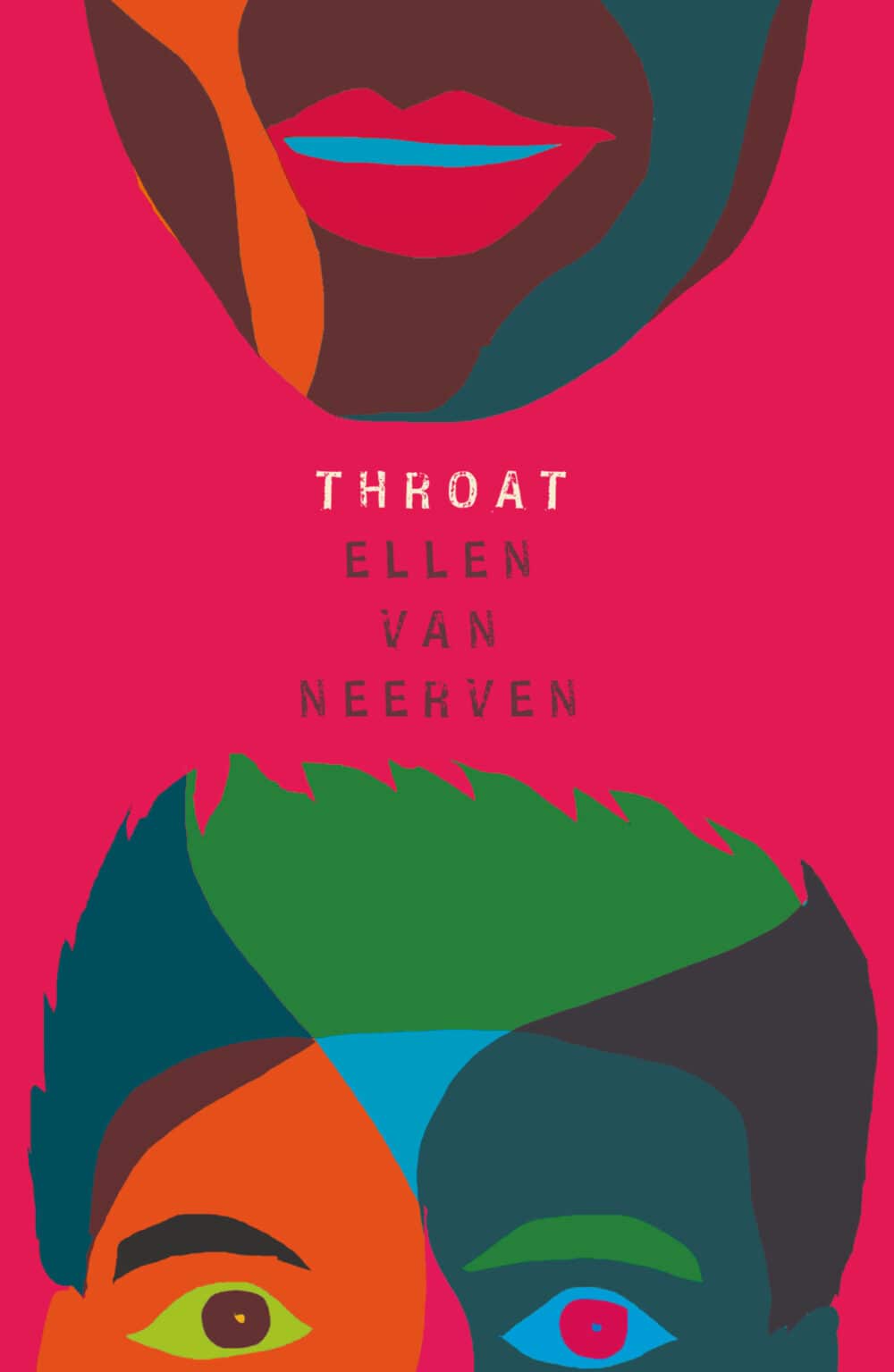
This poem is extracted from Throat by Ellen van Neerven, published by UQP, RRP $24.99.