When he was in his 20s, Tim Hannan read a feature article in National Geographic on the historic temple complex of Angkor Wat in Cambodia.
At the time, the site was seldom visited by foreigners and Tim, who had grown up with a Eurocentric view of history, was fascinated.
“It was the first time I began to appreciate the depth and complexity of Asian history,” he says.
“It wasn’t something I had learned in school.”
He devoured books on the Khmer empire and the history of 20th-century Cambodia. From there, his interest moved to Vietnam, Laos, Thailand and Myanmar.
When he eventually visited Angkor Wat in the 1990s, it didn’t disappoint.
“I had probably read everything written in English about it … but I was still utterly overwhelmed. The size and scope were more extraordinary that I expected,” he says.
“There are complex and fascinating cultures on our doorstep.”

After making several trips to Southeast Asia, Tim, head of the School of Psychology at Charles Sturt University, decided to apply himself to learning some of the languages.
He realised that languages were a means to marry his personal interest in the region with a professional goal to help the development of psychology in Southeast Asia.
Based in Bathurst, he had resigned himself to self-teaching until he discovered he could study Asian languages online at the Australian National University through its partnership with Open Universities Australia. This satisfied his desire for a course with both academic rigour and flexibility.
“Language learning had always been out of my reach, so the online option is just wonderful,’’ he says.
“For me it’s an absolute game-changer. These courses that are available are a great opportunity for people who want to learn a language properly.”
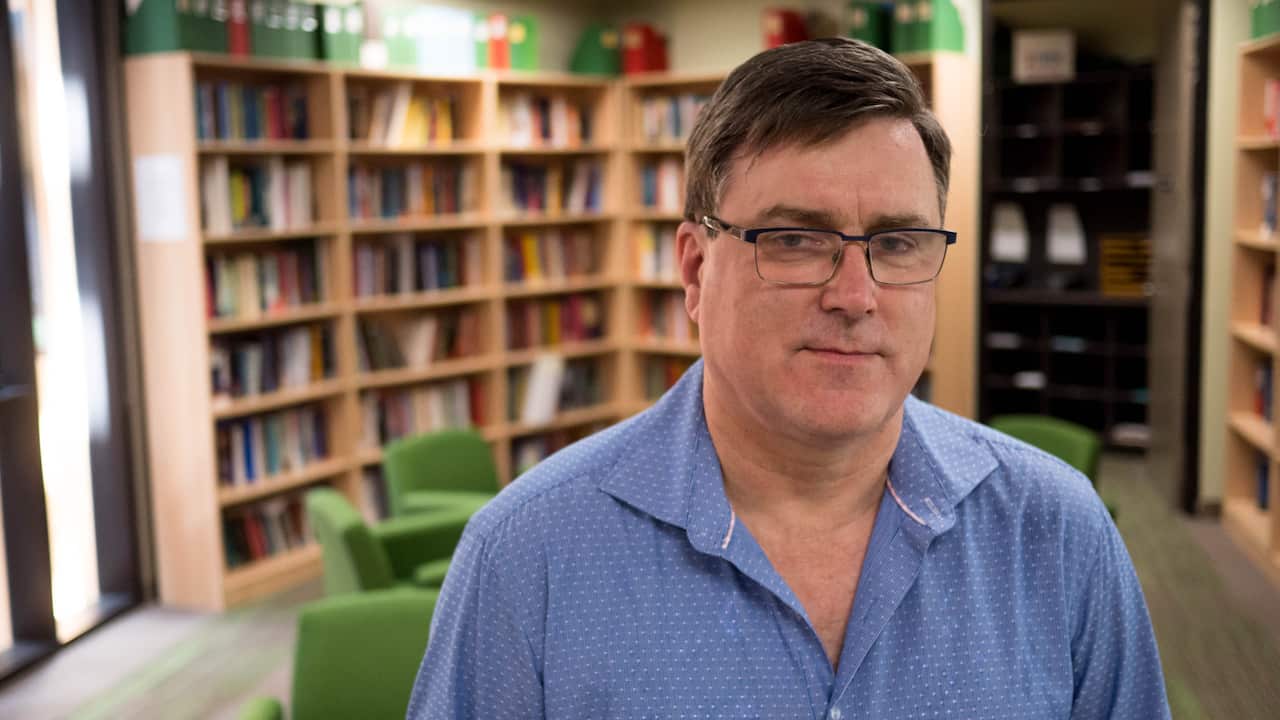
Tim enrolled in Thai and Vietnamese in 2018, and plans to pick up Burmese in 2019.
His aim is to converse with professional colleagues in their language “with reasonable fluency”. He does not accept that he can rely on others being able to speak English.
Tim’s “lightbulb moment” occurred at a psychology conference in Hanoi in 2017, where many of his Asian colleagues were translating in several languages – and the Westerners only spoke English.
“It really rammed it home. That old joke, ‘What’s the definition of monolingual? An Australian’,” he says ruefully.
“That prompted me. I wanted to be able to do something useful in assisting the development on skill and knowledge about psychology [in the region].
“I think some degree of fluency in the language shows we are serious, that we are interested in their culture, their life and their profession; that we are not just walking in and walking out.”
Learning two languages has had its challenges. Both have tones that are not easy for an English speaker to distinguish aurally, as well as a nuanced system of pronouns that change according to a complex social hierarchy.
But at least there is no risk of confusion. Thai and Vietnamese are from distinct linguistic groups and use different scripts; Thai is influenced by the Khmer script, while Vietnamese uses the Latin script.
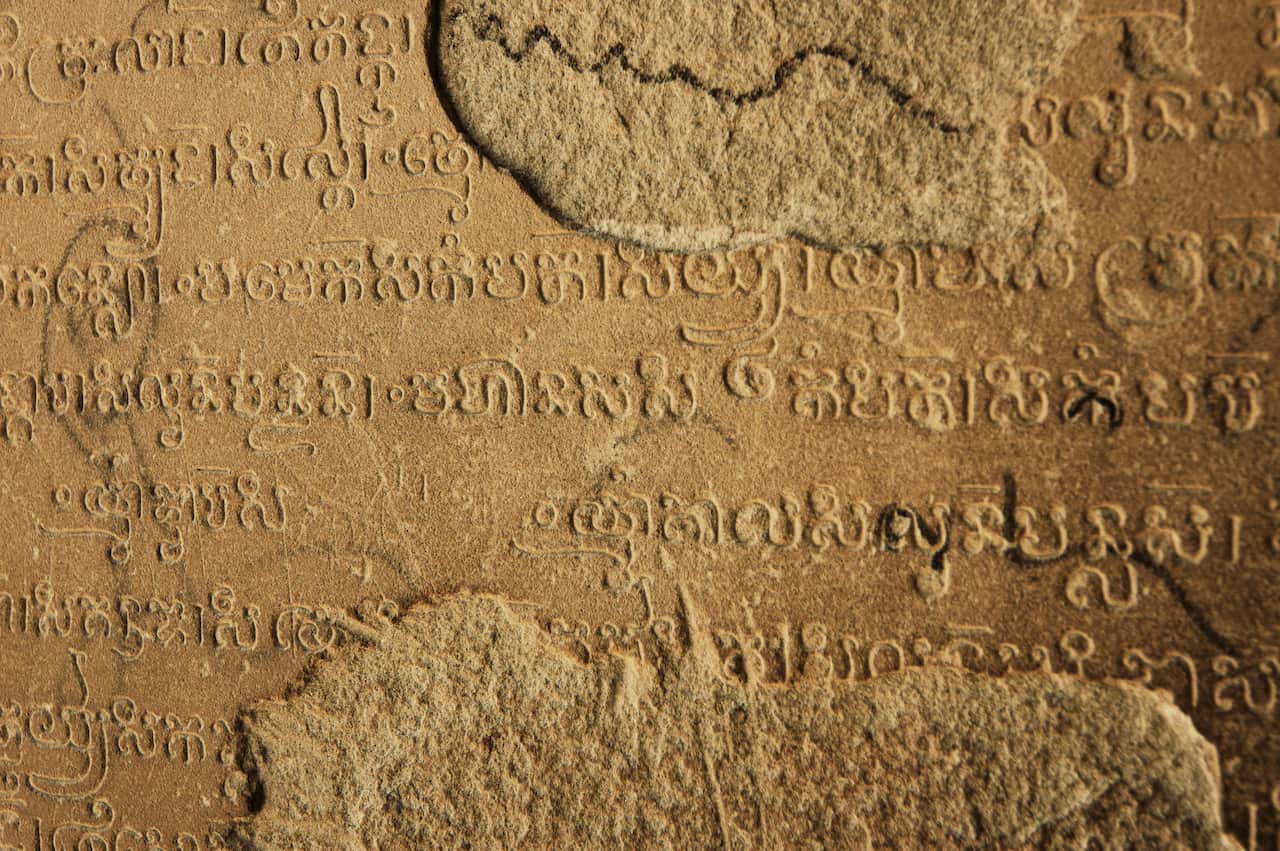
“I wondered whether it was too much to learn two languages, but they are probably as different as physics and chemistry. There is virtually no common ground between the two languages,” Tim says.
Tim has a disciplined approach to learning, rising early to do individual study every day.
This is on top of the 10 hours each week of formal study, comprised of lessons held via video conferencing, online lectures, written material and audio recordings he listens to while driving and walking.
“It’s about repetition and practice, so spending a bit of time each day [studying] is imperative,” he explains.
Tim has been impressed with the quality of both language programs at ANU, which draw on contemporary culture. His Thai class has watched a popular television drama, and were reading about the gripping Tham Luang cave rescue involving young football players as the extraordinary details filtered through to the media.
“We were using current material on a riveting news story to build vocabulary and learn grammar, so we are immersing ourselves in the culture while learning the language,” he says.
“The way it is delivered makes it easy to learn and a delight. It’s a well-designed, highly structured program.”
Travelling to Asia to use his language skills in future is “high on my agenda”, says Tim.
“The best way to understand a culture, learn about a country and establish professional relationships is to learn the local language,” he says.
“My interest in acquiring language skills in the region was to fulfil my personal and professional aims of a better cultural and historical appreciation as well as serving as a foundation for supporting the development of psychology in the region.
“Learning a language lets somebody know you are interested in their culture, you’re interested in their life and their profession. And that’s the message I want to convey.”
ANU offers 16 Asian and Pacific language programs that give students the skills and knowledge to succeed in the Asian Century. Nine of these languages – Burmese, Hindi, Mongolian, Sanskrit, Tetum, Thai, Tibetan, Tok Pisin and Vietnamese – can be studied entirely online via Open Universities Australia. Enrol now to start studying in 2020: open.edu.au/online-courses/australian-national-university