Peruse @lineupswithoutmales’ Instagram feed and one thing quickly becomes obvious: music festivals in Australia have a gender diversity problem.
It’s an imbalance backed up by stats. Triple J’s third annual survey of the state of gender equity in the Australian music industry showed that men dominate senior leadership positions, music festival line-ups, and the radio airwaves: solo-female artists or all-female acts made up just 28 per cent of the top-played songs in 2017.
It’s a similar situation overseas. One survey of major UK festivals revealed that just 26 per cent of acts booked in 2017 included women.
The lack of diversity at festivals has not gone unnoticed – the calls for change are growing louder and more insistent, and some are clearly listening. More than 100 international music festivals have pledged to reach a 50:50 gender split by 2022, a target set by Keychange, an organisation committed to supporting emerging female and non-binary talent.
But this diversity push is having mixed results. For every Electric Lady – an all-female series of gigs organised by Jack River, aka Holly Rankin – or Queenscliff Music Festival, which has 53 per cent of non-male on its 2018 line-up, there are still events like The Petting Zoo, which had only had male acts on its line-up for two years running. One of the biggest disappointments in 2018 has been Bluesfest, an established festival that should know better, with its first line-up announcement including just four acts featuring women.
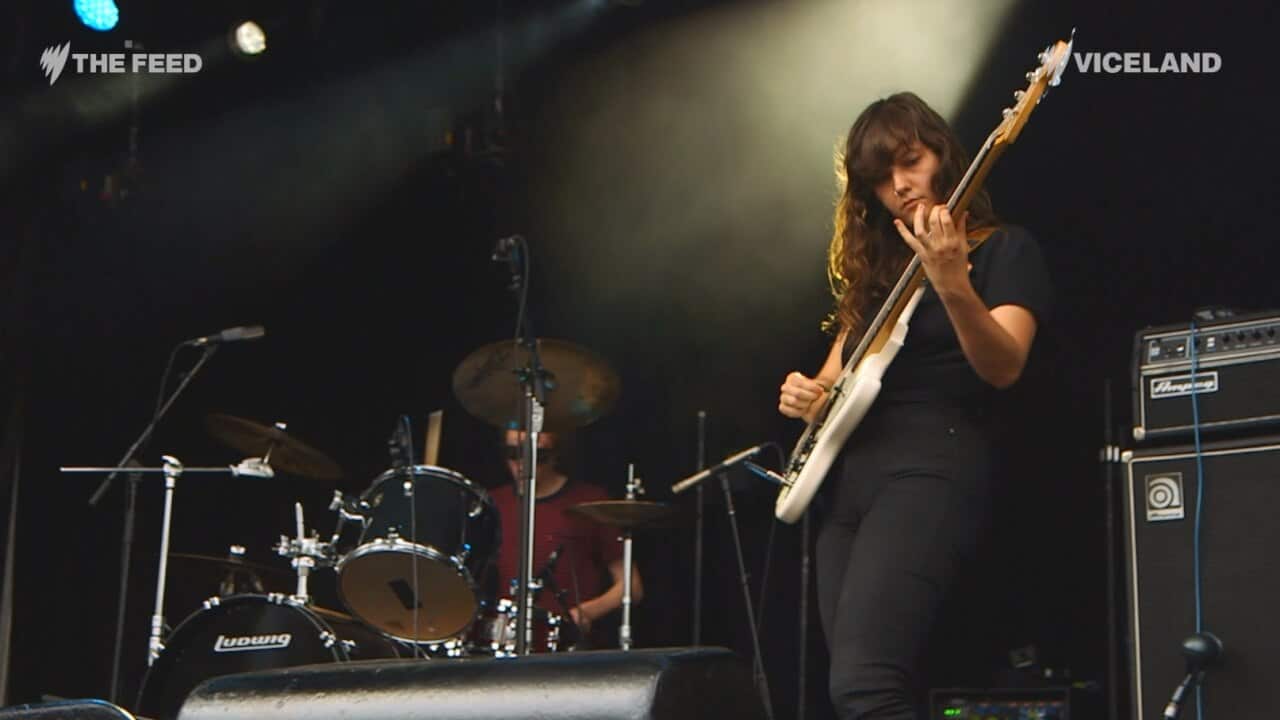
Falls Festival, one of Australia’s biggest live music events, offers a fairly typical case study. As Shaad D’Souza points out at Noisey, Falls Festival had a horror run on the diversity front in 2017. Just nine acts in the first line-up announcement included a non-male member, which earned the festival fierce criticism from the likes of Julia Jacklin and Camp Cope, who called out festival organisers on stage.
In 2018, it’s a different picture. In its first announcement, 48 per cent of acts were gender diverse, including First Aid Kit, Amy Shark and Odette. It’s an improvement, but it’s not a case of problem solved. A closer look at the line-up reveals just 20 of 96 performers are female or non-binary. As D’Souza’s analysis shows, Falls Festival remains a dude fest for now.
“Even though it feels like we’ve made huge strides in terms of accepting diversity in the broader community, when it comes to doing the hard work of actively seeking out and programming culturally and gender-diverse line-ups, people fall back on lazy flat-out false excuses about merit and availability and ticket sales,” says Amelia Jenner, Music Director at Sydney community radio station FBi.
“It might take a little less effort to program a festival with 73 per cent dudes, but that’s because often, privilege shouts the loudest,” says Jenner, acknowledging that the conversation is not just about gender diversity. “Women, the LGBTQI+ community and people of colour have to overcome a history of being shut out of the industry and are still dealing with the echoes of this discrimination every day. Historical disadvantage takes positive action to fully undo, so it’s up to us as programmers to seek out diverse, rich and interesting line-ups. In other words, do our jobs.”
Jenner walks the talk, having curated a diverse line-up for FBi Turns 15, the station’s forthcoming birthday party planned for November 3 at Sydney Uni’s Manning Bar. The all-Australian roster features 18 out of 26 acts with a non-male member, including all four headliners: Cloud Control, Tropical F*ck Storm, Sampa The Great, and CC:Disco.
FBi is all about diversity, says Jenner. “This festival just felt like a logical extension of what we do on a weekly basis. Of course, we wanted to have a broad spectrum of representation on this line-up, but it felt like a completely natural process, and at no point were we making ‘compromises’ for the sake of diversity. It’s just not that bloody hard!”
Jenner is dismissive of the pro forma excuses trotted out to justify male-dominated line-ups. “Now days diversity itself is a drawcard – over half of festival-goers are women, and the inevitable backlash that dude-heavy line-ups face is the market telling you ‘don’t worry mate, it’s ok to have a couple of women up top there’.”
The wider music industry has more to do, she says. “Clearly many aren’t doing enough. There’s a lot of buck passing, a lot of acknowledging that change needs to happen ‘but just not with my line-up’. The industry has to take responsibility - if you reckon there aren’t any culturally or gender-diverse artists with a high enough profile for your festival or label, find some that you think are great (I guarantee you will if you look) and help them build that profile by booking or signing them. Do this work and eventually diversity won’t need to be a conscious priority, it’ll be second nature. That’s what we should be aiming for.”
Nicola Heath is a freelance writer. Follow her on Twitter @nicoheath