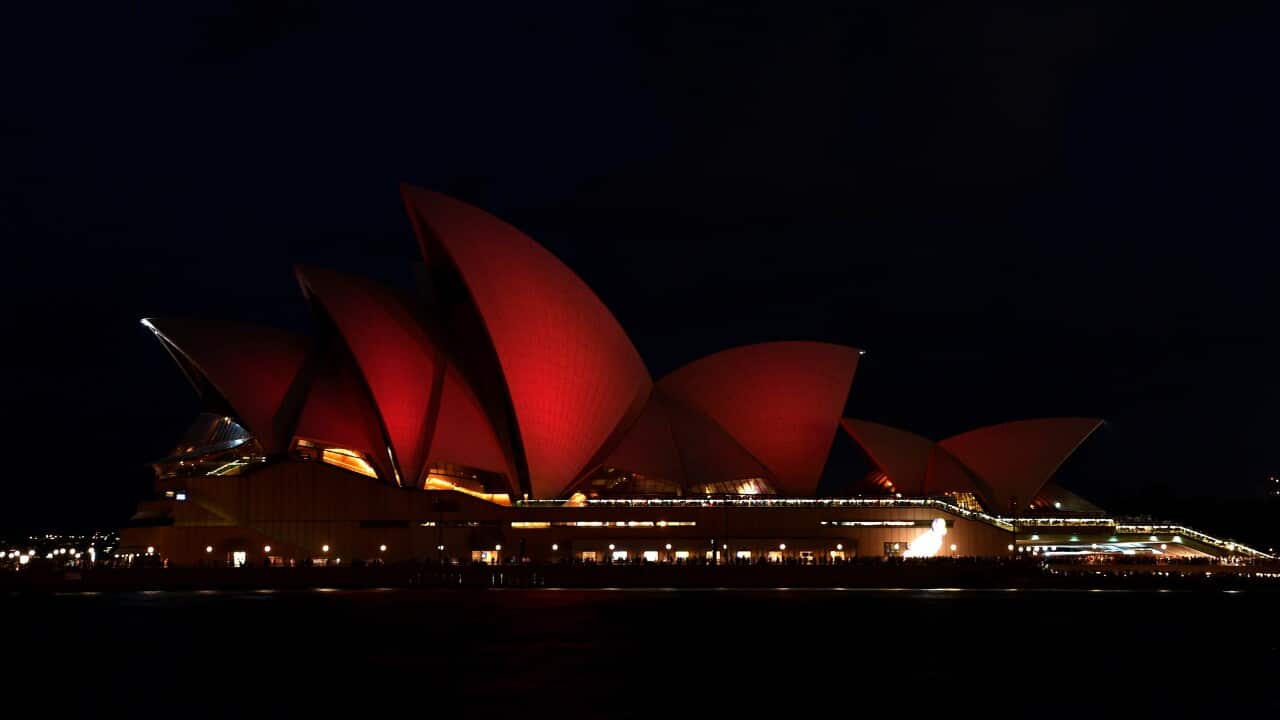
On Friday evening, the Sydney Opera House sails and the Melbourne Cricket Ground will light up red to mark the 50th Anniversary of the Special Olympics and Global Day of Inclusion.
Australia's participation in this worldwide campaign, which will see over 70 landmarks light up globally including the London Eye and Niagara Falls, is a powerful statement to raise awareness of and support for inclusion of people with intellectual disabilities.
However, fresh research by Special Olympics Australia reveals almost two in five of us Australians really aren’t sure what intellectual disability means. As a nation of people who believe it’s important to behave inclusively (that’s 75 per cent of us), this might be a little embarrassing to admit.
So, what is it exactly, and how inclusive is Australia?
Intellectual disability is a disability characterised by significant limitations in both intellectual functioning (reasoning, learning, problem solving) and in adaptive behaviour, which covers many everyday social and practical skills. Intellectual disability can happen any time before a child turns 18 years old, including before birth.
Fifty years ago, it was a different world. Families of people with intellectual disability were advised to institutionalise them, effectively excluding them from life. There was a lack of opportunity for someone with intellectual disability at every level – employment, education, medical treatment, even something as simple as the joy of sport.
However, fresh research by Special Olympics Australia reveals almost two in five of us Australians really aren’t sure what intellectual disability means.
Often, even families who chose not to institutionalise children with intellectual disability could not take them out of the house, for fear of the stigma. They were neither seen nor heard by society.
Since then, we’ve seen a massive shift in the conversation. Established in 1986, the Australian Humans Rights Commission’s anti-discrimination work has gone a long way in driving our transformation into a society that’s more considerate and more inclusive in its thinking and behaviour.
The last 12-18 months in particular have seen a visible up-swell in both conversation and action around diversity and inclusion.
We’ve come a long way and we should be proud of where we are. But we should also continue striving to do better.
For example, one of the biggest mistakes we continue to make is underestimating their potential. Despite the fact that 85 per cent of people with intellectual disability are only mildly impaired, society at large still has low expectations of them. There is widespread and unwarranted belief that they are not able to be broadly included in the workplace, school or many other situations and activities. But the truth is that their ability is much higher than we give them credit for.
One of the greatest ways to demonstrate this is through sport.
Global research shows 94 per cent of Special Olympics athletes report improved sports skills through their involvement with us. This includes improvement around cognisant behaviour, team behaviour, taking instructions, following instructions and collaborating with others.
There is widespread and unwarranted belief that they are not able to be broadly included in the workplace, school or many other situations and activities. But the truth is that their ability is much higher than we give them credit for.
We also found that 65 per cent of parents had higher expectations of their own children with intellectual disability once they became involved with the Special Olympics, showing us that even loved ones can sometimes expect less of them than they are capable of.
While we’ve come a long way in the past 50 years, people with intellectual disability still face inequality and exclusion every day. Luckily, there is something that we can all do for them: listen.
We are all living in a very fast-paced world and struggling to be heard. For people with an intellectual disability, being listened to and valued is particularly important. While they may take a little longer to get their message across, when they start talking we must let them finish what they have to say. Do not walk away, do not complete their sentences, do not try to solve their problems.
It is very easy to make a difference in the lives of people with intellectual disability simply by taking the time to listen.
Ahead of Global Day of Inclusion on 21 July, I’m proud to say that Australians are increasingly aware of and participating in the conversation about intellectual disability and inclusion. And, of course, more of us are starting to listen and include.
I’m proud of all the positive change we’ve seen in Australia. When it began in 1968, the Special Olympics was a movement for people with intellectual disability. Now, in 2018, it is no longer a movement for them, it is a movement from them. They are leading the inclusion revolution.
I call on all Australians to join us in this revolution by choosing to listen, choosing to get involved, and choosing to include so that, in another 50 years, we can look back and once again be proud of how far we’ve come.
Corene Strauss is CEO of Special Olympics Australia.
About Special Olympics Australia
Special Olympics Australia is part of a global inclusion movement using sport, health, education and leadership programs every day around the world to end discrimination against and empower people with intellectual disabilities. Our volunteers create accessible sports training, coaching and competition opportunities which are offered week-in and week-out in local communities throughout Australia.