
Content warning: sexual assault
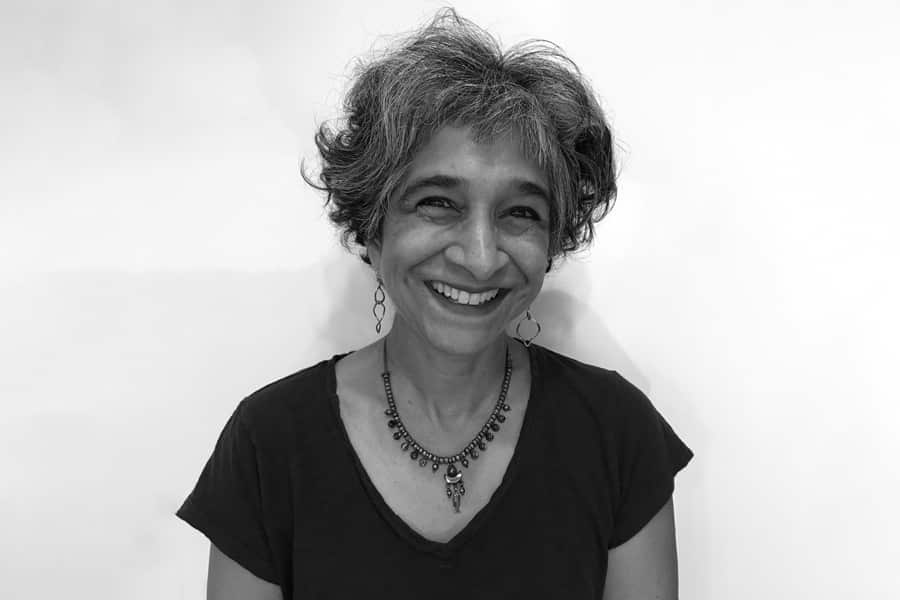
Sohaila Abdulali wants to change the way we talk about rape. “Rape drains the light,” she writes in her new book, What We Talk About When We Talk About Rape (Vintage Australia). “I want to let some light back in.”
It’s a subject in which the New York-based writer is well-versed: she worked in a rape crisis centre, studied the issue of rape at university and contributed to a report on election-related rape in Zimbabwe. She was also one of the first victims in India to speak publicly about her own rape, an assault she outlines in her book.
On a warm July evening in 1980, four armed men accosted her while she was out walking with a male friend. It was the summer holidays, and she had just graduated from high school. Soon, she would start college in the US.
“They beat us, forced us to go up the mountain, and kept us there for two hours. We were physically and psychologically abused, and, as darkness fell, we were separated, screaming, and they raped me, keeping Rashid hostage. If either of us resisted, the other would get hurt,” she wrote in a ground-breaking essay about her rape, published in Indian feminist magazine Manushi three years later. “They could not decide whether or not to kill us. We did everything in our power to stay alive.”
In India and other places rape is the source of great shame to the victim, but Abdulali refused to submit to the stigma of sexual assault. “Time and again, people have hinted that perhaps death would have been better than the loss of that precious ‘virginity.’ I refuse to accept this. My life is worth too much to me,” she wrote.
In 2013, Abdulali revisited her rape again in an op-ed in the New York Times. Rape is horrible, she wrote, but not because you lose your virtue or dishonour your family – reasons women in India are told to fear rape. It is horrible because you are violated, frightened and hurt. If we understand rape as a personal horror, she argued, we can offer rape victims empathy, not the all-too-common shame or guilt.
Today, we are talking more about sexual assault, thanks to movements like #MeToo and Violet Spring in Mexico. In India, thousands of people took to the streets of Delhi in 2012, following the death of 23-year-old Jyoti Singh, a physiotherapy student who was gang-raped by six men. Her tragic death triggered a national outpouring of frustration and rage and started a conversation about rape culture in India. “Thirty years ago, I never could have imagined this,” Abdulali writes in What We Talk About When We Talk About Rape.
But we also need to change the way we talk about rape. “We tend to make it both bigger and smaller than it is,” says Abdulali on the phone from her home in New York. “We load it up – in India, if you’re raped, it’s a statement about your whole family and your whole life and your whole community. It’s a huge thing. Or we make it too small – what’s the big deal, why are you still thinking about it, it happened 10 years ago. We don’t seem to find a reasonable balance in talking about it.
“We don’t pay attention to what it actually is, which is different to each person.”
Consent, sex and rape culture
#MeToo has exposed fault lines in the way we understand rape, with consent – affirmative or otherwise – emerging as a sticky issue. It’s not as simple as “yes means yes and no means no,” Abdulali writes, a quandary highlighted in the 2017 trial of Luke Lazarus, who was accused of raping 18-year-old Saxon Mullins in a Kings Cross alley in 2013. The judge accepted that Mullins did not consent to have sex with Lazarus but acquitted him on the grounds that he had a genuine and honest belief that she did.
We need better education around sex and consent, Abdulali argues. In current models of sex education, girls and boys often get completely different messages about sex – boys enjoy it, girls endure it – and the topic of mutual pleasure is avoided entirely.
Abdulali believes that gender inequality more broadly contributes to rape culture, diminishing the self-respect of girls and women and creating within boys a sense of entitlement. “If we want to teach our children to be decent human beings who respect others and themselves, we have to tackle notions of masculinity and femininity,” she writes.
Some men have no idea what rape is, says Abdulali, citing the example told to her by a campus therapist of a student accused of rape in the US. He had no idea that his actions could constitute sexual assault, she says. “He had no clue because she was just lying there. He didn’t even know how to figure out that she wasn’t into it.”
Analysis of sexual assault tends to focus on the behaviour of the victim – not the actions and motivations of the accused. “So often we tend to talk about the victims and the ways they went along with, or took advantage of, or kept suspiciously quiet about, rape,” Abdulali writes in her book. We forget, she writes, “that there is someone else in the picture who also has a choice: a man, who can choose between decency and dominance.”
We should start the conversation with our children about respect and consent early to equip them better to talk about these issues. Words are powerful, writes Abdulali. “If a child is molested, she or he is much less likely to report it if she doesn’t know what words to use.”
While Abdulali is reluctant to declare definitively that progress has been made, she remains optimistic about the future. “Do I think that all this talk will lead to even one less rape? Maybe – but I have no way of knowing that,” she says. “What I do believe is that…it’s always positive to have a conversation when there wasn’t one before, even if that conversation is hurtful and horrible. It’s part of a process of coming to terms with something.”
If this story raises issues for you, contact Lifeline on 13 11 14 or 1800 RESPECT.
What We Talk About When We Talk About Rape by Sohaila Abdulali (Vintage Australia, $19.99)
Sohaila Abdulali will be appearing at All About Women at the Sydney Opera House on Sunday March 10, 2019.
Nicola Heath is a freelance writer. Follow her on Twitter @nicoheath