We willingly use and trust technology in almost every facet of our existence, with little consideration for the potential cost. Yet, who are the ultra-powerful figures behind these tools that are shaping our lives? Are they really interested in improving our lives, or are they motivated by profit and greed?
Writer Jonathan Glatzer’s (Succession, Better Call Saul) darkly funny and eerily relevant new drama series, The Audacity, takes us into the orbit of tech’s most powerful.
Set in Silicon Valley, America’s wealthiest enclave, The Audacity delves into the interconnected lives of several key figures involved in the industry. At the centre of the series is data-mining CEO Duncan Park, brilliantly played by Billy Magnussen (Into the Woods, The Many Saints of Newark).
When a deal that would see his company, Hypergnosis, acquired is cancelled, partly due to his own actions, Duncan begins to break down, turning to his therapist, prominent Silicon Valley psychologist Joanne Felder (Sarah Goldberg). Respected by the Valley’s most powerful, Felder’s clients include other major industry players, like tech billionaire Carl Bardolph (Zach Galifianakis).
Unhappy with his situation, the brash CEO concocts a plan to change things. Using his own technology, Duncan also finds out that his therapist has her own secrets. Armed with this information, Duncan sees an opportunity to exploit the situation to his advantage.

A major reason Magnussen and Glatzer were drawn to The Audacity was that they felt an urgent need to examine the implications of the digital innovations changing how we live our lives and the underlying issues of ethics, privacy, and surveillance.
“There's no other industry right now [other than tech] that touches everyone,” Magnussen said.
“It's in our moment-to-moment lives. It's infiltrated everything. Entertainment, music, and politics,” Glatzer adds.
Prior to creating The Audacity, Glatzer knew little about the tech world. But, as he dived deeper into research, he immediately became fascinated by the industry.
“I spent some time up [in Silicon Valley] and got a sense of the culture there,” he said.
“It's a funny, unique place. I recommend everybody go and see the origin of so many of the things that we use in our daily lives.”
No one's a villain in the show, but I think the world around them can poison them a lot. And you slowly see that this culture can be poisonous.
Yet, the aspect that intrigued Glatzer most during his time in Silicon Valley was not the tech or the inner workings of the corporate giants but the lives of the powerful figures making decisions that will impact billions.
“I didn't want to be an expert in tech to write this show,” he said.
“I didn't think that was actually ultimately the perspective that would be the most helpful. I wanted to align myself with the 7.7 billion people on the planet who are users of tech. And that is ultimately the perspective that I wanted to see [The Audacity] from,” he continued.
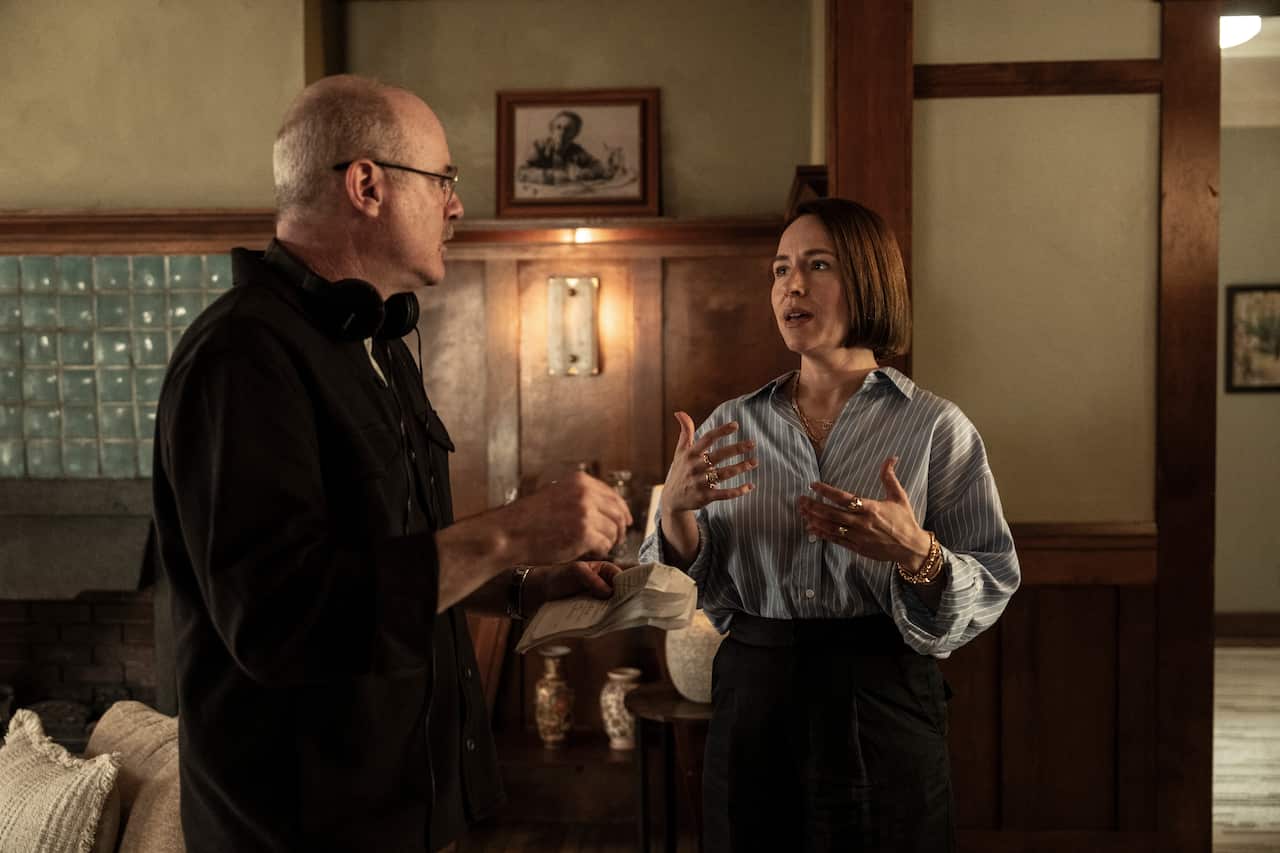
The Audacity does not sugarcoat its depictions of powerful figures. A key example is Duncan. Duncan is unscrupulous and egotistical and has no issues with potentially committing fraud. “We juiced our shares before the IPO,” the CEO casually says early in the series, without a shred of guilt. Yet, he is also insecure and whiny.
“[Duncan] is a guy who's just below the tech titans. [He’s] ambitious. [He enters] into a world that's very toxic,” Magnussen explains.
“He’s a guy who originally came to the Valley to do something good and hopeful and positive for the world. Then you slowly see the corruption of it all infiltrate him.”
Yet, while Duncan has no qualms with unethical behaviour or law-breaking, Glatzer and Magnussen do not consider Duncan a villain, but rather, a complex character corrupted by his environment.
“What you discover through season one is you learn the toxicity that is seeping into everyone throughout the show,” Magnussen said.
“No one's a villain in the show, but I think the world around them can poison them a lot. And you slowly see that this culture can be poisonous."
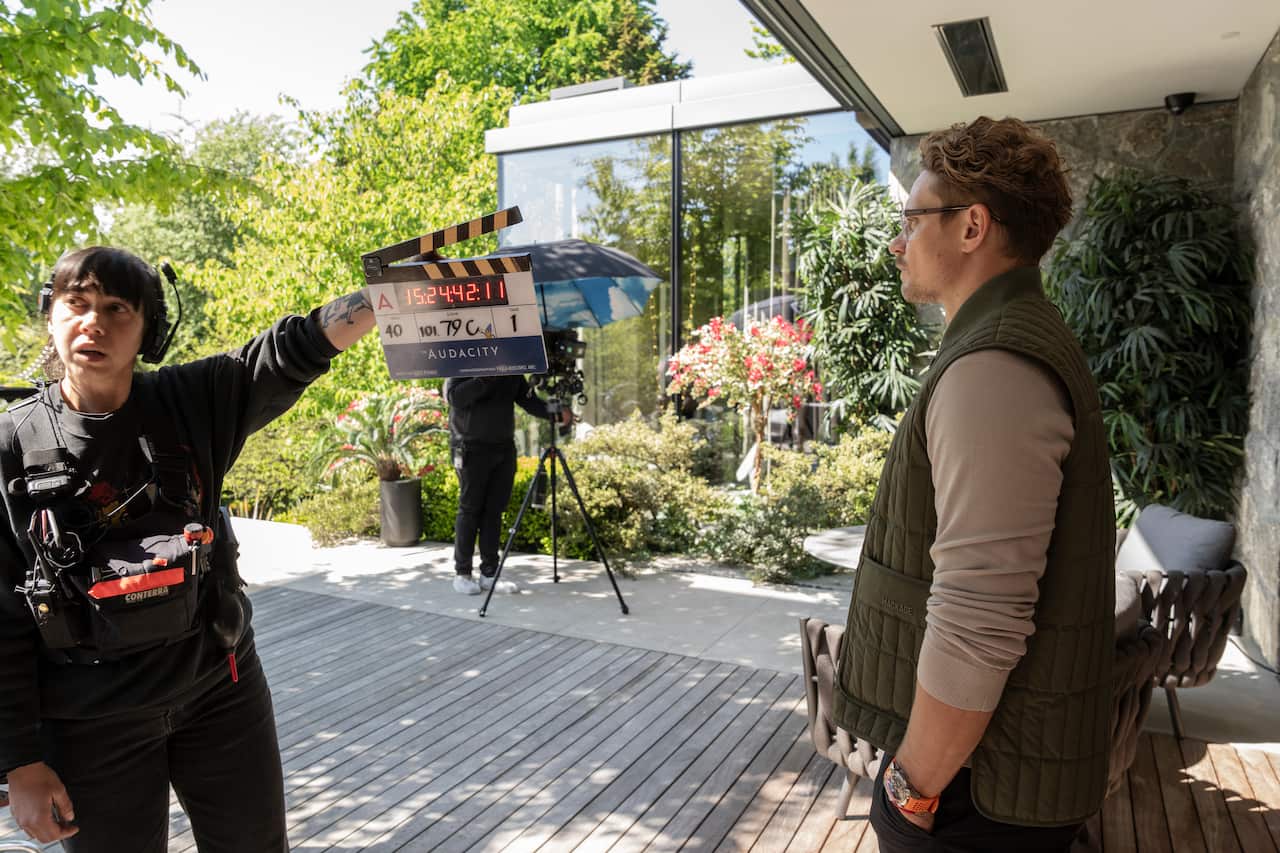
One of the biggest challenges of the series for Magnussen and Glatzer was finding the humanity in Duncan, despite his often ruthless and reprehensible tactics.
“At the core of him, he's still that young guy who came to do something positive. It's just, he's so lost,” Magnussen said.
Despite the cutthroat world they find themselves in, Glatzer was determined to emphasise the “fallibility” and human side of the characters - that they are flawed and complicated.
“Humanising the characters and reminding them that they are fallible was essential. I think that fallibility is what makes us,” Glatzer said.
“To create a wider swath of humanity inside of this little bubble of Silicon Valley was what I was hoping to do."

While The Audacity is a fictional satire of the Silicon Valley world, Magnussen and Glatzer say they ultimately hope the series provokes a serious discussion on ethics surrounding tech, trust, and privacy.
“I think that a lot of what we've found thus far in the 15 years since the iPhone [was launched] is a steady dehumanisation of how we communicate with each other, how we're tolerant with each other, how we come to solutions, how divisive this has made us as a society, and how much we ignore the facts instead of learning the facts,” Glatzer said.
“All of that, I think, is something that we all need to face, and hopefully the show does a little gentle satirical nudge in that direction."
“Technology is a beautiful thing," Magnussen adds, "but it's inevitably going in this direction where they're like, ‘Oh, we make a lot of money, so let's keep going down that route,’ instead of just focusing on trying to make it more beneficial [for users].
The Audacity is now streaming at SBS On Demand. Episodes air weekly on SBS and SBS On Demand starting Wednesday 15 April at 9.30pm.