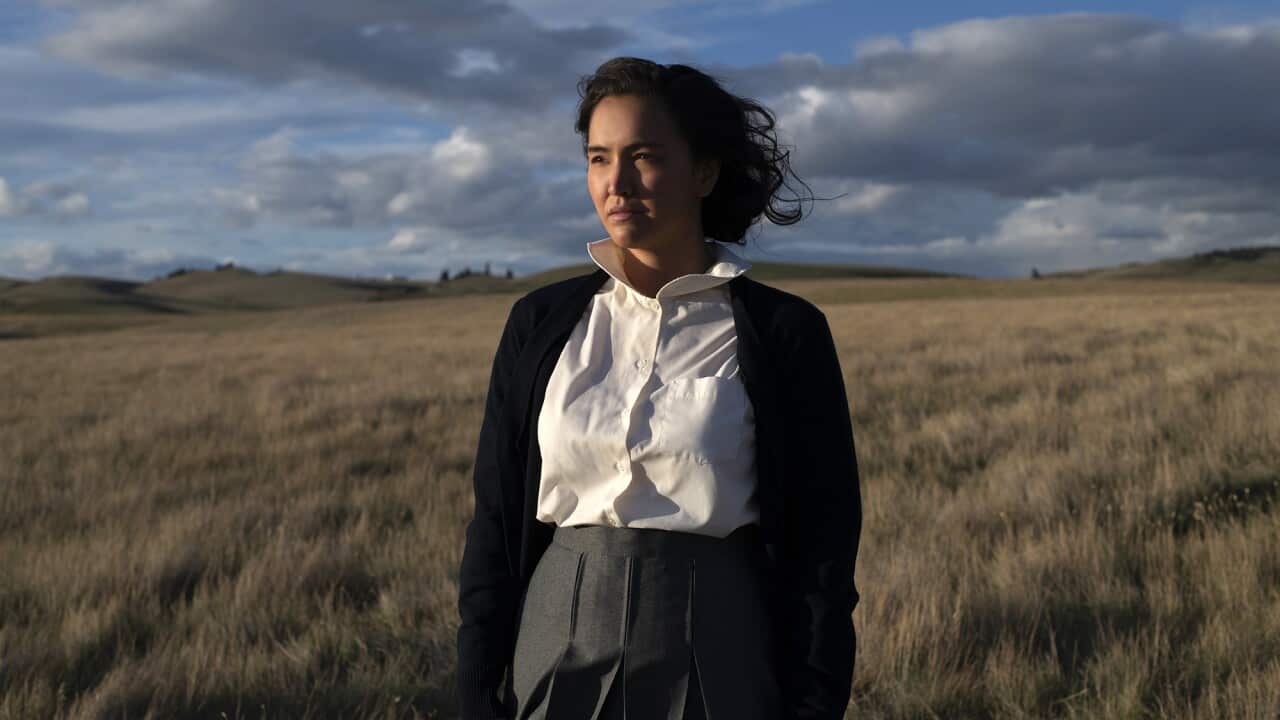
Centred around the experiences of Cree matriarch Aline Spears, Bones of Crows is a powerful depiction of the experiences of an Indigenous Canadian family, showing their courage and resilience in the face of enormous challenges.
Removed from their family home and forced into Canada’s residential school system in the 1930s, young musical prodigy Aline and her siblings are plunged into a struggle for survival. The five-part series sees Aline played by three actresses: Summer Testawich as the young girl, Secwépemc actress Grace Dove (Monkey Beach, The Revenant, Alaska Daily) in a powerful performance as teen and adult Aline, and Carla-Rae (Rutherford Falls) as the older Aline. The cast also includes rising star Phillip Forest Lewitski as soldier Adam Whallach and Cardinal star Karine Vanasse as the stern and pious matron of a residential school.
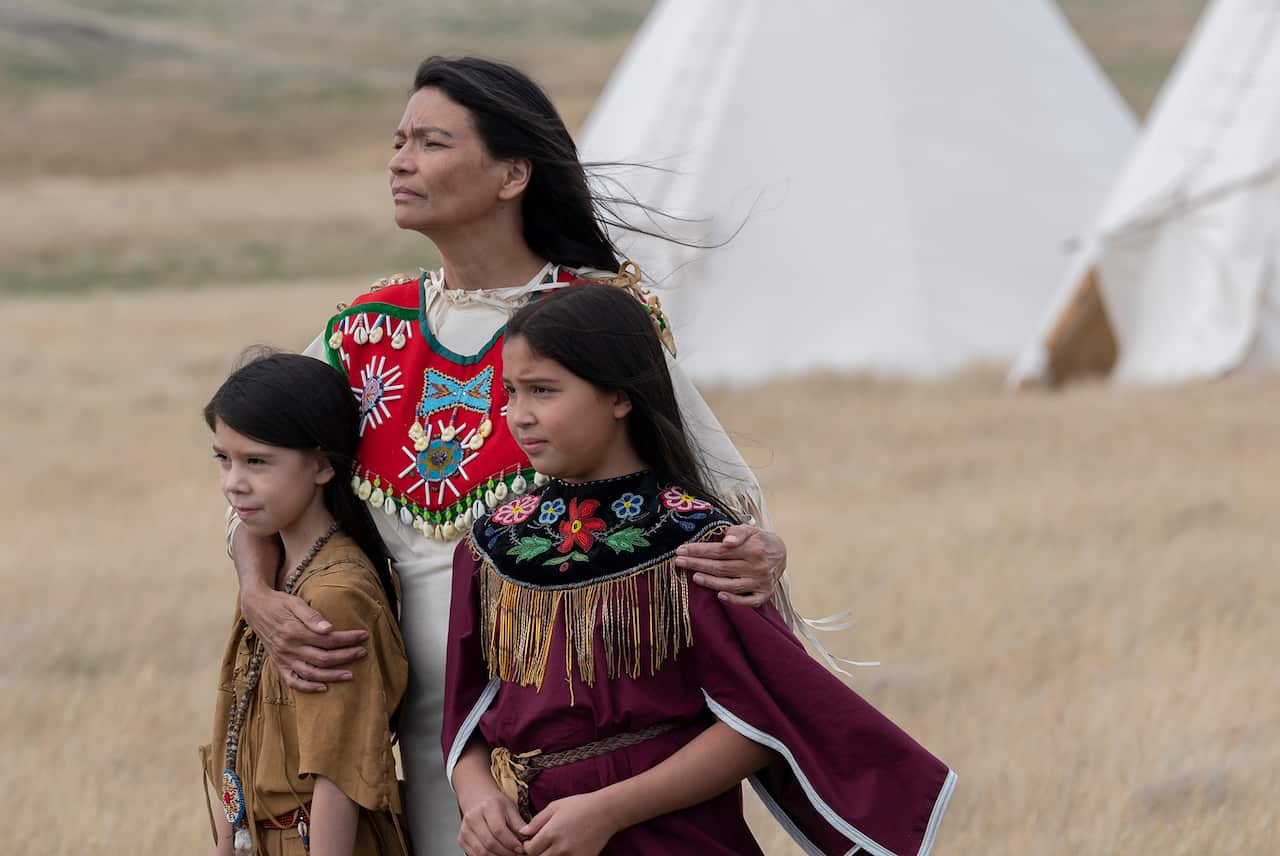
There is strong Indigenous representation on and off screen, including the show's creator, writer, director and lead producer Marie Clements, an award-winning Métis/Dene filmmaker whose other works have included Lay Down Your Heart and Red Snow.
The sweeping story was developed to create both a two-hour feature film, which debuted to critical praise in 2022, and a five-part TV series that expands the story of Aline and her family. We see Aline working as a World War II code talker, getting married, having children; and later, supported by her daughter Taylor and granddaughter Percy, confronting the scars of the past so she can step into her role as the family matriarch.
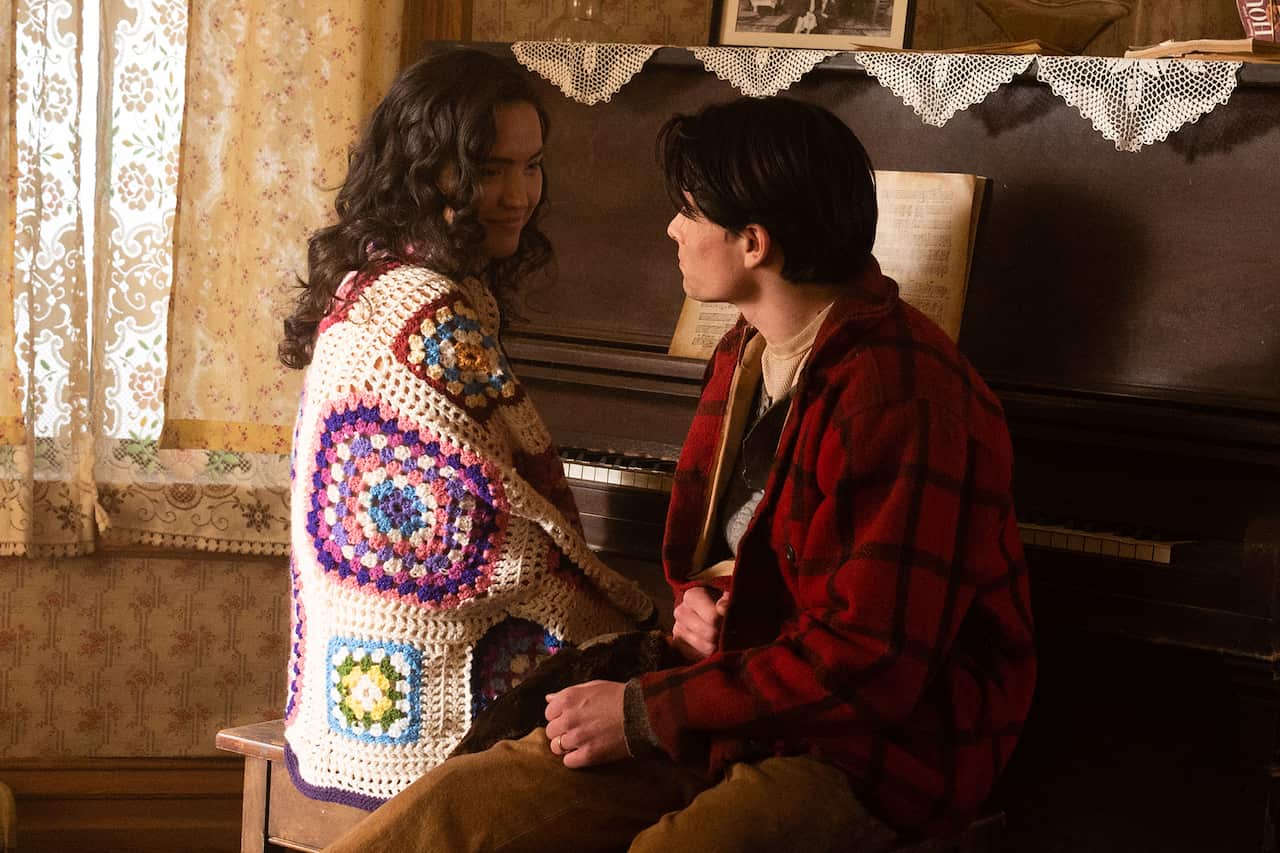
Clements says Bones of Crows represents Indigenous experience on screen in a way that had not been done before.
"Bones of Crows is epic in scope and it is meant to be. Cinematically, Indigenous peoples are meant to feel that we were not really here, not part of a shared history, never modern in the context of time and place. We might not be present in a filmic way but we have our family albums that archive a reality that we have always been here.
"There are war heroes and seamed nylons, Indian cowboys, straight skirts, tattoos and horn-rimmed glasses. There are black-haired bee-hives and tailored suits, palazzo pants and mustang bikes. There are politics and wars, human rights movements and traditional realities. Bones of Crows is a generational period piece coming up through the decades, asserting that our future was always present, our past always connected to the future.
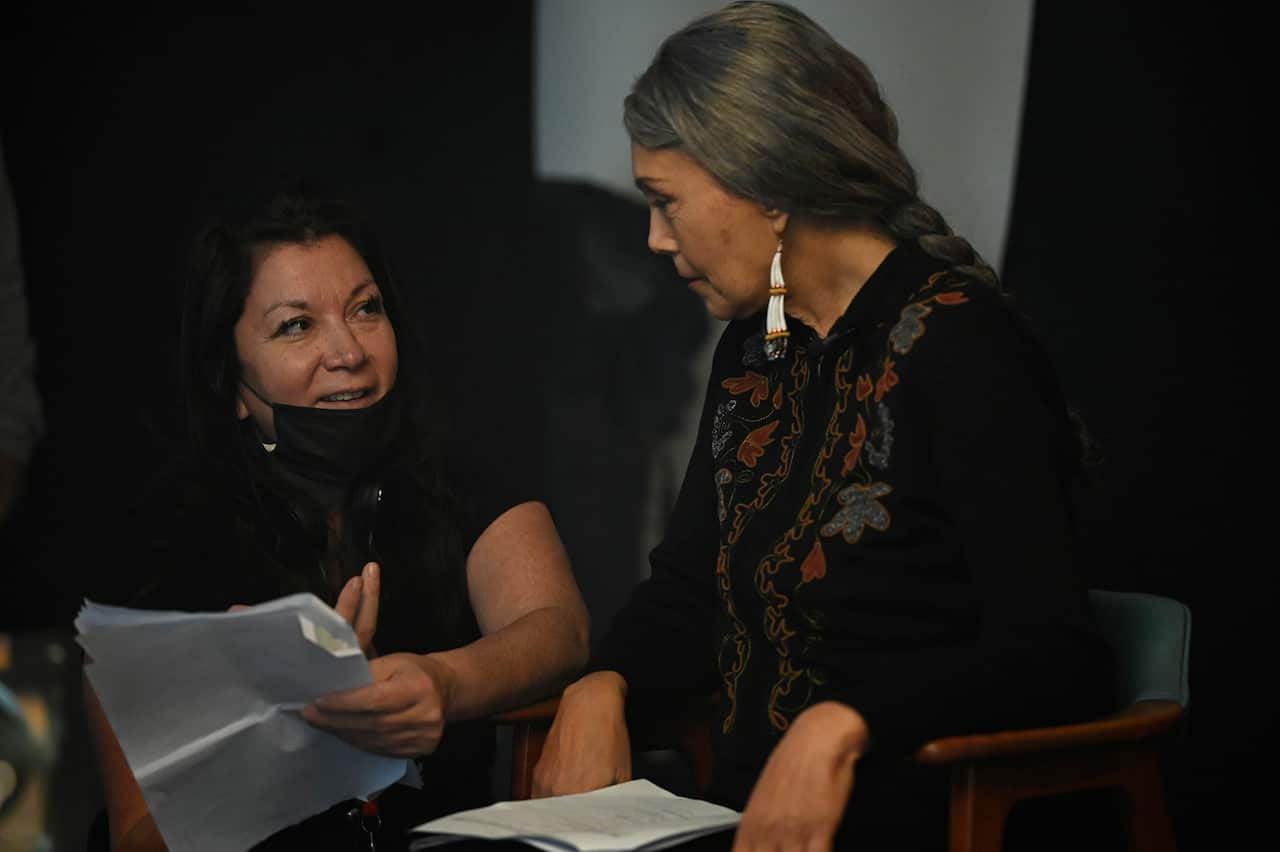
"Bones of Crows is a darkly psychological drama told in parts that add up. It is inherently connected in its telling to blood memory. The idea that we are living in the present but are affected by the lives and trauma of not only our own personal battles of survival, but those of our ancestors. The residential school legacy is still playing out in the lives of survivors and their children’s children, it is still coursing through our veins. In the telling of Bones of Crows we come to understand memory not just as a flashback but as an emotional reaction triggered by a present one. .... Bones of Crows comes to this with an Indigenous scope, allowing the viewer an 'in' to what is commonly only understood as simply a singular tragedy."
Clements says the structural rhythm of the narratives not only adds to the dramatic experience for viewers, but also stays "true to the seeing of our main characters".
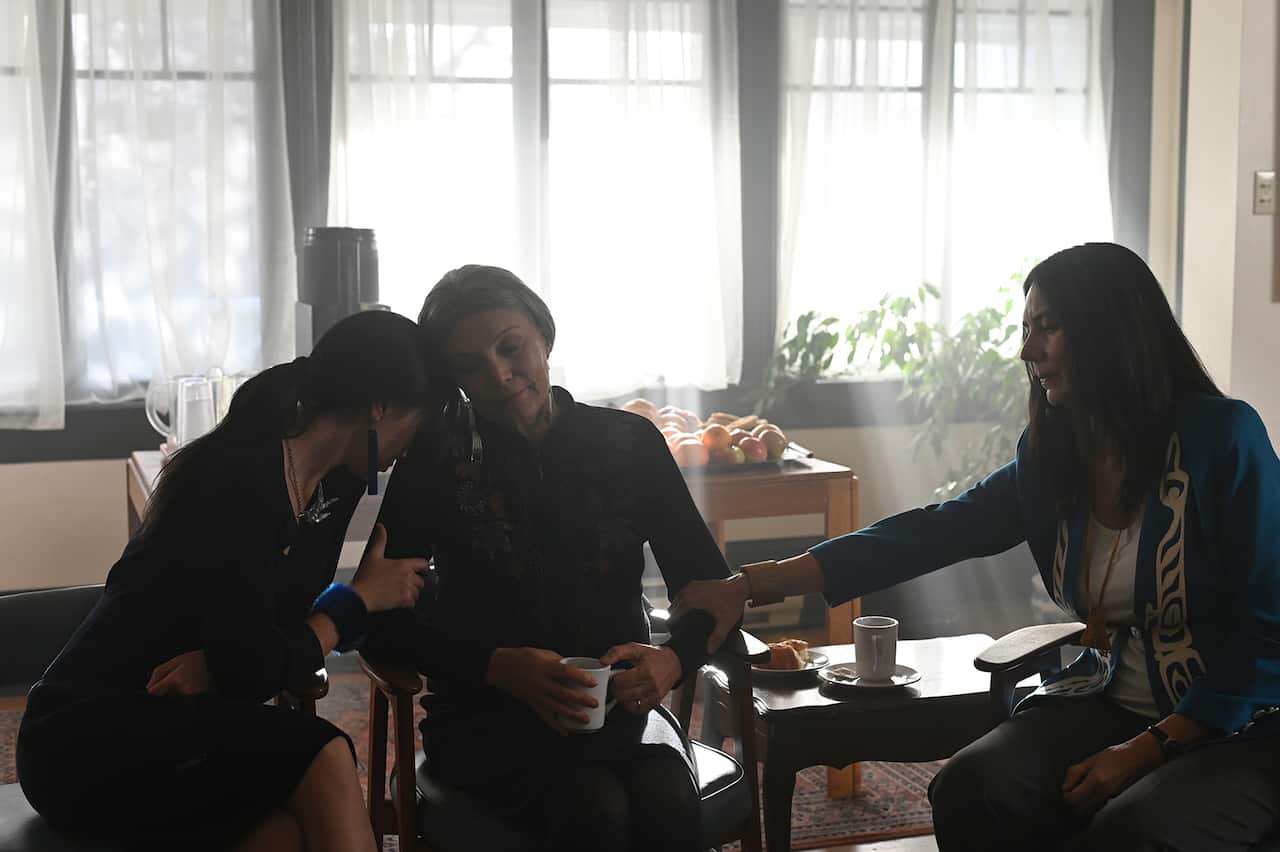
"There are a lot of codes for survival and a lot of secrets. There are secrets we withhold from ourselves to survive, and there are codes we deftly manifest to get ourselves out of a situation if only in our imagination for the moment – our spirit finding a place, a way to escape. Bones of Crows weaves this into the narrative, off-setting the acceleration of the dramatic action with moments that suspend and offer freedom through music, our original language, our feet in this earth, our connection to our family – codes that are inside us and have their own technicolour pictures.
"Bones of Crows is mythic. It has black wings that live in the mind’s eye of Aline and her siblings because as six-year-old children this is what they hear coming (black shoes against wooden floors); they see wings descending against the walls of the residential school dorm (cloaks of priests and nuns habits). Beaks and birds’ eyes that see everything…because they always try and get you when you are down.
"If the Indigenous world has secrets and codes so do the other worlds in Bones of Crows. The government and church – not unlike The Handmaid’s Tale – [are] designed in a kind of choreographed presence that is two sides of the same coin. Cooler surreal tones, a heightened state of existence where despite the possibility of real humanity, a manifest destiny is the engine.
"If The Handmaid’s Tale is the white feminist response to a deep embedded fear," Clements says, the aim of Bones of Crows is "a cinematic response to our lived history in Canada where the reign of terror included starvation, disease warfare, sterilisation, residential schools and paedophilia, and cemented a solid highway for the 1960s scoop, Murdered and Missing Indigenous Women and Girls, poverty, the incarceration of Indigenous people, environmental crisis and the foster care system. It’s scary because it was scary and because it’s still scary.
"Where is the hope? Hope is in the truth. Hope is survival. Despite this history that is lodged in us I have always seen hope in the face of my mother, in the faces of my family, in the face of my son – the face of this new generation. Hope is not a separate thing. It has to exist with the truth – good or bad."
Bones of Crows premiered on NITV and is now streaming at SBS On Demand.