It's hardly news, but vampires are in; from Let the Right One In, to the enormous cult swirling around the Twilight franchise, the undead blood suckers seemed to have a compelling hold on the popular culture…the question is why, or rather, why now?
“From the dawn of cinema, late last century to the end of cinema, I don't think that the vampire will ever be out of fashion,” says Richard Kuipers, special guest curator of the SFF side-bar dedicated to the vampire movie. “I think other creatures of the supernatural and man-made monsters have their ups and downs, but I don't think there hasn't been a vampire movie made somewhere in the world since Bela Lugosi first appeared as Dracula in Tod Browning's film in 1931.”
Kuipers, a writer, filmmaker and Variety critic, is widely appreciated in local film culture as an enthusiast of all things film, with an especially encyclopaedic knowledge of genre movies. For Kuipers the vampire is the perfect monster: “It looks like us, walks like us, it's a human entity… the vampire is enduring because we can look at a vampire and look at ourselves.” Kuipers says that an essential part of the allure of the vampire is that it is fantasy of control and power; a fantasy that answers a lot of fears; fear of aging; fear of sex…. And vampires have a sexy image. “Who hasn't fantasised about being one? You get to live for ever and party all night.”
Pressed to theorise as to what the vampire movie is really about, Kuipers suggests that its roots lay in Christian mythology and the eternal battle between good and evil: “Well obviously, Dracula is Satan and Van Helsing is God (Van Helsing, Dracula's sworn enemy, who like the Count originated in Bram Stoker's novel published in 1897). That's why you have the cross and the other things that come into play about how you kill a vampire.”
The vampire, says Kuipers is about the allure of 'the dark side'. “The vampire has eternal life, but it is a lonely life, a horrible life, a pathetic life, yet it's attractive, because after all vampires are immortal.”
Given the enormous scope of the vampire movie as a genre, Kuipers elected to mount a program that embraces the classic, and the obscure in addition to the over-looked and under-appreciated. “I wanted to choose films that you can't see readily on cable or free to air and that have maximum impact when seen on the big screen.”
The Program
Nosferatu
(Dir. FW Murnau, 1922)
Murnau's sublime silent classic with 'Dracula' not as a handsome cool character but a wretched, ugly creature.
Dracula
(Dir. Tod Browning, 1931)
Kuipers: “I wanted to have a few classic corner stone movies; I think for an older audience we've seen Dracula and Nosferatu but how many people under 35 have actually seen Bela Lugosi in 35mm on the big screen? For young audiences I don't think they've seen these key films in the genre.”
Nosferatu appears with live accompaniment from seven piece ensemble Darth Vegas with sound effects by Miss Death.
Black Sunday
(Dir Mario Bava, 1960)
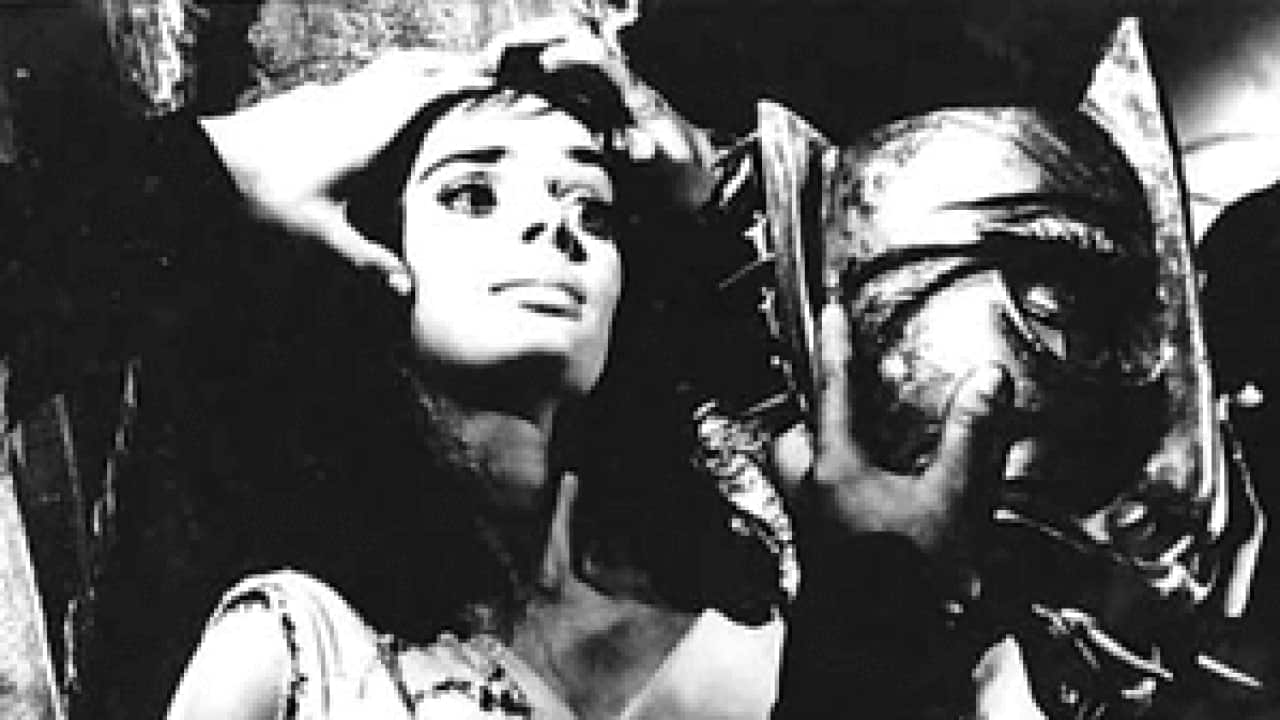
“People should see this because it's the film that established all the traditions and executions of modern horror – which is to say more explicit violence. It's beyond Gothic…the kind of feeling Bava put into it, influenced a whole generation of filmmakers to make horror a lot more disconcerting and atmospheric. Viewed today it might appear clichéd but it certainly wasn't in 1960. But then no film began with a witch having a spiked mask nailed to her face. It was banned in the UK outright on release.”
Dance of the Vampires
(Dir. Roman Polanski, 1967)
Polanski's notorious horror comedy is also known in a different form as The Fearless Vampire Killers. The plot is a parody of the classic Van Helsing/Dracula confrontation, with Polanski camping outrageously and hilariously as a useless assistant to Jack MacGowan's vampire hunter.
“I was really pleased to get this because there was no way I was going to show Fearless Vampire…which was cut by twenty minutes. Dance is Polanski's director's cut if you like and it's a million times better than Fearless…this is where Polanski crossed over from the psycho horror of his Euro films like Repulsion (1965) before going into full tilt horror with Rosemary's Baby (1968). It's a satire of the kind of films made by British horror production house, Hammer.” (Hammer was famous for their extraordinarily gory films with Peter Cushing and Christopher Lee).
Dracula AD 1972
(Dir. Alan Gibson, 1972)
Hammer's Dracula, Christopher Lee, stars in this eccentric take on the legend set in post-swinging London, complete with orgies, flairs, frills, and lots of Glam.
“I knew I had to have a Hammer horror with Lee so I went with this. It was one of the first movies I ever saw. It's got Cushing in it as well and the first few minutes are a period Dracula film. It's got this tacky setting and there's this other film about glam rock going on at the same time as the vampire film. It shows Hammer the trad horror house trying to drag themselves into the modern day. And it's an example of the way of the vampire film uses the Eternal Battle as a narrative device.”
Daughters of Darkness
(Dir. Harry Kumel, 1971)
Kuipers describes this as an artful entry in the cycle of lesbian soft-core porn vampire films from Europe in the early '70s. The plot, about a newly wed couple corrupted by a Countess vampire is all seduction in beautifully appointed rooms and stunning costumes. “Most of the stuff from Europe was pretty trashy but this one has this hypnotic spell and it does star Delphine Seyrig from Last Year at Marienbad (Fr, dir. Alain Resnais, 1961) and India Song (Fr. Marguerite Duras, 1975).”
Mr Vampire
(Dir. Ricky Lau, 1985)
A horror comedy about a hopping vampire with a clutch of dazzling martial arts action set-pieces.
“This is a fabulous Hong Kong film for audiences who have never seen vampires from the East. What I love about Asian fantasy cinema of the '80s is that they are based on certain cultural traditions such as the undead being attracted to the breath of people and that you can stop them with sticky rice! I don't think anyone ever wrote that vampires hopped but in Ricky Lau land they do! And Christianity has nothing to do with any of it… and there's kung fu too.”
Near Dark
(Dir. Kathryn Bigelow, 1987)
A 'family' of vampires travel a barren middle-America in a big van sucking and killing to survive. Violent, hideous, and suspenseful, it's an original take on vampires and the serial killer movie.
“What I like about it is that the word vampire isn't even mentioned. It came out the same year as The Lost Boys (USA, dir. Joel Schumacher, 1987) which was a smash, but this was low key. There's a whole subplot involving a little kid vampire, which I doubt you could do today. This was before Bigelow's big hits, Blue Steel (1990) and Point Break (1991), which are no way near as good as this. You could see the ferocity to her approach. This is really visceral and breathtaking.”
Thirst
(Dir. Rod Hardy, 1979)
Produced by Australia's King of Ozploitation, Tony Ginnane, Thirst, Kuipers says, is an original and creepy take on the vampire genre. There's no garlic and no black cape, but there is rivers of gore, in a plot about a 'vampire farm' that harvests blood for a secret society.
“It's good to have something local and I think it's terrific. Its set up is a metaphor about class – the working class having the blood sucked out of them.”
Dracula: Pages from a Virgin's Diary
(Dir. Guy Maddin, 2002)
Canadian filmmaker Guy Maddin's metier is a style derived from silent cinema; this is a version of the Winnipeg Ballet's production of Dracula.
“It's obviously a personal film. Made in 2002, it looks like it was made 1902! Very beautiful and luscious.”