By the beginning of the 1960s, French filmmaker Henri-Georges Clouzot had already established himself as one of the great post-war directors with his landmark film Le Salaire de la peur (The Wages of Fear, 1952) and the twisted noir classic Les Diaboliques (1954). But to the arrogant young guns of the French New Wave, the once-admired Clouzot had become representative of the "tradition de qualite" – a staid and boring adherence to the styles and subject matter of populist cinema.
Clouzot took the criticism to heart and, in 1962, began work on a script that was to be his answer to those who doubted he possessed any personal vision. He chose as his 'New Wave' project a self-penned re-interpretation of Dante's L'enfer (Inferno), in which an aging playboy named Marcel (Serge Reggiani) is consumed by a self-destructive jealousy as he watches his young wife Odette (Romy Schneider) live seemingly carefree amongst the beautiful people of France's Cantal resort region (his character's names were taken from Marcel Proust's novel 'À la recherche du temps perdu', which explored deceit, jealousy, and suffering). Inferno would become a fascinating tale of ambition, ego and artistry gone awry; the crippling affect upon Clouzot and his cast and crew during the extensive pre-production period and the brief location shoot has been captured in Serge Bromberg's and Ruxandra Medreahe's startling docudrama L'Enfer d'Henri-Georges Clouzot.
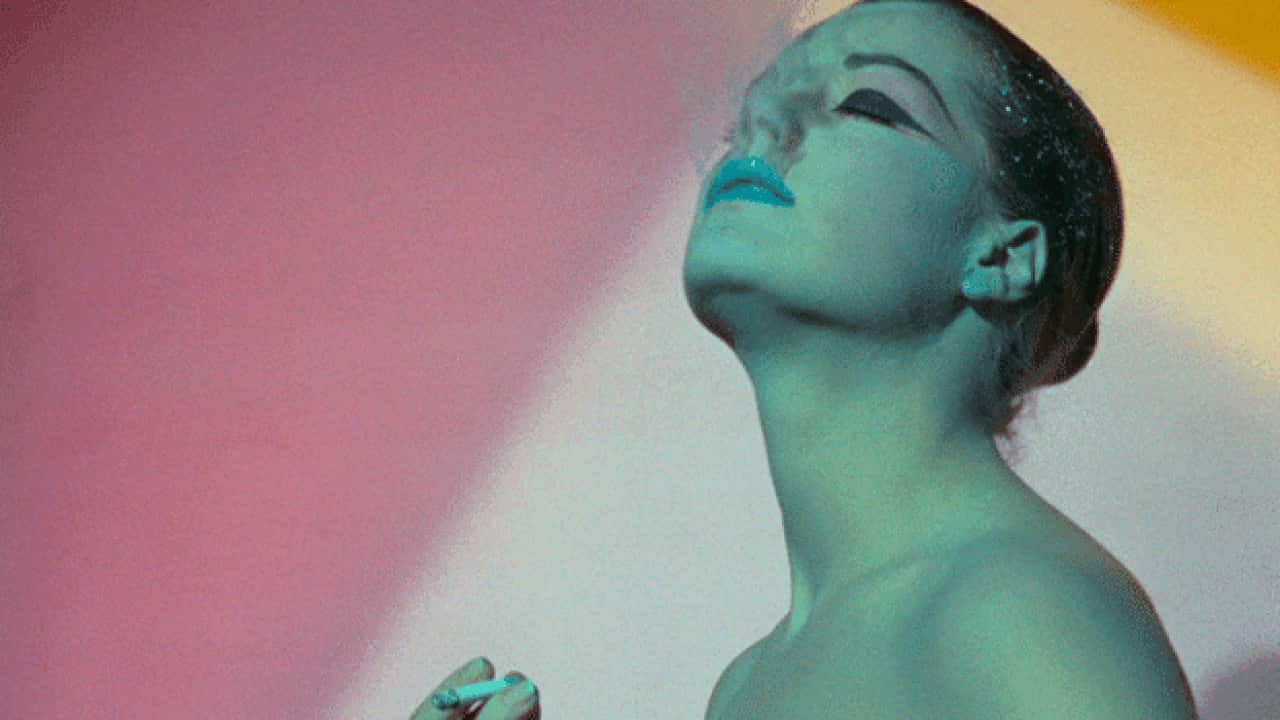
With the works of Clouzot detractors Francois Truffaut and Jean-Luc Godard sweeping world cinema in the early 1960s, American studio Columbia Pictures were convinced that the new project from the director of The Wages of Fear would be an event film. His mind consumed by innovative interpretations of his lead character's all-consuming jealousy, Clouzot indulged in a pre-production phase of pure experimentation funded by the over-confident American backers. Footage culled from months of in-camera trickery and film-stock manipulation appears in the docudrama and suggests that, had Clouzot's film not imploded so spectacularly, it would have resulted in a grand work of art. The melding of black-and-white realism and nightmarish colour sequences, the use of twisted mirrors and refracted light sources and the full-body painting of actors in blues and greys to suit a lens filter that would turn an azure lake into a blood-red ocean are just a few of the advancements that Clouzot demanded of his crew (which included Claude Renoir, Rudolph Maté, dual cinematographers Andréas Winding and Armand Thirard, camera operator William Lubtchansky and a youthful Costa-Gavras as a production assistant – all of whom feature in L'Enfer d'Henri-Georges Clouzot.)
But implode it did. Despite being warned the manmade lake upon which much of the shooting took place was to be drained, Clouzot shot time-consuming retakes of the most minor scenes; employing three separate camera crews to capture the vastness of the location, Clouzot had undertaken a logistical nightmare, the likes of which no one involved with the film had ever experienced; the director became a manipulative tyrant, demanding his actors suffer through the region's scorching summer heat to physically capture their characters emotional breakdown.
The toll upon all involved became insurmountable. Footage of Romy Schneider, at the time one of international cinema's biggest stars, indicates that Clouzot had captured her at her most radiant, but the actress would not tolerate her director's psychological taunting and they clashed. Lead actor Serge Reggiani was himself a volatile personality and the constant hardships resulted in the star and the director feuding terribly or not speaking at all; Reggiani would suffer a heart attack three weeks into the shoot from which he thankfully recovered, even if the production did not.
After several months of expensive pre-production, the shoot ground to a halt after only three weeks. Initially, French matinee idol Jean-Louise Tritignant was employed to fill Reggiani's role, though he never shot a frame of film. Columbia Pictures buried the cost in the labyrinthine methods employed by studio accountants and withdrew from financing international productions for many years.
Serge Bromberg and Ruxandra Medreahe film is a fascinating study of a filmmaker's ambition and eccentricity colliding with the harsh realities of production, as well as an attempt to flesh out the narrative strands that would have formed Clouzot's film. Having been entrusted with 185 cans of footage from Clouzot's widow Ines, the directors have cast actors as Odette and Marcel (Bérénice Bejo and Jacques Gamblin, respectively) who perform dialogue scenes that bridge the existing location footage and provide a notion of what Clouzot wanted to achieve. Hypnotic test-footage of Clouzot's technical experiments place the innovation he was willing to employ on par with Kubrick's visions for 2001: A Space Odyssey, which would be released only a few short years after Inferno closed-down its shoot.
Henri-Georges Clouzet would also become a victim of his own unrelenting drive – he was taken seriously ill following the cessation of Inferno and would direct only two more films, the opera documentary Messa da Requiem von Giuseppe Verdi (1967) and La prisonnière (1968). In a revealing 1969 interview with Paul Schrader, Clouzot is philosophical about his failings with Inferno, stating “I had an idea but it was impossible to do in a movie.”
Though his intimate epic about the fragility of love and tortuous, corrosive nature of possessiveness would become synonymous with egotistical folly, artistic prowess and unrealised ambition, the simplest legacy left by Inferno is that it is one of the great unrealised projects of international cinema.
Henri-Georges Clouzot's Inferno screened at the 2010 Sydney Film Festival and will screen on SBS ONE in the future. Read our review of the film here.