The last days of flighty French monarch Marie Antoinette’s reign have been given plenty of screen time over the years, so one might assume that perhaps all that is dramatically pertinent has come before Benoét Jacquot’s Farewell, My Queen. But the veteran auteur, adapting the Chantal Thomas novel with co-writer Gilles Taurand (Army of Crime, 2009), has breathed new life into the story of the painful origins of the French Revolution, and in the process, resuscitated his own career; this French/Spanish co-production is his finest work since 2001’s Tosca.
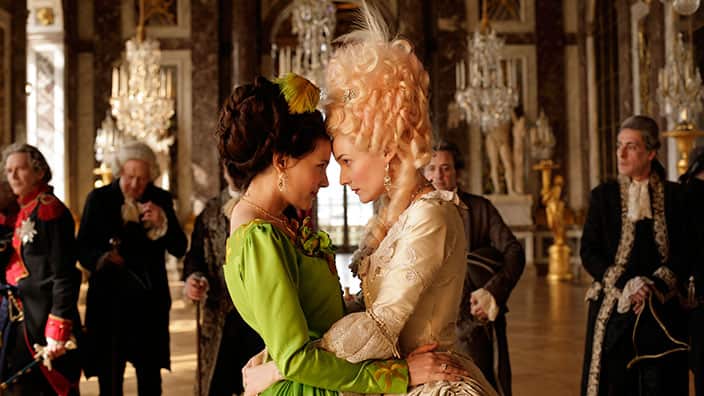
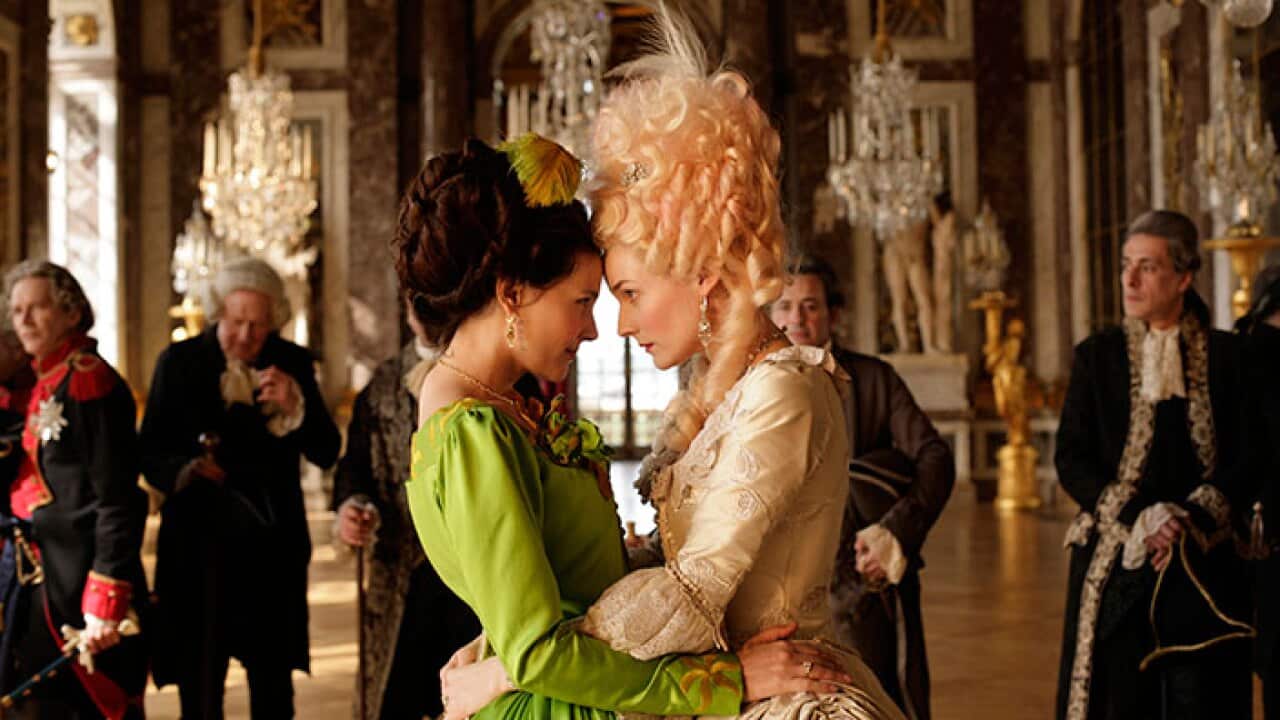
Farewell, My Queen takes place within the opulent, gated grandeur of the Palace of Versailles circa July 14, 1789, where noblemen, coiffed society dames and their entourages live in arrogant denial of the larger population’s hardship, Its focus is on second-tier servant and reader to the Queen, Agathe-Sidonie Laborde (Léa Seydoux). The angelic Sidonie is in awe of the enigmatic ruler (played by Diane Kruger in a career-best performance), cherishing with mounting longing each moment they are together but left to look on from afar at the developing intimacy between Marie and Mme. de Polinac (Virgine Ledoyen).
Seydoux is clearly emerging as France’s next A-list international star
As the aristocracy’s decadence begins to implode with the people’s uprising, Sidonie struggles with her allegiance to the throne, her feelings for the Queen and, ultimately, the manipulation of her by the Court. In the final moments, when Sidonie is literally stripped bare and recast in what may become the role of martyr, Seydoux’s heartbreak is devastatingly convincing. Based on her commanding portrayal as Jacquot’s tortured protagonist, and her memorable turns in Inglourious Basterds, Mission Impossible - Ghost Protocol, and Midnight in Paris, Seydoux is clearly emerging as France’s next A-list international star.
Filmed on location within the great halls and majestic grounds of the Palace, Jacquot and his cinematographer Romain Winding capture in remarkable detail both the gilded existence of the upper-crust and the often candle-lit quarters of their servants and pages. This world feels vast, despite its minor existence, and the fluid use of handheld and Steadicam techniques provide the film with a compelling, increasingly foreboding momentum.
Jacquot also takes great pleasure in slyly exposing the physical filth that the immoral elite must constantly keep suppressed in order to maintain their shallow visage: the constant threat of rats (living and dead), the foul odour of the pompous unwashed and the expensive fragrances that mask their stench, the circuitous infidelities of the needy hangers-on etc.
Jacquot has spent a large part of his career exploring the psychology of women from all walks of life, (most notably The Disenchanted, with Judith Godreche, 1990; A Single Girl, with Virginie Ledoyen, 1995; and The School of Flesh, with Isabelle Huppert, 1998). In Farewell, My Queen, he finds fertile ground to explore themes of desire, betrayal and class warfare. The complex triangle at the dark heart of his film, set against the surging social change of a nation, makes for both a superb historical epic and a compelling human drama.
Watch 'Farewell, My Queen'
Sunday 21 November, 8:30pm on SBS World Movies (Streaming after at SBS On Demand)Tuesday 23 November, 2:05am & 11:40am on SBS World Movies
M, CC
France, 2012
Genre: Drama, History
Language: French, German, Italian
Director: Benoét Jacquot
Starring: Léa Seydoux, Diane Kruger, Virginie Ledoyen