In the brand new season of The Hospital: In the Deep End, three new high-profile Australians step onto the frontline where the stakes are high, and compassion is critical. The series return expands its lens to explore a wider range of departments than ever before across not one, but two of the busiest and most well-known hospitals in the country.
Award-winning food journalist, best-selling cookbook author, radio presenter and international TV personality Matt Preston, former professional tennis player, broadcaster and public speaker Jelena Dokic, and Hollywood actor, producer and activist Ruby Rose, all arrive with a deeply personal connection to the public health system, but nothing has prepared them for the emotional and eye-opening experiences ahead.
Every episode gives us a glimpse at the courage, compassion and, above all, strength of those who work tirelessly on the front lines of our hospitals.
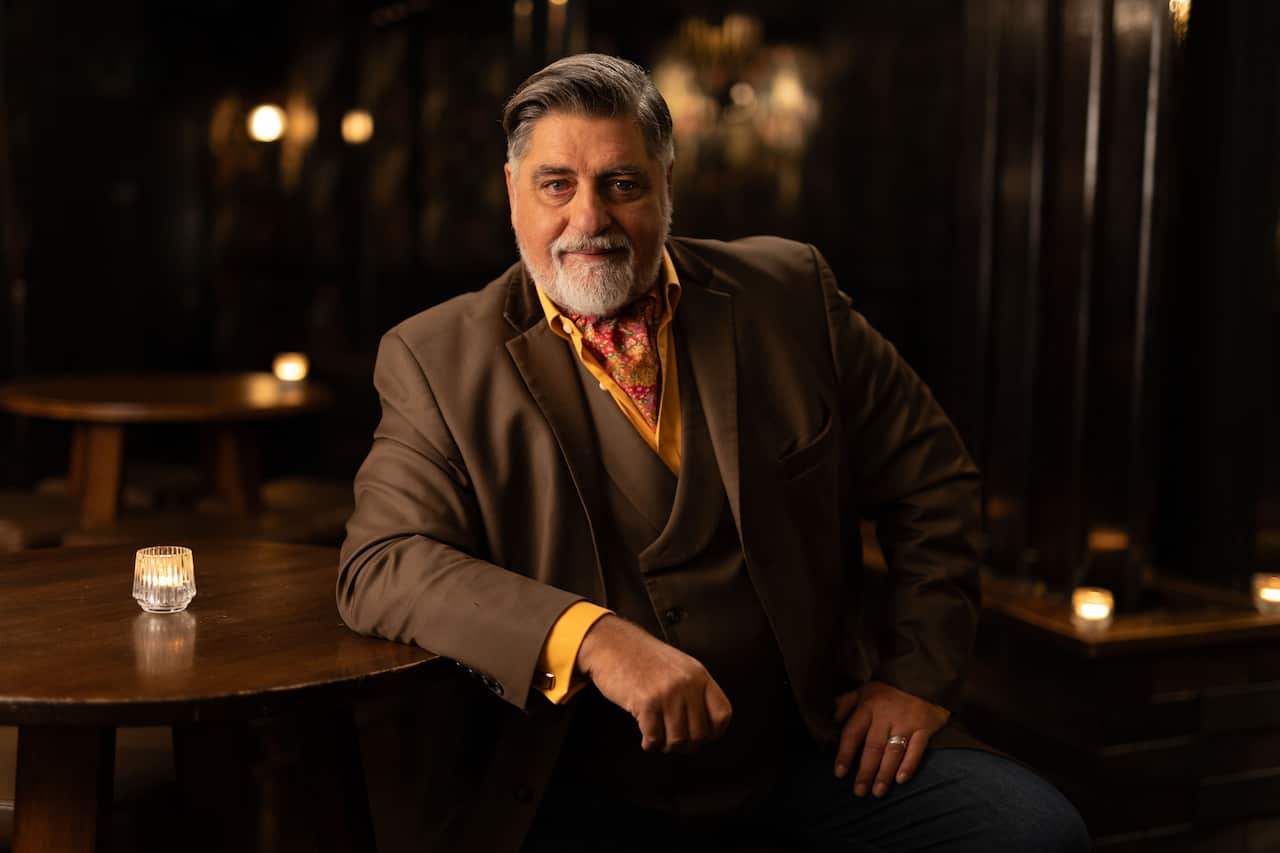
SBS spoke with Preston about his unforgettable, challenging and oftentimes confronting experience on the frontline, and the life-changing lessons he learnt from his time in the deep end.
Going from the world of food to the medical world seems like quite a leap. How did you feel going into the hospital on day one, and what were you hoping to learn from the experience?
I think hospitals are a part of all of our lives. We interact with them in moments of panic, and moments of joy.
For me, there were specific things I wanted to learn about in terms of being involved in this adventure. But certainly, day one was filled with trepidation because you are going into an area where you know nothing about what happens behind the scenes. It would be like walking into the back of a restaurant for the first time, but hospitals are far more complex than any restaurant ever could be.
What did you learn from being in situations where alarm bells are going off and a single person's actions can mean life or death for a patient?
Stay out of the way. Stay out of the way. They've got this.
That's the thing about the hospital. In an area like geriatrics, so much of the day is menial, but then shifts into moments of life and death, and then everyone jumps up, including sometimes the patients, which you don't want. There's a full risk that's quite dramatic in hospitals, so you want to try and minimise that.
And in those chaotic situations, what did you learn about the people alongside you who are front line workers?
I think it's the fact that you can go from second gear to sixth in a moment. When that code blue goes off, you don't actually know what you're running to do. Everyone grabs a different piece of equipment.
It might be a simple thing, but it might be a defibrillation moment or all those other things that can happen. So you don't want to be in a situation where you're going, oh, I actually need something I don't have with me. And then you've got the whole issues about the patient's requests for Resus (resuscitation), Non-Resus (non-resuscitation). There's a whole range of complexities.
There are very few careers outside of the medical profession where you are dealing with life and death on a daily basis.
In the series, you also noted that there were very few occupations where it is commonplace to face abuse like the medical profession.
Things can go horrendously wrong when it comes to life and death in lots of professions, but I've still been asking people, can you think of somewhere else where abuse is commonplace? Because patients with dementia don't behave like the lovely, sweet granny or grandpa you remember. Dementia changes them, it can change them so dramatically.
You know, those behaviours of concern are a massive, massive issue. It's an everyday potential. It's really hard to name anywhere where you have to go through that. It's surreal.
I think one of the things we all agree on is that everyone should work in a safe workspace. And if it's not safe, then it's beholden to those people managing it, you know, to make it safe. I think that's a question that we're still struggling with in the the public hospital system.
And I don't know what the solution is, but it's a challenge. It also becomes more of a challenge when geriatric patients end up not being in the geriatric ward. We've got people who are trained in geriatric care, but sometimes a patient will end up in a surgical ward because there's no space in the geriatric ward and they've come in through ED. How do you deal if that patient does have some form of dementia? How do you deal with those behaviours in a situation where they're sharing a ward with other patients, non-geriatric patients, and with nurses who maybe don't have the specific experience to work in that area?
Our public hospital system is a jewel beyond price, but we need to protect it and look after it and nurture it, as you would anything of such great value.
If you look at the rates of dementia, those numbers are starting to rise. And we haven't doubled the number of geriatric beds. We haven't answered the question of where they go after the hospital. We haven't doubled the number of old people's homes.
I think keeping people in their own home is ideal. That's the experience I had with my mum, which was amazing. It was way, way better. You're safe in your own home, you're less at risk of a fall. And when you get old you want a combination of safety and dignity. And that's sometimes easier to deliver at home. Also, you're in your place. You can sit looking out the window and wave to your neighbour who walks by, and you feel like you're connected. I think when you get taken into the hospital, it can feel very isolating.
We saw in episode one how beneficial this can be, when you did the home visit to see Val, and she was sitting in her garden, admiring it.
She said, it's the whole thing of like, if you look at the geriatric ward, there's not a lot of bright colours on the wall because they don't want to over-stimulate the patients. It can feel quite cold, quite institutional.
You know, when you walk into her home there's a picture of the front page of the Herald Sun of Val running to get a seat in a Collingwood grand final back when she was younger. There's all this stuff that connects you with who you are and your memory and that engagement is fantastic. It's so important.
From your experiences in the hospital front lines, what qualities did you admire in these people who were keeping the whole system afloat?
I think if they were spoiled ratbags like me, they'd all be leaving!
They'd all be going: "That's too hard. This is too hard."
But they genuinely feel a connection with their patients. They genuinely feel that the job they're doing is really important. If they don't do it, it doesn't get done. And that would be a disastrous situation.
These people are going to be caring for your mum, for your grandma, for your partner, for you in the coming years. So we should probably be respecting them now. These are the people who are delivering dignity to a large number of people in their old age. They play a massively important role, and what they do is phenomenal. I don't think I've got the capacity to do that. I have the greatest respect for them because they do.
There was a kind of post-COVID thing about what heroes these people were, and then we didn't fund them and we didn't look after them any better. We didn't support them.
And it's often not the money. It's just maybe more staff. Maybe it's a higher number of nurses, including nurses of a certain level of experience.
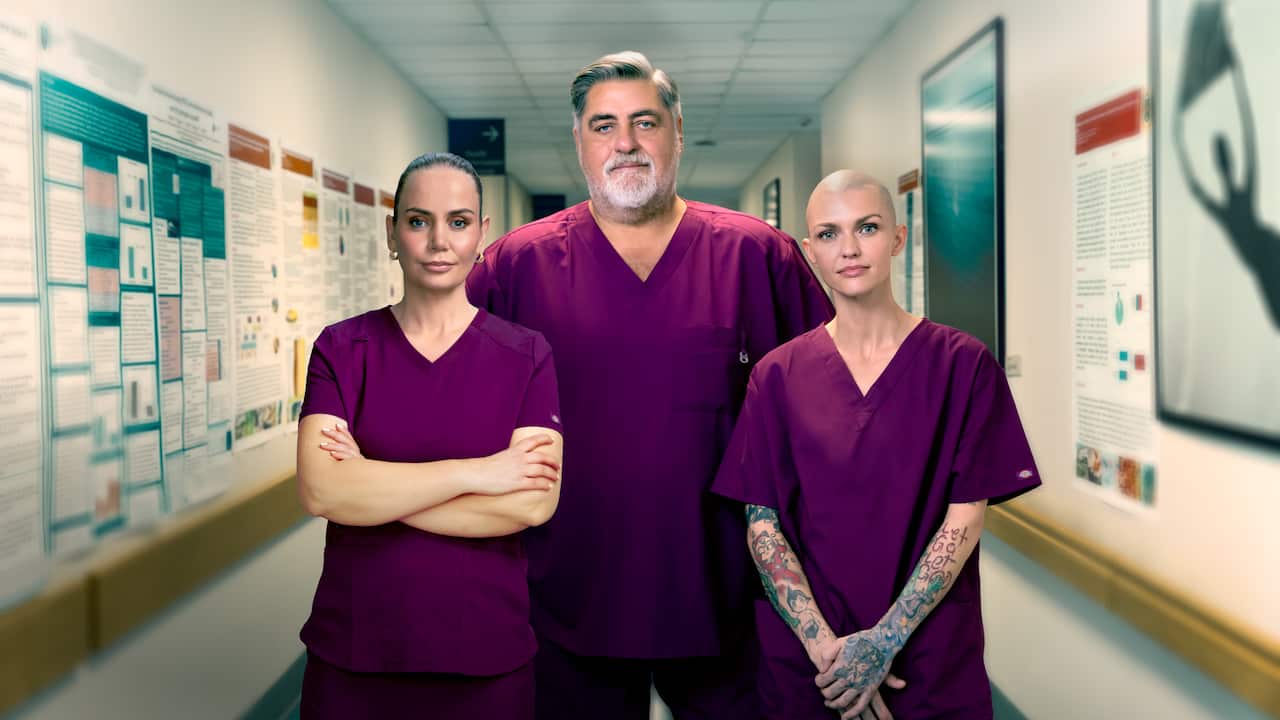
In the series, Jelena and Ruby are going on their own journey. What did you learn about their experiences, and how did their personal journeys compare to yours?
Ruby and I caught up a couple of times and spoke about it. I think it was really interesting going on similar journeys and seeing how many people have had a positive impact on patients.
In the neurology area that I spent some time in, they're already at a point where they're hoping that a surgery is going to turn around something that they're living with. And that has a huge impact on their life, and the surgery might make them better.
In Ruby's case, it was very similar. So I think that whole thing of watching and seeing the uplifting nature of how things can go from being so bad to so good. I mean, it's amazing. I think that was one of the things that resonated between my experience and Ruby's.
The human body is phenomenal, how quickly it can fix itself, how it can re-route the neural pathways
Surgeons can just remove stuff, and I go, what's that? Oh, a little oyster-sized little brain being clicked out of the cranium. Oh, it's a little piece of the brain! And then the next day to be going in and seeing that patient and talking to them about the fact, it's sort of phenomenal. It's like, yesterday I looked inside your head! I could see your brain pumping. Those surgeons, they make it look so easy.
It's amazing to go from being totally debilitated by the threat of having an epileptic fit to now not having that because of surgery, or that you can start driving again, despite not being able to drive for the last 15 years because you've had seizures.
What do you hope audiences take from the second season of this series?
That our public hospital system is a jewel beyond price, but we need to protect it and look after it and nurture it, as you would anything of such great value.
I think that's probably what it is. The danger is that you can ignore it, and it will wane. And at some point, you lose good people, because they don't want to do the job anymore. That's a real problem. If people start to decide that it's not worth their while, then you've got a real problem in the health system. And there's no doubt that the committed nursing staff who are on the ward, who are part of that ward's roster, they're the lifeblood of the system.
The Hospital: In The Deep End is now streaming at SBS On Demand.
The first season of The Hospital: In the Deep End with Melissa Leong, Costa Georgiadis and Samuel Johnson is available to stream free on SBS On Demand.