To be a person of faith in the modern world is not without its challenges. For a millennial Muslim man living in New Jersey, the challenges are even more complex. Comedy series Ramy follows Ramy Hassan, a first-generation Egyptian American attempting to balance a renewed interest in religion with the realities of life in his late twenties. The semi-autobiographical series, starring writer and creator Ramy Youssef, dives into Ramy’s struggle to make family, faith, and his own desires align, with varying degrees of success.
After his relationship reaches an impasse when religion enters the conversation, Ramy is newly single and questioning whether his approach to dating, relationships, and even love itself has been misguided. Although Ramy wants to believe that his intentions are good, his lack of direction leads him astray on more than one occasion. As he reflects on his lifestyle and the largely secular world around him, Ramy realises that he wants to become a better Muslim, but his love of sex, partying, and dating is in conflict with what a life devoted to Islam should look like. As Ramy comes to learn, however, what makes a ‘good Muslim’ is, like anything, open to interpretation.
Love is Ramy’s first challenge, or more specifically, finding it. Add his recent decision to seek someone with the same faith to the mix, and asking “Hey, can I get your father’s number?” is a daunting, and often awkward, reality. The search for love within his own community is a welcome change for his mother Maysa (Hiam Abbass) and father Farouk (Amr Waked) but for Ramy’s sister Dena (May Calamawy), it is a betrayal of the highest order. Unlike her brother, Dena makes it clear that she has no intention of carrying on the traditions of her parents, and rejects the double standard facing her as a Muslim woman.
With Ramy seemingly willing to return to the values of his parents, and Dena having spent much of her life resisting the pressures that accompany them, their relationship becomes increasingly tense as they face very different experiences despite a shared family and faith upbringing.
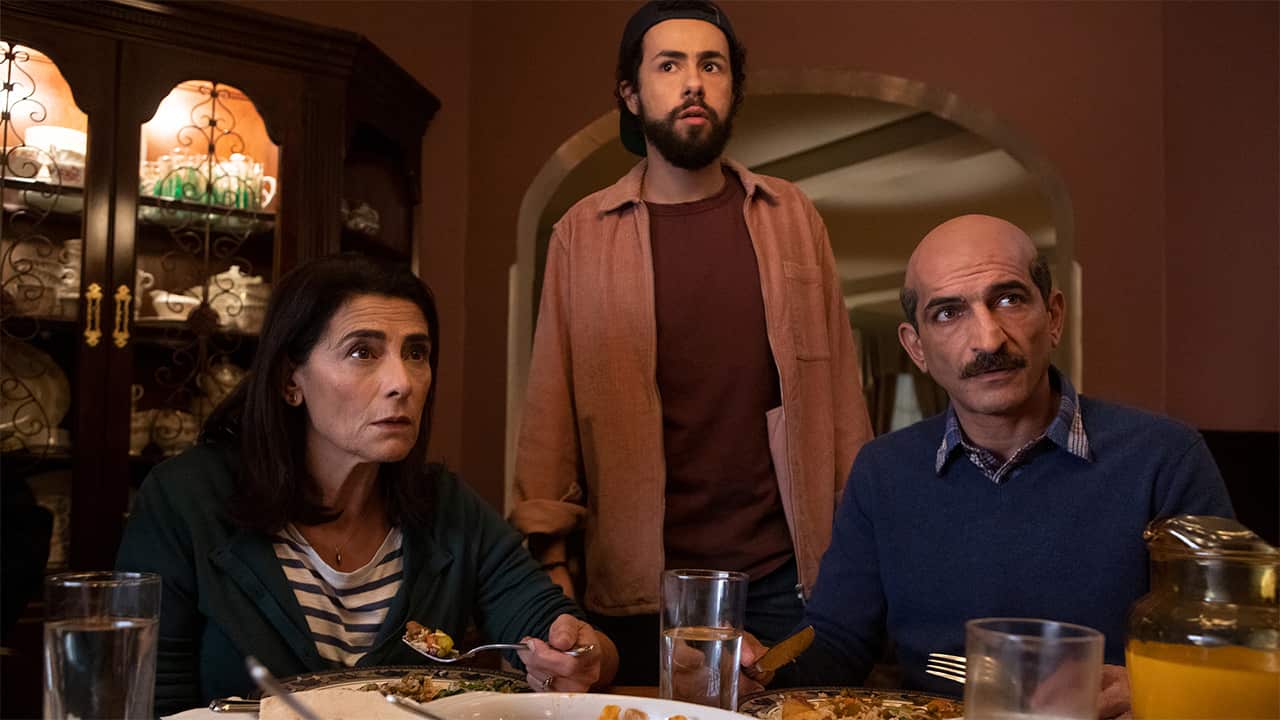
As he begins dating, Ramy discovers that even within the Muslim community itself, approaches to living a religious life are varied and contradictory. He is forced to confront some uncomfortable truths, not least that, in order to know what he wants, he must know himself first. The trouble is, on many occasions, it feels like what Ramy believes and what he wants to do are rarely in sync. Figuring out who he truly wants to be is an even harder task when Ramy sees every choice as one between being an American and being a Muslim. How can he reconcile these two core parts of his identity when they are becoming increasingly incompatible?
Ramy’s search for identity goes beyond love and relationships, shaping his understanding of career, fulfilment, and an independent adulthood. The uncertainty is deeply interwoven with culture and family, and his decision to drop out of medical school to pursue his passion as part of a tech startup was one that, in his parents’ eyes, put passion before a plan. When the startup goes bust, Ramy feels his idealistic approach to his career is harder to defend, forcing him to consider whether the chance he took was a foolish one. His parents are quick to encourage him to work for his uncle Naseem (Laith Nakli), a man who is the antithesis of everything Ramy wishes to be, but who is heralded as the epitome of masculinity and success. If Naseem represents his parents’ definition of an ideal life, Ramy is unsure if that is really the life he wants.
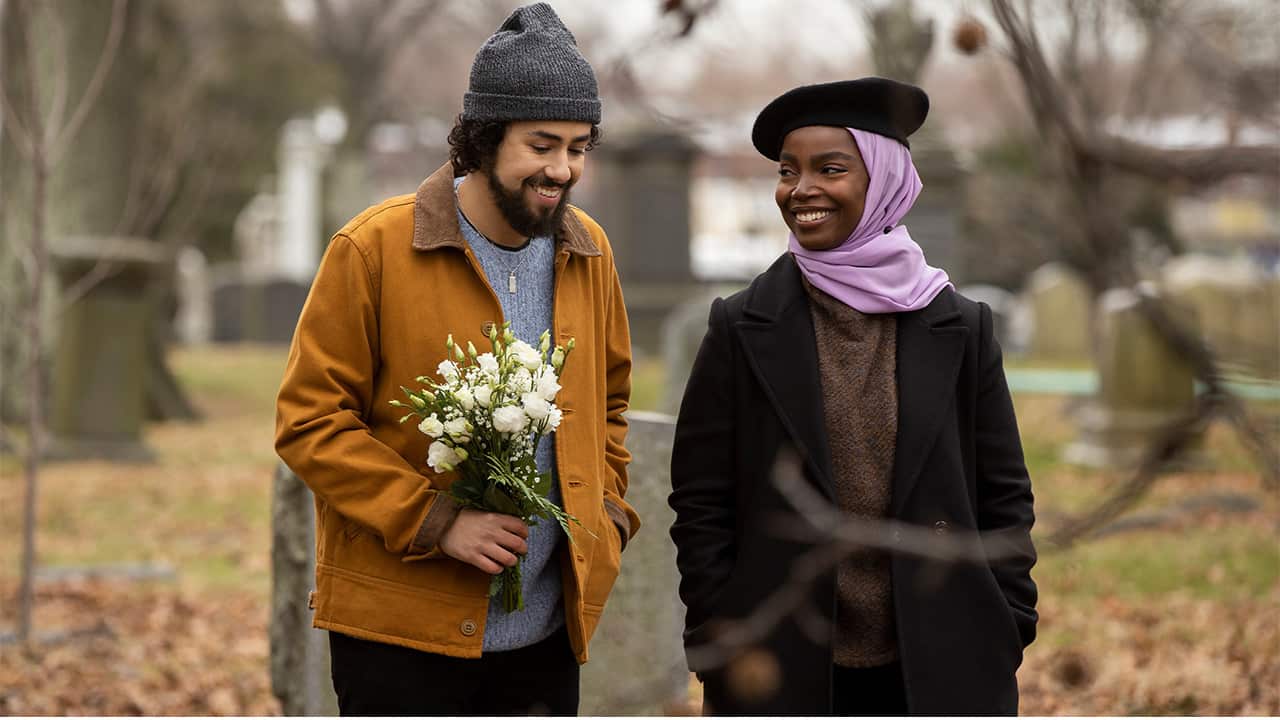
It’s clear that Ramy wants to give his Muslim faith a real shot, but doing so requires reconnecting in a more tangible way with his spirituality and his identity. When he gets the opportunity to reflect, away from his day-to-day life in New Jersey, Ramy is able to grapple with the generational differences in defining what it means to be a faithful Muslim, differences that have only added to his confusion up to this point. Though he has always imagined his parents’ homeland as a place that held the answers to his problems, what Ramy discovers is that experiences of faith have changed the world over, and his struggle cannot be remedied by trying to run from temptation.
Ramy is a comedic yet soulful account of finding space for faith, and of the difference between personal devotion and institutional religion. It is a story that is less about a conflict between Muslim adherence and the American millennial lifestyle, and more about Ramy battling the different parts of himself. Ramy is endearing, not because he is figuring things out, but in actuality, because he is getting nothing right. He is frustrating, hypocritical, and full of contradictions, but it’s in the contradiction that a relatable and real human experience is found.
Ramy seasons 1-3 are now streaming at SBS On Demand.