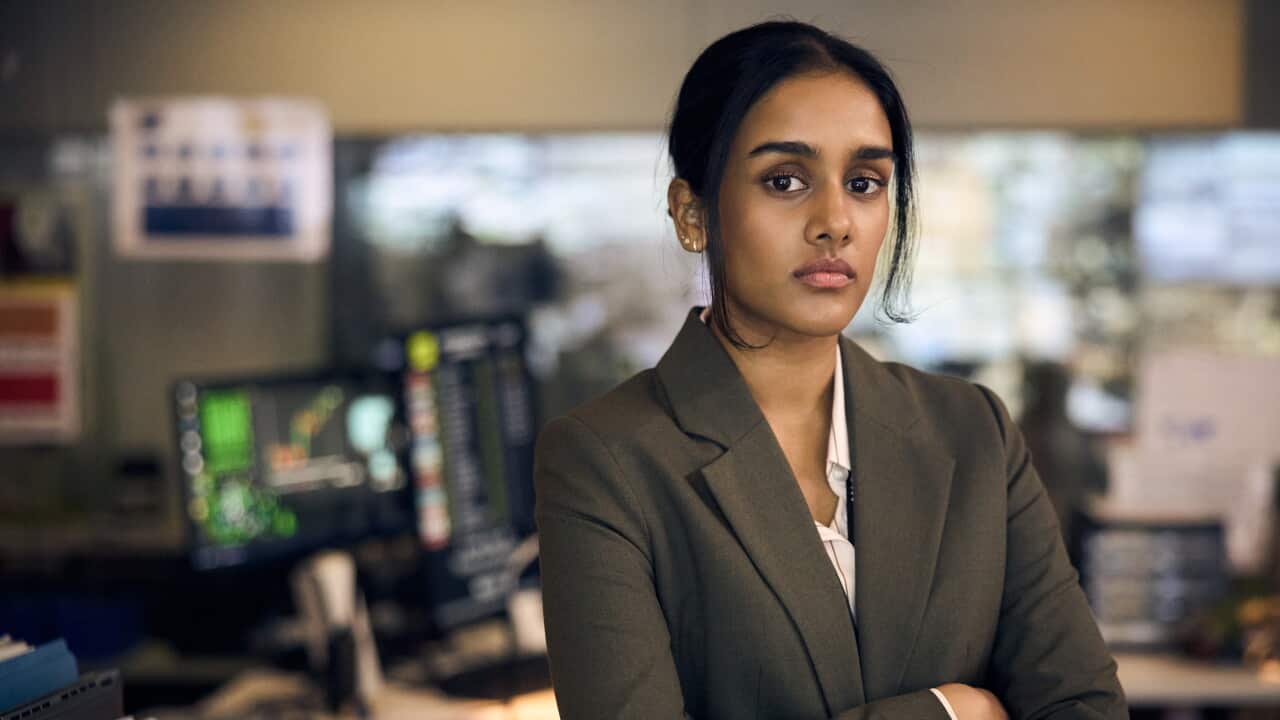
A fast-moving fixer with pockets full of cash and a constantly-ringing phone, Tobias Wallace has never met a problem he couldn't solve – until he meets his formidable new boss, Mira.
The Airport Chaplain stars Hugo Weaving (Slow Horses, Love Me) and Shabana Azeez, breakout star of Golden Globe-winning drama The Pitt. Set in the high-stakes world of a bustling international airport, it's told through the struggles, triumphs and unexpected connections of workers who keep the place running.
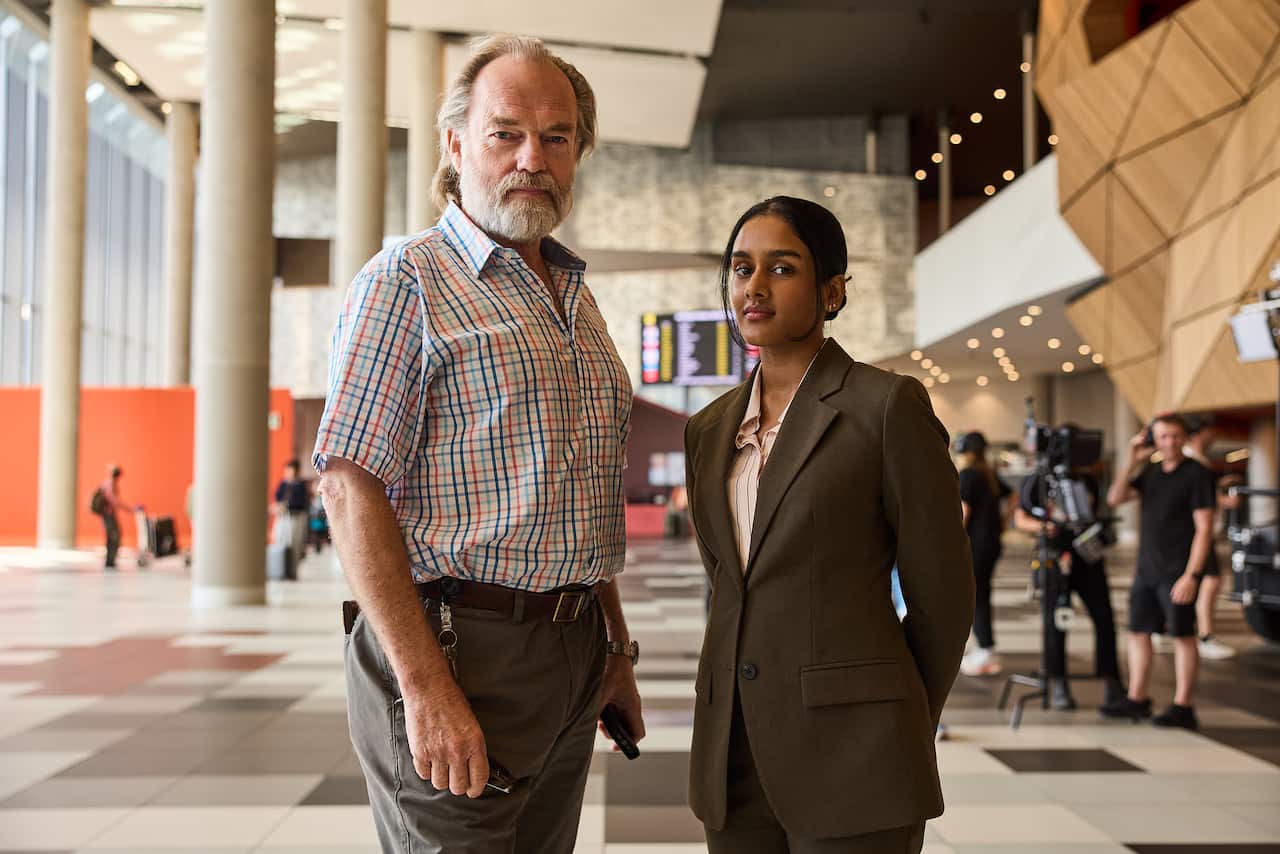
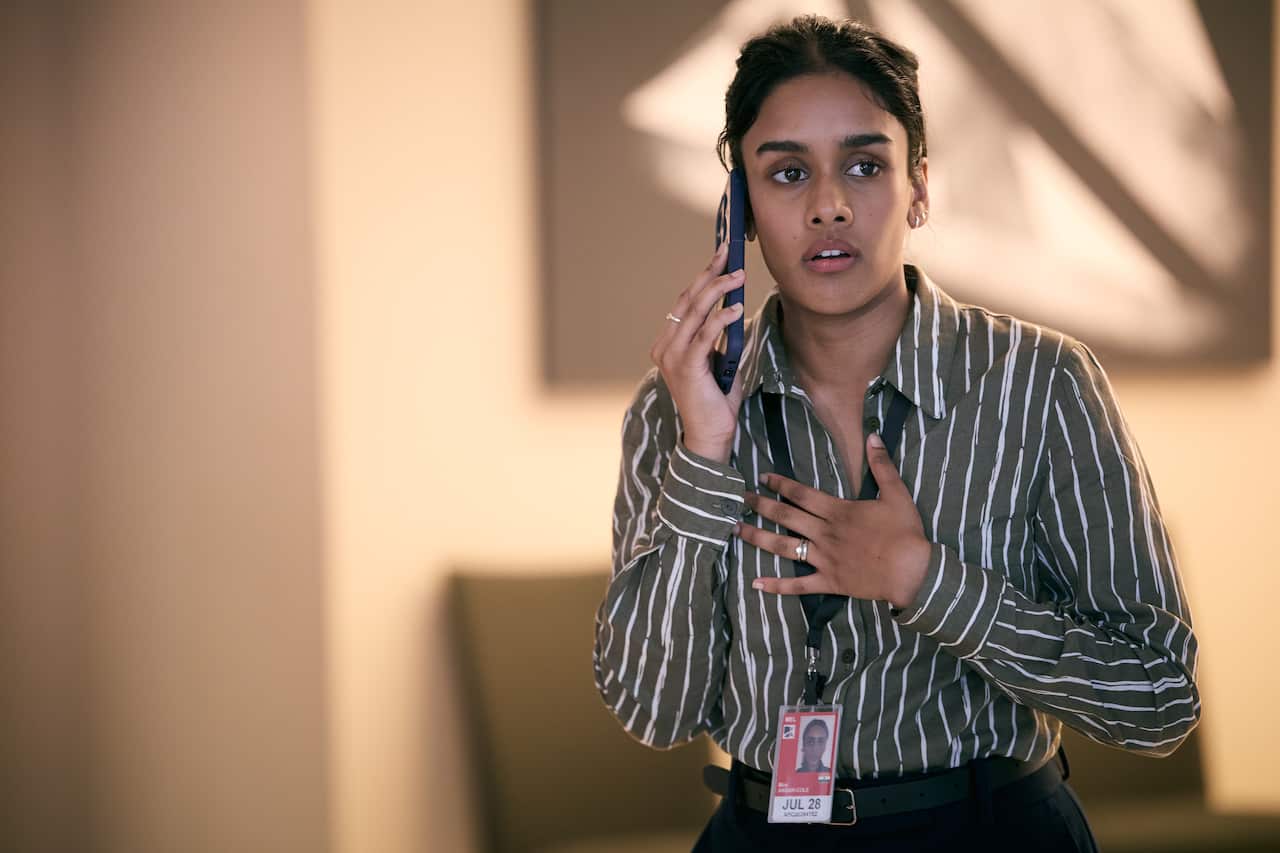
Convinced the airport couldn’t run without him, Tobias (Weaving) takes an unorthodox approach to solving daily crises. But Mira (Azeez) sees him less as saviour to the masses, more as a walking liability.
SBS spoke with Azeez about the rewarding challenges of playing a mid-30s manager, the power of storytelling with purpose and the nature of joy as an intellectual pursuit.
What initially drew you to 'The Airport Chaplain' and the role of Mira?
The team! I was thinking about the last show they did, The Clearing, which I was desperate to get an audition for but could not get on. Then to be offered the role for this one was such an honour. It's really very exciting. They (Wooden Horse) are a great production company and they've made so many amazing Australian shows like Stateless that I'm a huge fan of.
And getting to work with Hugo (Weaving) was obviously such a great opportunity. Also, the script! I played a 20-year old cute, socially-inept, genius child on The Pitt, and so to play a mid-30s young mum in a leadership position, which is so fraught for women in Australia, I was very, very attracted to that. Management for women is a really complex, interesting space.
How did you find the juxtaposition between those two roles? Because like you said, there's not only an age gap but different life positions as well.
I was really excited with the challenge, actually. I think it's good to play variety. Some people get put in boxes at this stage in their career. I mean, I'm also in boxes, I'm not getting the call to play Batman anytime soon, but I feel very grateful that people are able to see me in varied ways.
I'm not a mother, so representing that was really exciting to me. I think for me, the only through-line I need my career to have is impact. I tell stories that have a positive impact on people and have a mission statement. I think The Pitt has that in terms of its need to represent healthcare workers and illuminate what that's like for the general public.
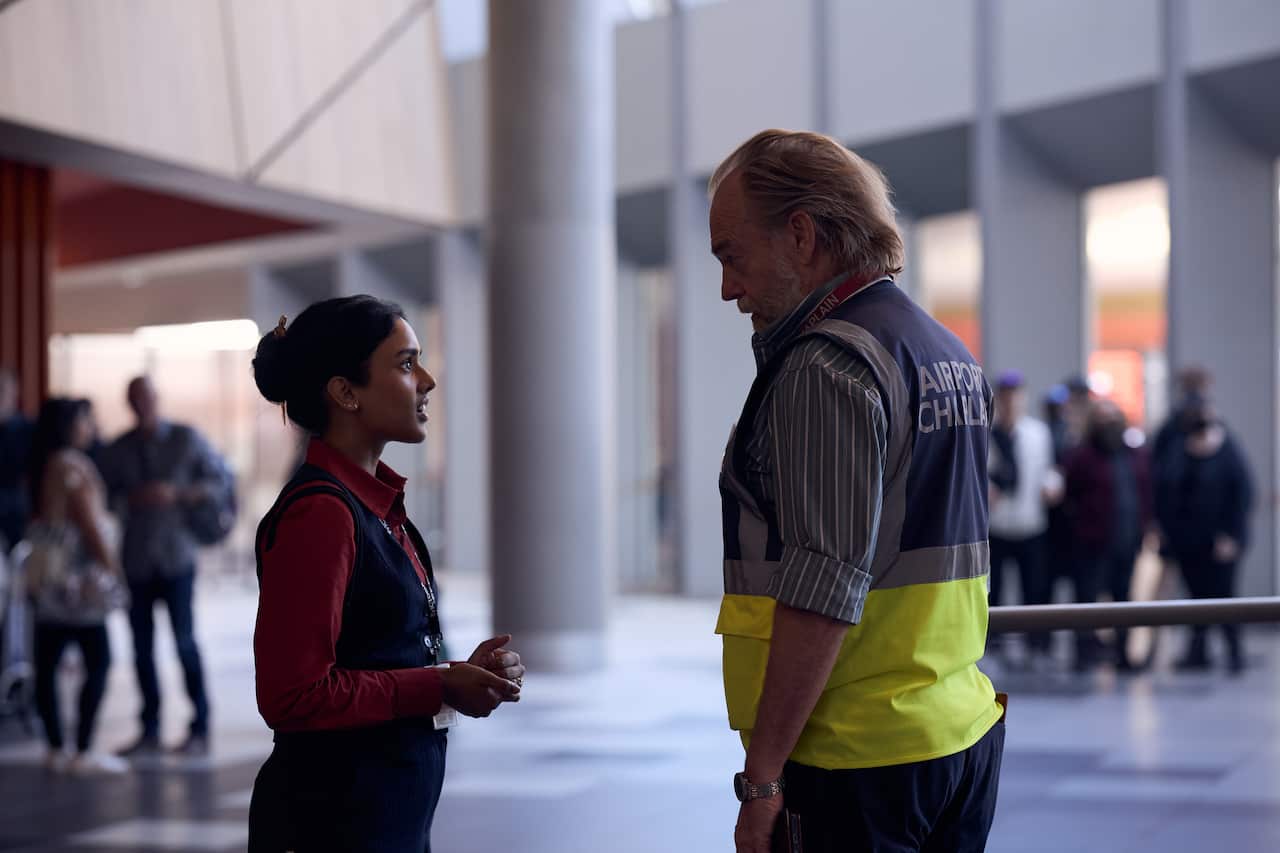
Then, for The Airport Chaplain, I think Mira's in a really impossible situation in terms of the job she's been asked to do. She's socially on the back foot because she's representing a new way of doing things to a bunch of people who like the old way of doing things, and there's so many biases at play in how people see her and how people just don't like her.
Managing is a really social job and for a young woman of colour. You're socially on the back foot when you're in a leadership position. Hugo Weaving isn't going to take directions from me – that's a really crazy thing – but that's what we're playing with here. And so it really had impact for me. I loved representing young mums going back to work after maternity leave and the complexities of that, and the fact that young mums are put in these impossible situations and face the judgement of society when they're not with their kids.

You mentioned the old way versus the new way. In the series, you go head-to-head with Hugo Weaving's character, Tobias. What was it like developing that power struggle on screen and also behind the scenes?
Oh my god, it was really challenging. You know, I think there's an inbuilt power dynamic there where he's Hugo Weaving and I'm just me. So there's that power dynamic and then there's what our characters are going through and I think that it was such a great learning experience. I learnt so much from him.
I didn't go to drama school, I kept making movies with my friends and doing small parts in TV shows. I'd go in for one day, work across from the lead actor, give them what they needed and then leave. I really didn't have this experience of talking to the directors, talking to the writers about what things mean and what doesn't make sense to me, but he really has that experience, and so I definitely learned a lot creatively about how to be on set from him.
You've described before that your entry into acting was almost "accidental". How has that kind of unconventional path shaped the way you approach a show like The Airport Chaplain?
I remember the first time I was on a real film set was for The Letdown, and our director (Trent O'Donnell), who I adore, didn't speak to me all day which I didn't know was abnormal for a director and an actor. I didn't know they all had to speak. Nobody told me that. He came up to me at the end of the day and went, "Hey kid, sorry I didn't talk to you all day, you just didn't suck, so I didn't have to". And I was like, oh slay! If the director talks to you, it means you messed up.
And then I continued working with that same director and I was a series regular on the show and he kept trying to talk to me. It really wigged me out. I was like, I must be doing a horrible job, he keeps talking! In hindsight, I know now that that's the job. You go in as a guest, and you want to be as giving as you can. You want to be as accommodating as you can for all the other actors and all the other creatives. You want to know your stuff well enough and be malleable enough to give whatever is needed in the moment. It's not about you. It's not about your character. You need to just give. I just go into each scene being like, what does the other person need? What can I give? As opposed to "Well, my character's arc is this and so I have these needs". I'm very much not able to do that yet. So I think I came into it a bit during The Airport Chaplain.
I think I come into every job acting like a guest star. I need to learn what it is to be in a leadership position. Hugo was really great about that. By the end of filming I was able to talk to the writers about stuff, talk to the directors about stuff. I was really able to ask questions and admit that I don't know. It became okay to come to work not knowing, not quite understanding one dynamic and really working on it on the day.
I want to talk about the setting of the series for a moment. Airports are unique, polarising and kind of cold, but they can also be welcoming and happy spaces. There's a lot going on. How do you feel that the setting for this series shaped the emotional tone?
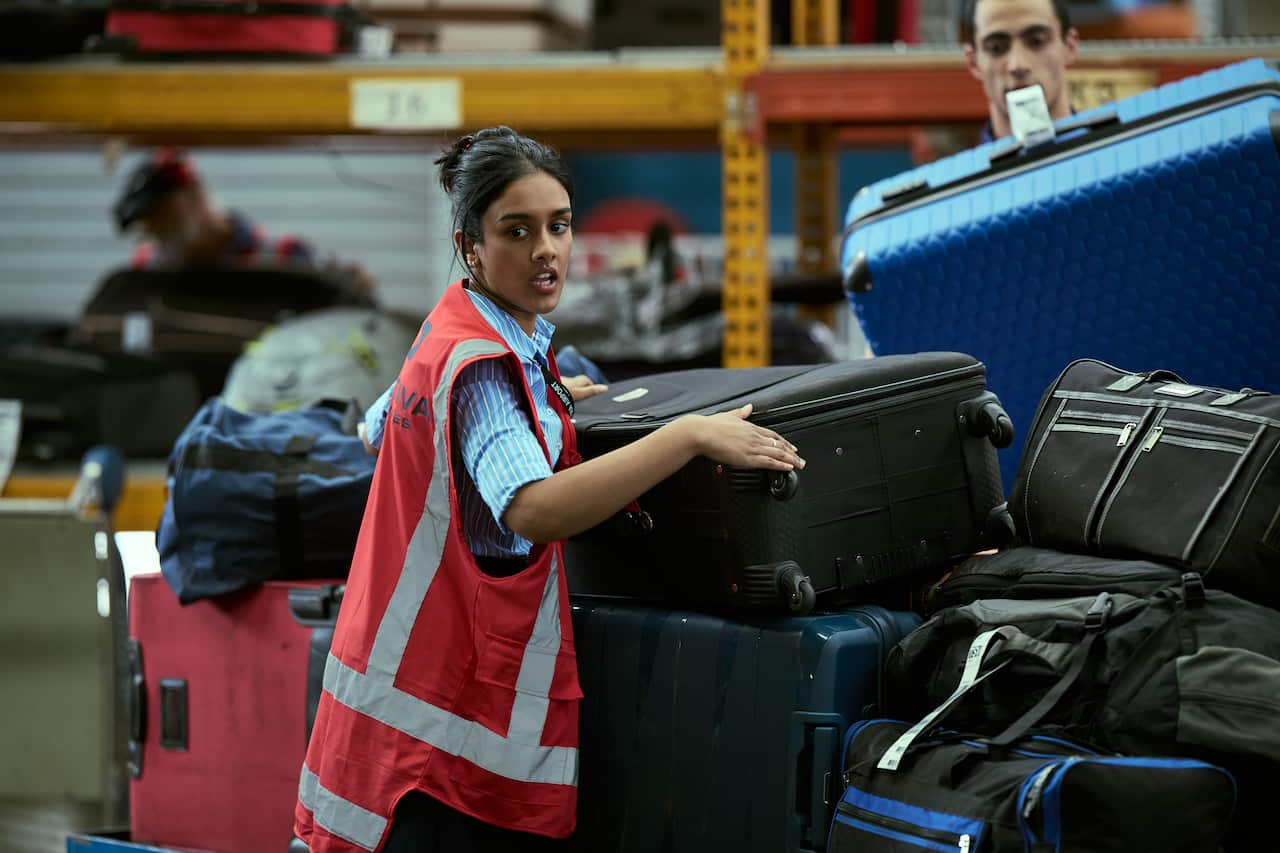
My character is somebody who is running away from stuff. A very well-travelled person who's lived in many places. Nobody goes to the airport to go to the airport, right? Everybody goes to the airport to go somewhere else. It's a really transient space. I think very few people actually stop to think about the people who live and work there every day, right?
I remember going to the airport actually and shadowing some people who worked there and interviewing them. And the passion they have for it was so beautiful and at one point somebody said, "Once you start working in airports, you never leave. If somebody leaves they come back in six months. Airports are the best place to work, we would not leave it for the world", which is so beautiful. Everybody's excited to be at the airport because they're either going to go to work somewhere or they're going to go visit family, or they're going to go travel and experience something new. They're such beautiful places, and to facilitate that kind of human joy and connection is a really beautiful thing.
I don't want to just make escapist viewing. I want to tell stories that matter and that have positive impact on society.
Did spending time in this world in the series change how you experience airports in real life?
Oh I'm sure, in the same way that The Pitt changed the way I look at hospitals. I think that so much goes into making travel possible and I'm so grateful to airports. I could not do my job if I had to go by ship to different places. Airports really make my life possible.
I think I just understand behind the scenes how it's all working now, and I actually get to airports a bit earlier now than I used to.
What do you hope audiences take away from Mira's journey in The Airport Chaplain?
I'm really excited about people coming up against their own biases. Mira sort of gets drip-fed to us at the start of the show and then we learn her perspective as we go along. She very much comes in as an antagonistic force. Her job is to make the airport financially viable again. Her job is to to cut jobs. Nobody wants to be fired; that would be horrible, right?
I think that it's really easy to think "Oh, she's representing this ivory tower of managers who don't know what it's like on the ground and they're making big decisions about this workforce and don't even understand what it's like", but actually those are sort of things we're putting on her. I think that she's really a misunderstood character. And she, as a manager, as a professional, she can't really open up to her staff in certain ways. She can't really talk to them about the ways she's struggling. She can't really talk to them about what she's up against from the higher-ups because that's really unprofessional.
And those are professionalism standards that are not put on the other workers, but they are put on her as a manager. Managing is a really social job, but you can't necessarily be fully honest and social and open with your employees because of those boundaries. And so that's interesting from a character perspective of playing somebody who's not giving so much away. Playing somebody who is meant to just hold it all together and not let you know what she's going through.
I think that as the story goes on and we see more of her world, I think that perception of her changes. I hope people sit with their original biases anyway and think about what they think of their managers, you know?
You've spoken in the past about queer joy being a powerful storytelling tool. Could you expand on that a little bit in the context of your career and films such as Lesbian Space Princess?
I don't want to just make escapist viewing. I want to tell stories that matter and that have positive impact on society.
I think it's a really interesting thing where people often hear that and go, "Oh, you want to tell serious stories!" In their minds, serious stories have impact, drama has impact and comedy does not. Joy is seen as anti-intellectual. People think sadness and criticism is so academic and joy and happiness are fun – childish almost. But I think that's a really problematic mindset. And I think we really need to learn to value joy as an intellectual pursuit. Therefore, I think with queer joy, people go like, "Well, what's the impact of this story?" I think queer joy in queer spaces is really valued. And I think that actually all of society can really learn from that.
Joy is impactful. Sharing joy, experiencing joy, isn't just escapism it's political. It can be an active resistance. It can be intellectual. It can be meaningful. I think we think of sadness as meaningful and meaning-making and we think of sitcoms as not as culturally significant, right? And I think that's a foolish thing to be thinking and we need to reframe the way we think about that. I think queer people have really always known that.
The Airport Chaplain premieres Wednesday 26 August at SBS and SBS On Demand. The first two episodes will premiere on SBS at 8.30pm on 26 August, with double episodes continuing to air weekly on Wednesdays at 8:30pm.
All episodes of The Airport Chaplain will be available to stream at SBS On Demand on Wednesday 26 August.