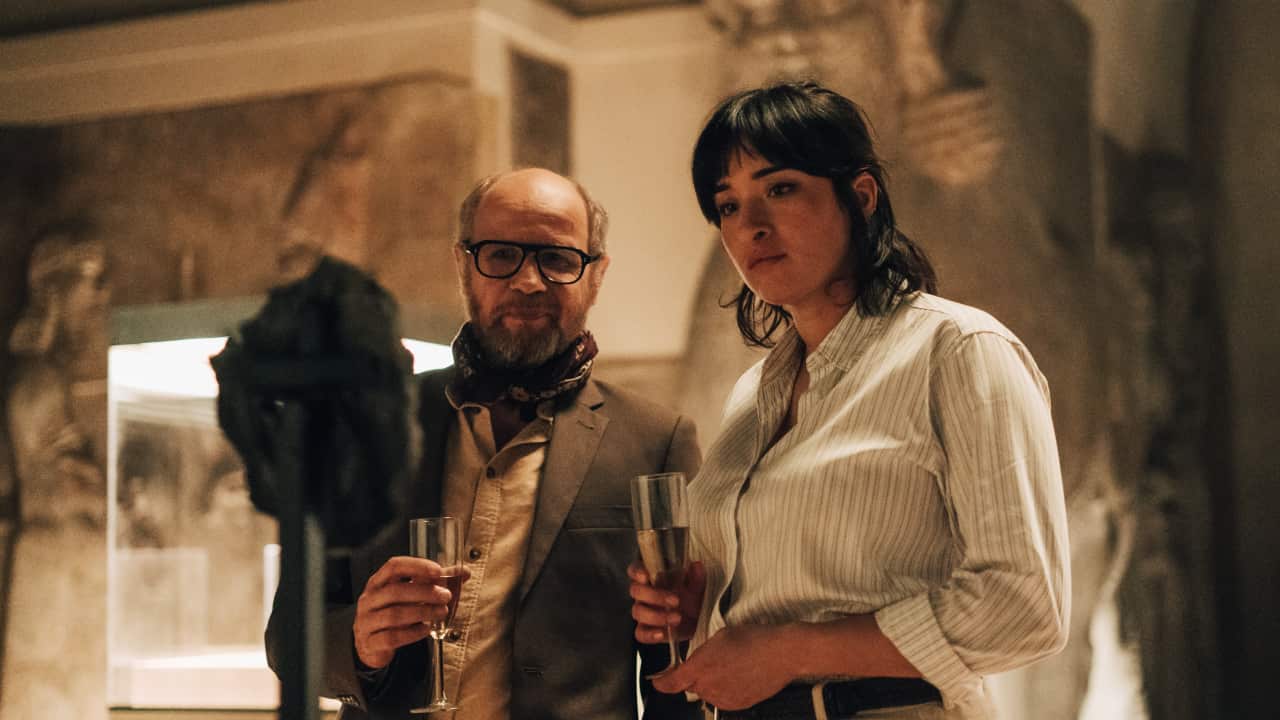
Haunted relics from the distant past are creepy enough at the best of times. But a haunted relic from the distant past that’s now in the crumbling and ancient basement of the Louvre? That’s only the beginning of a whole lot of sinister activity.
Hafsa Moreau (Shirine Boutella) is a newly hired art restorer at the famous Paris museum and art gallery. Her job is to take loving care of the many artworks and artefacts gathered there over the centuries, and from what we see early on, she’s pretty good at it. Though lately, one item’s been getting all her attention: an antique mask of the storm god Belphégor.
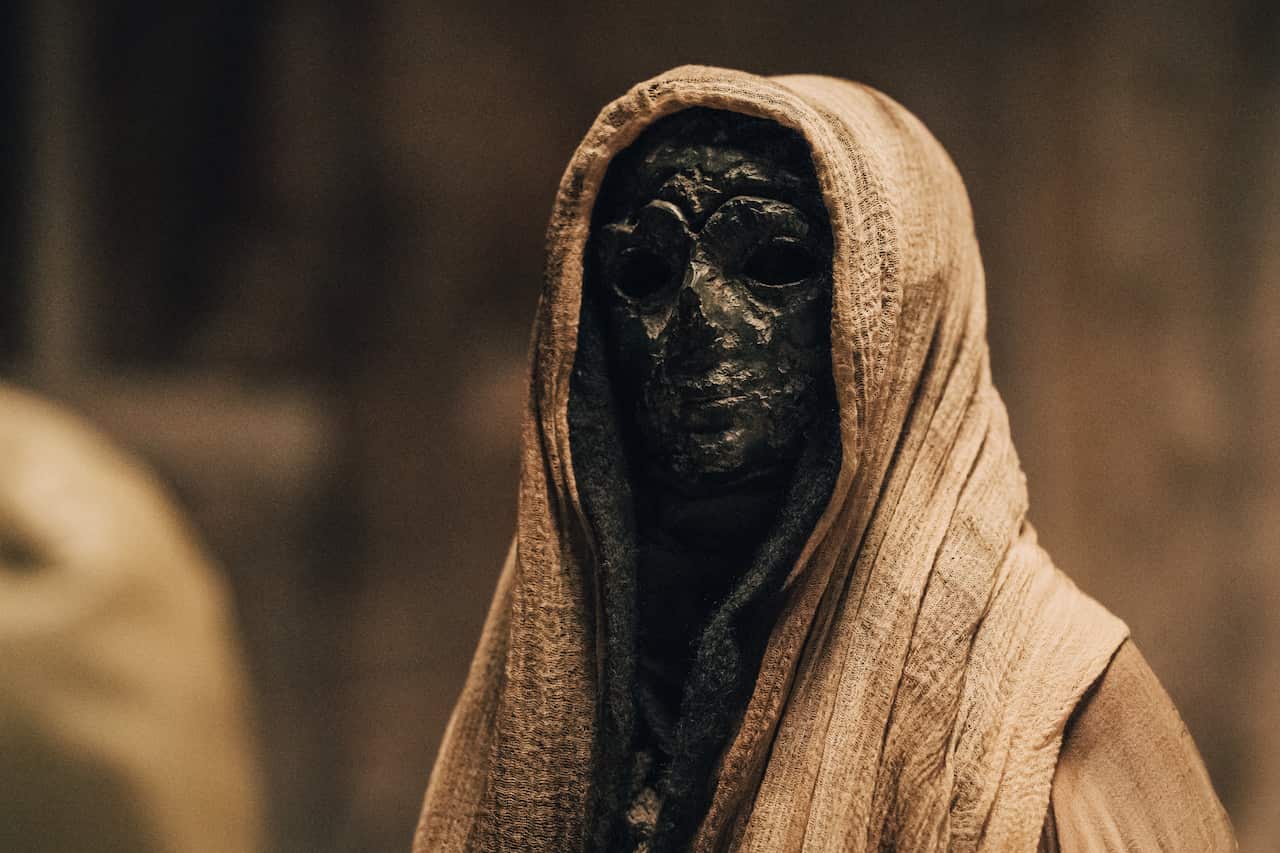
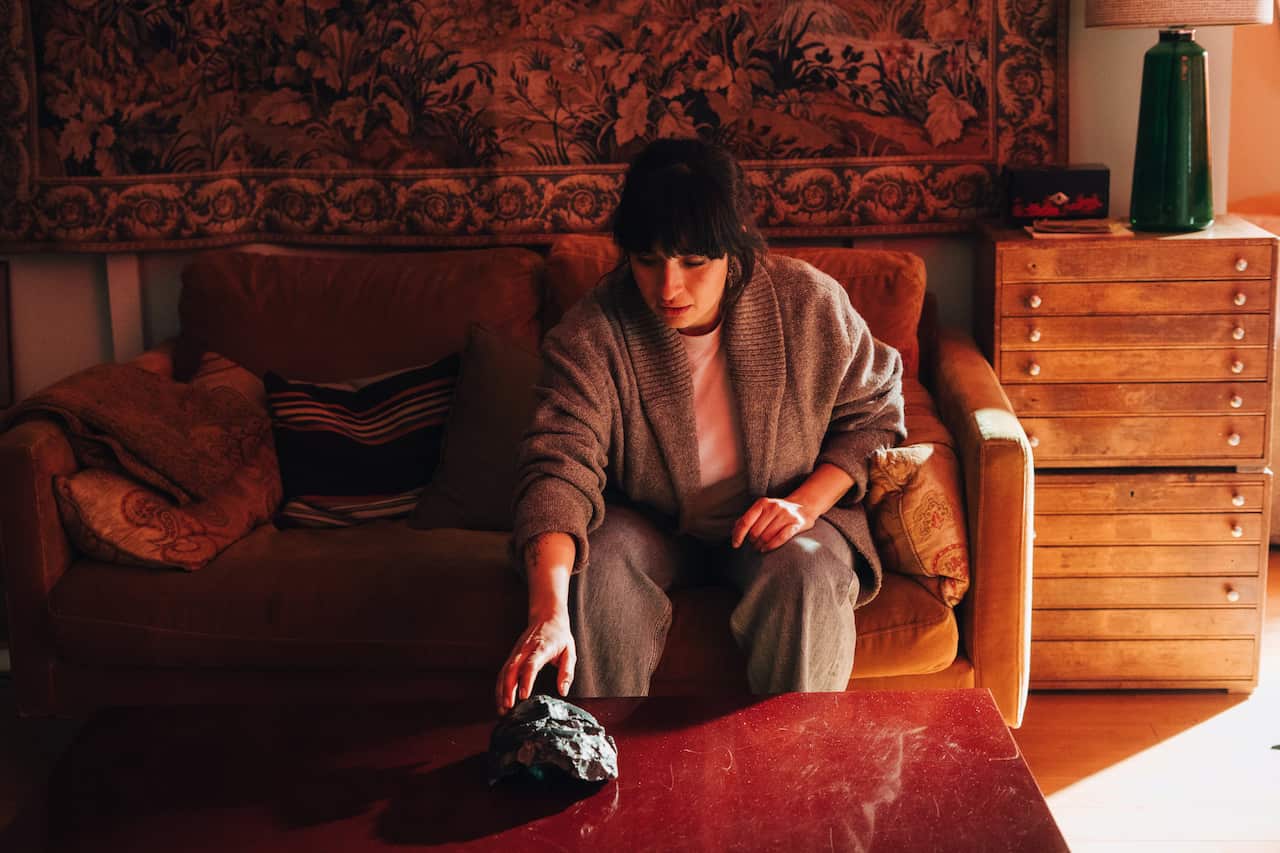
Becoming obsessed with the icon of a violent and brutal god is an occupational hazard when you work with ancient relics. But for Hasfa, a sudden flood of macabre visions and a growing sense of paranoia and fear aren’t something she can simply shake off. Soon dreams and reality seem to be merging into one ongoing nightmare. Is she having some kind of breakdown, or does the mask have a deeper hold over her?
Hearing voices, having flashbacks to childhood traumas, increasingly violent dreams (at least, she hopes they’re dreams) and a growing sense of the supernatural would be bad news at the best of times. But working in the Louvre only makes things worse. The vibe soon shifts, the stone walls and small spaces becoming prison-like; it’s almost as if she’s trapped inside a living organism, the sinister mask bringing a web of artworks and artefacts to oppressive life around her.
For her co-workers – department chief Élise Wagner (Aure Atika) and Head of Security Joseph Bellegarde (Vincent Elbaz) – her behaviour is unsettling at best and criminal at worst. For her father Charles (Kad Merad), whatever she seems to be going through is most definitely worrying. As for the owner of the mask of Belphegor, Luc Trivic (Nicolas Briançon), he seems to have an agenda of his own.
French audiences have an advantage here over the rest of the world. For them, Belphégor isn’t just a creepy mask: he’s a pop culture icon with a legacy stretching back almost a century. The original Belphégor was a four part silent film serial (there was a print adaptation published at the same time) released in 1927. It was a big hit; then in 1965, a black & white television version titled Belphégor, or the Phantom of the Louvre aired, and pulled in huge audiences. By some measures, one-fifth of the entire population of France watched that four part series.
While later versions (including a late 20th century animated series and a 2001 feature film) proved less successful, Belphégor retained his cultural clout. Fortunately, while in many ways this series is something of a reboot, it contains everything you need to know to get up to speed. It’s no secret that the mask of Belphégor means trouble; beyond that, this series is blazing its own path.
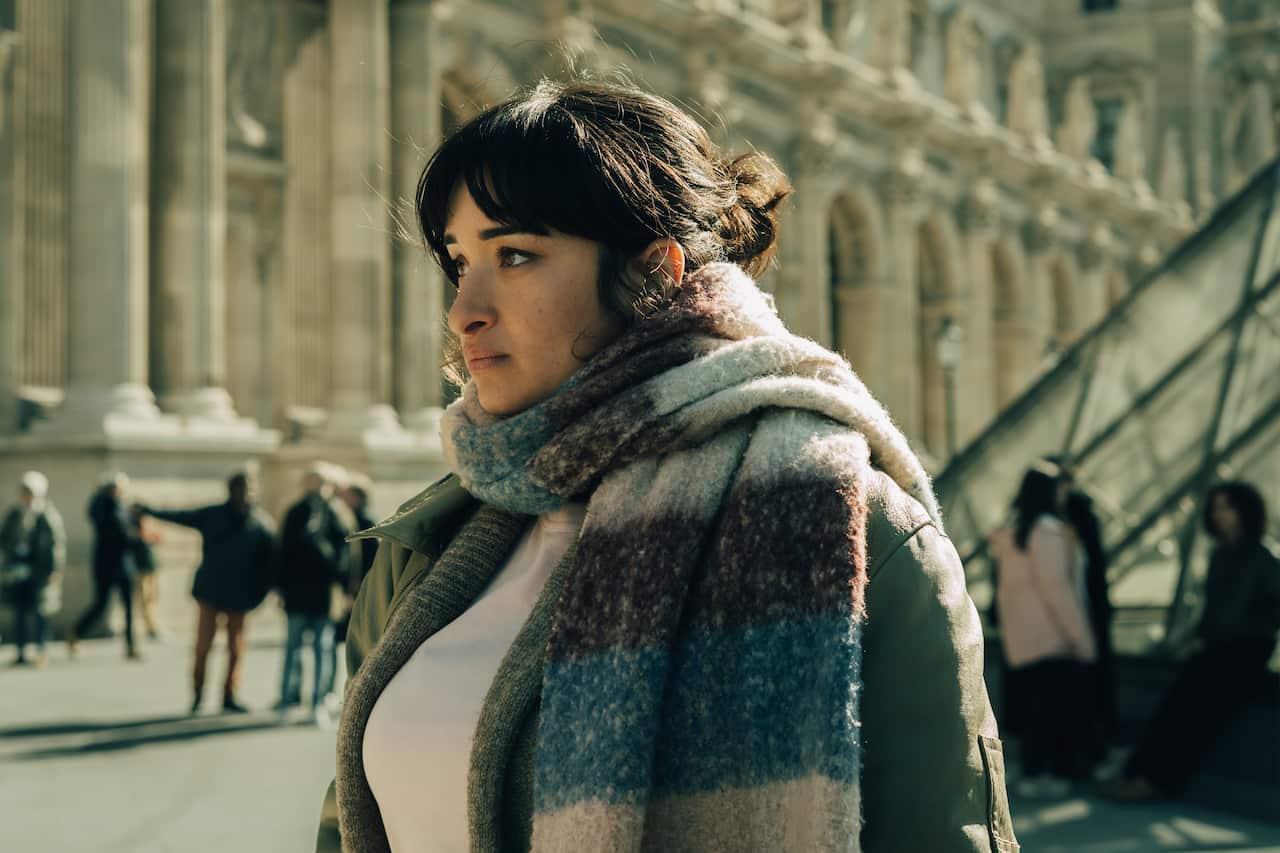
In this version, the focus is much more on Hafsa. She’s picking up on something evil – and again, with the mask of Belphégor on the premises, we all know where those evil vibes are coming from – but those around her are quick to dismiss what she’s feeling. It doesn’t take much to see this as a metaphor for how women’s concerns are too often brushed aside; Hafsa isn’t exactly a modern-day Cassandra (who was cursed to see the future only nobody would believe her), but there’s only so long people can ignore her before things start to get serious.
Supernatural suspense can be a tricky thing to get right on the small screen, but Belphégor has one big advantage; it was filmed inside the actual Louvre – which probably isn’t packed with supernaturally charged artefacts whose evil influence is driving the staff to the brink of insanity, but you never know.
Seeing Hasfa surrounded by epic works of art reaching back centuries gives the ominous mood some real weight. People have been attempting to depict the divine and the demonic for millennia; in a very real way, Belphégor is just the latest example of a tradition as old as humanity itself.
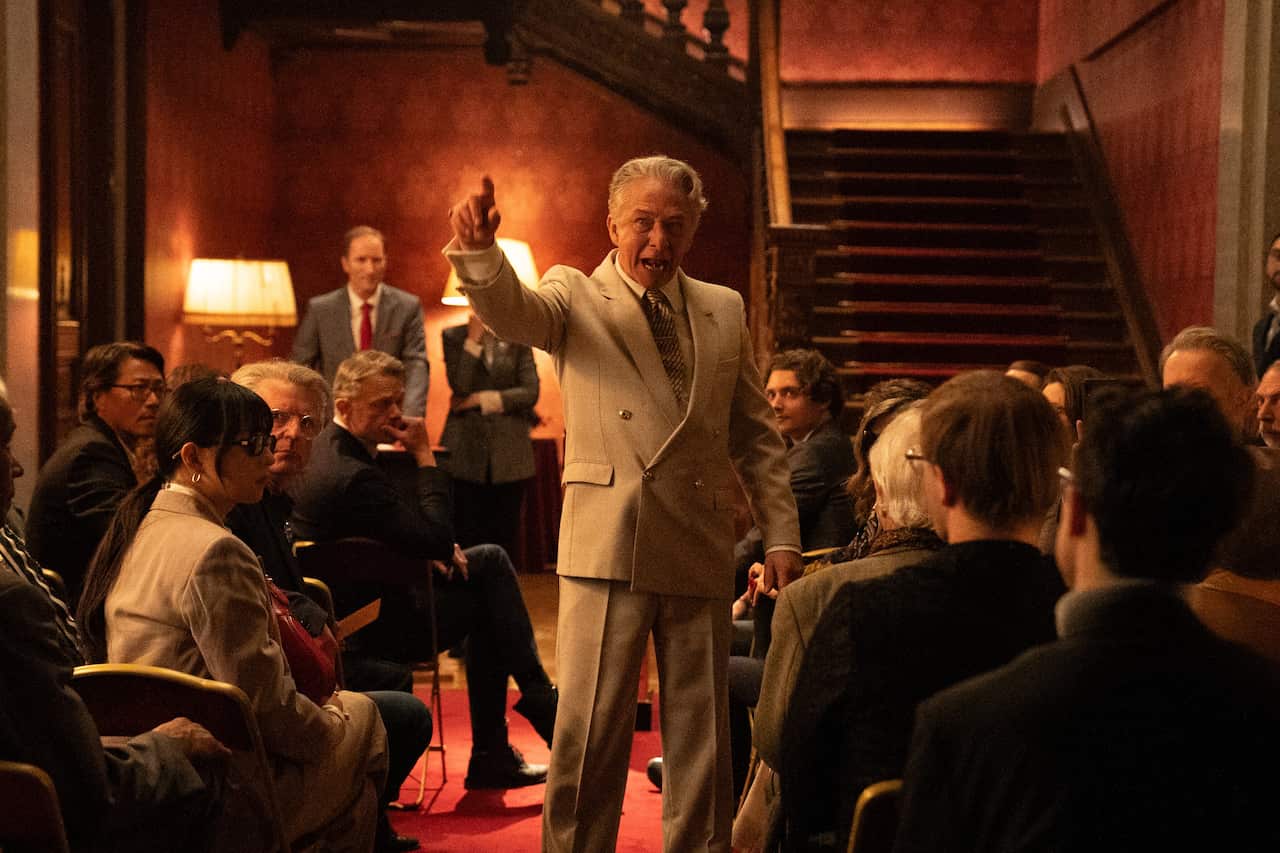
As Hafsa sinks into a nightmare, Shirine Boutella’s performance makes us feel her confusion and terror. Whether she’s the one responsible for what’s going on or just one of Belphégor’s victims, her search for answers – about both the mask and her own origins – grounds the supernatural in her own emotional reality.
For her, the only way out of this nightmare is further in. And what she discovers will either set her free… or see her trapped in a demon’s clutches forever.
Belphégor is now streaming at SBS On Demand.