
A hot Jupiter isn’t something you’re going to find on Urban Dictionary, but rather the easiest type of exoplanet we’re able to detect with the most powerful telescopes on Earth. Massive worlds orbiting distant suns, they are host to weather so wild and unimaginable that it makes the truth seem stranger than science fiction.
In the documentary Weirdest Weather in the Universe, it’s these hot Jupiters that offer a glimpse into the strangeness of other worlds, while also charting the advances in a new type of astronomer: the extraterrestrial meteorologist. Through state-of-the-art imaging and the accumulated knowledge of weather patterns on Earth and throughout our solar system, extraterrestrial meteorologists are not only able to discern the atmosphere and likely weather on alien worlds, they’re at the forefront of the hunt for distant worlds that can support life.
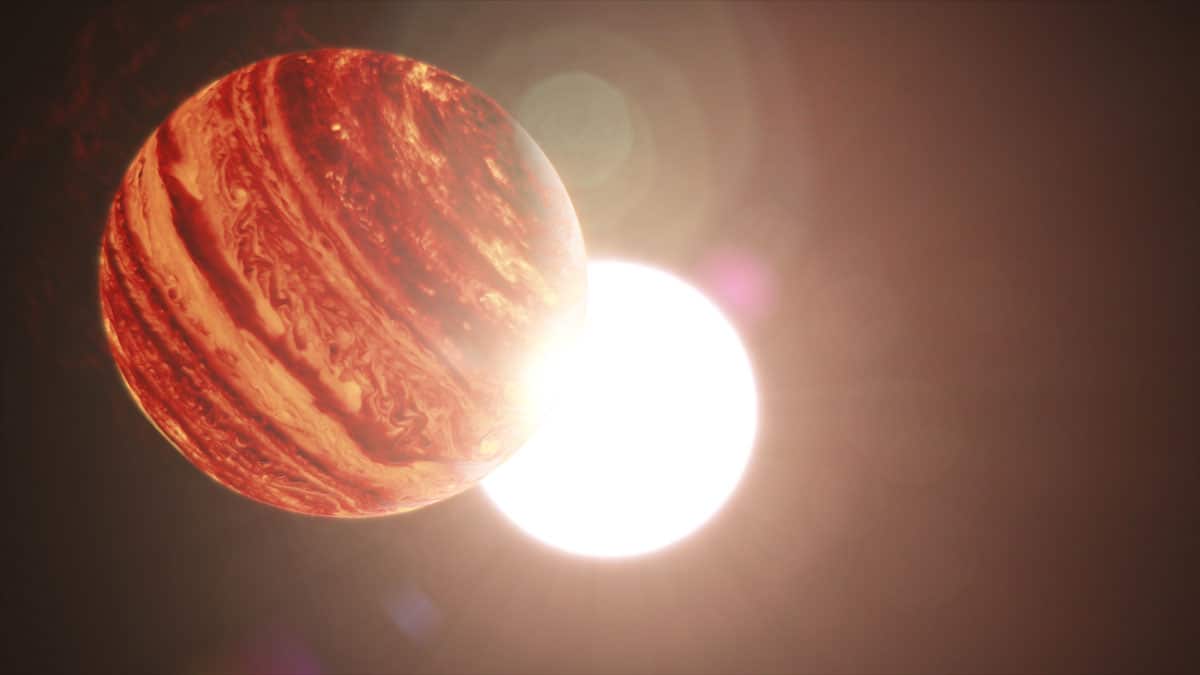
It’s remarkable to think that the first exoplanets, planets orbiting stars in solar systems outside our own, were only discovered in 1995. While science fiction had spent the better part of 100 years at that point imagining what alien planets could be, there was no definitive proof any other world, let alone one with an atmosphere and its own unique weather patterns, even existed beyond our corner of the galaxy. A little over 20 years later we now not only know that other worlds do exist, but that they’re worlds of permanent twilights, lava clouds and ruby rainstorms. The universe is weird, but it’s also exceptionally cool.
Weirdest Weather in the Universe begins a little closer to home though, and takes a quick tour through the neighbouring planets that form our own solar system. We visit the hellish surface of Venus, and the cold and barren deserts of Mars, whose sandstorms blanket the planet’s surface for months on end. From Jupiter’s famous Great Red Spot we then stop by Saturn, where the strange combination of extremely high pressure and atmospheric carbon results in a rain of diamonds.
It’s here that we take a slight detour back to Earth, specifically to the workshops of Element Six. Using the same combination of factors that results in Saturn’s diamond showers, they go about their work like real life alchemists, turning graphite to diamond. The diamonds they produce are then put to a variety of industrial and technological uses.
Bringing us back to Earth in this way serves as a stark reminder of the importance of the kind of research carried out by extraterrestrial astronomers. They’re not just stargazers staring out into the universe and hoping it stares back at them, but pioneers in a field that is already opening the way for innovation. That natural world has always inspired scientific discovery; there’s little reason why we can’t also learn lessons from the natural world of alien planets.
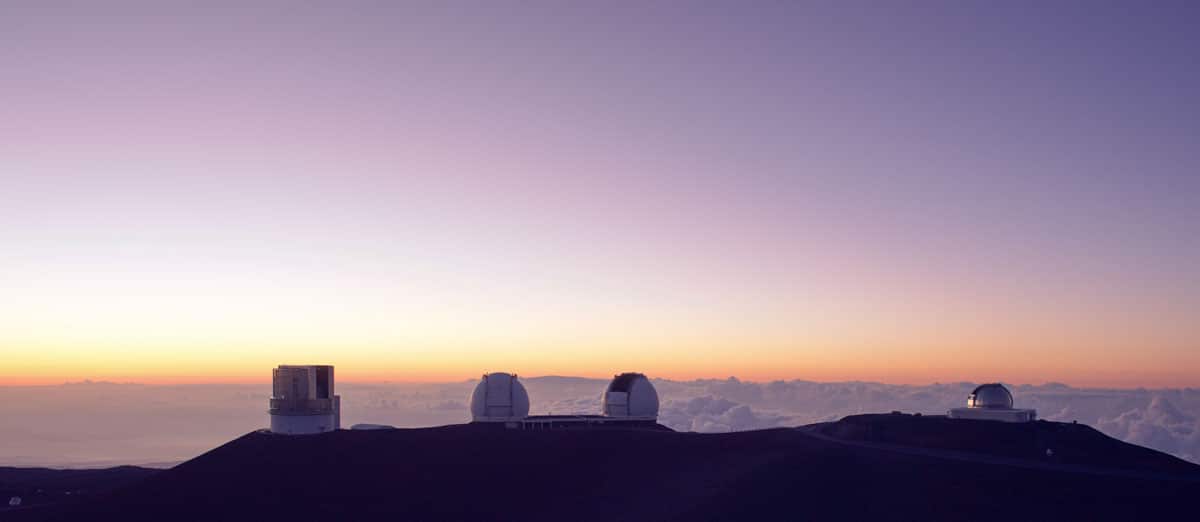
400 light years away from this research and industry is one of only 15 exoplanets to be directly imaged, allowing us back on Earth unprecedented knowledge of atmospheric makeups and weather patterns. A hot Jupiter like most other exoplanets so far discovered, it offers great insight into the weirdness that abounds in the universe, but little hope in the way of discovering habitable, Earth-like worlds.
This is unfortunately the place we’ve reached with current telescopes and imaging technology. Hot Jupiters are the easiest exoplanets to find by way of their size and closeness to their sun, and until new, more powerful telescopes come online, they offer the only glimpses into the universe beyond our solar system. While there are promising candidates for Earth-like planets, their potential discovery is still some time off.
This is perhaps the sobering takeaway from Weirdest Weather in the Universe: diamond rains and planet-encircling storms may be the norm in the galaxy. Earth, and it’s perfect conditions that allow for life to flourish, may actually be the most unique weather system in the cosmos.
Weirdest Weather in The Universe airs on SBS Sunday night at 10:20pm.