Attendees at Melbourne's Other Film Festival have been growing steadily since its inaugural program in 2004. With the 2010 festival boasting 20 films from Australian and international filmmakers, forums, guests and even a comedy show delivered in three languages, artistic director Rick Randall hopes to continue the trend and break all box office records for the fourth time in a row.
The Other Film Festival's main program is selected by a panel of nine film buffs – all of whom have a disability. Says Randall, “They watch the films and provide feedback to me. As the festival director I'm responsible for the programming but we have a lot of robust discussions!”
The selection panel assess both the quality of the films and whether individual films, “have something interesting, new or engaging to say about the experience of disability”.
“There are any number of films that look at disability and use it perhaps in a symbolic way or from a highly medical point of view,” explains Randall. “Those films are of less interest to us at the festival. We are really interested in the experience of disability being represented on film in a way that engages everyone. And that's the great thing that film can do. It can open up the door onto the experience of the other; of another person.”
For the first time, the 2010 program includes a focus on Deaf cinema – three films made by, with or about people who are deaf. Randall says the selection process has “opened up massive a can of worms” for the predominantly Auslan-fluent selection panel.
“One of the things that we didn't anticipate, and you always find out your ignorance by doing new things, is that of course internationally, there are going to be as many sign languages as there are languages! There's International sign language, American sign language, Israeli sign language, British sign language, German sign language, French sign language [amongst others] and there's Auslan.” In order to understand films in different sign languages, the selection panel “went back to the international filmmakers and asked them to provide subtitles for their films.”
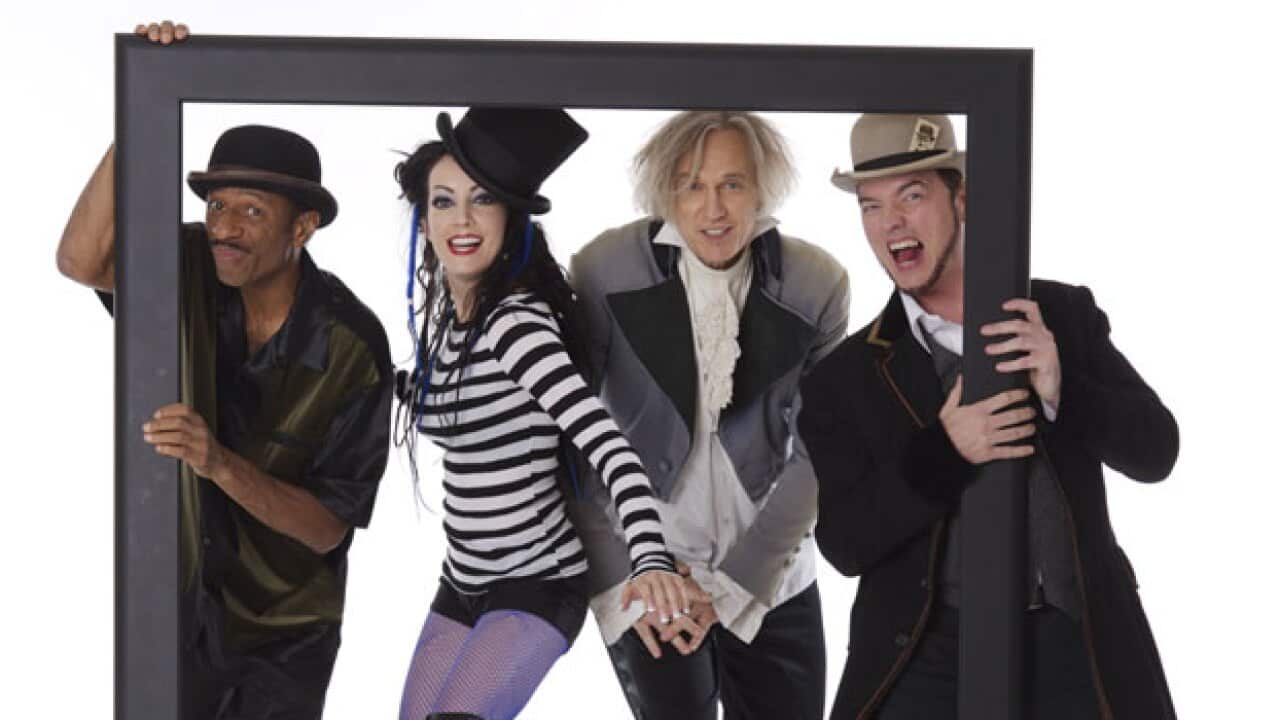
One of the highlights of the Deaf program is See What I 'm Saying, a feature documentary by North American filmmaker, Hilari Scarl. The film's focus is four deaf entertainers – comedian C.J. Jones, singer T.L. Forsberg, actor Robert DeMayo and drummer Bob Hillermann. The talented four are role models and sources of pride for the deaf community, and who enjoy broad audience appeal. The film is an engaging and illuminating portrait of these four artists, and both Scarl and Jones will travel to Melbourne as guests of the festival, to participate in a Q and A session following the Australian premiere of the film, and Jones will perform an 11pm comedy show at the festival club.
Another special guest of the festival is a Toronto based, Canadian filmmaker Rob Spence who will present a world premiere demonstration of The Eyeborg, one of Time magazine's 'Best Inventions of 2009'. “Rob has opened up a completely new area of prosthetics,” explains Randall. “Normally being a one-eyed filmmaker, in terms of having only one functioning eye, would be a disadvantage to a director. What he has done is turned around and fitted a miniature video camera and transmitter into his prosthetic eye. He's shooting his next documentary using that camera”.
The Other Film Festival considers itself to have “both an international and national perspective”. “We want to ensure that we have screen content that reflects the range of experiences of disability in a way that is engaging, authentic and compelling,” Randall states. Twenty percent of the Australian population are people with a disability yet sourcing quality Australian content for the festival is a challenge. Says Randall, “the simple fact is that there is not a lot of strong disability related cinema in Australia. That's always something we battle against because we are committed to very robust programming. In the past we've had a number of Australian films that we liked because they were from Australia but they simply weren't strong enough to get into the festival. We put out an international and Australian call for entries and this year we received about 200 entries. A quarter of those are from Australia and from that, we probably end up selecting about ten percent of Australian-made films.” In addition to the open call for entries, films are sourced from a number of key international festivals such as Emotion Pictures International Documentary Festival on Disability in Athens, The Way We Live International Short Film Festival in Munich, Germany and Superfest International Disability Film Festival, Berkeley, California.
A top priority for the Other Film Festival is of course, providing the highest level of accessibility for all people. According to Randall, “We provide what for us are quite obvious access services such as captioning for people who are deaf or hard of hearing and audio description for those who are blind or vision impaired. We take out rows of seats at Melbourne Museum so there are an increased number of places for people who use wheelchairs. We ensure there is flexibility so people who use wheelchairs can sit next to friends, carers or partners. We even provide a bed for people who can't sit or stand for any length of time. What guides us, and what we are very keen to promote to other events and venues is the question, what do your audience want access to? For Randall, Arts Access Victoria and the Other Film Festival this is a “systemic and cultural change”. Attending the Other Film Festival is a great way to see this in action.
Full details of The Other Film Festival can be found here.